Start here · Start Here
Choosing your first serious suit
Navy or mid-grey, plain, eleven ounces, half canvas at least, and spend the difference on alterations.
The first suit worth real money should be the most useful one, not the most interesting. That means a plain navy or mid-grey worsted at around eleven ounces, half or fully canvassed, in a cut you will not resent in five years, and a budget set aside for alterations, which will improve it more than the next price tier would.
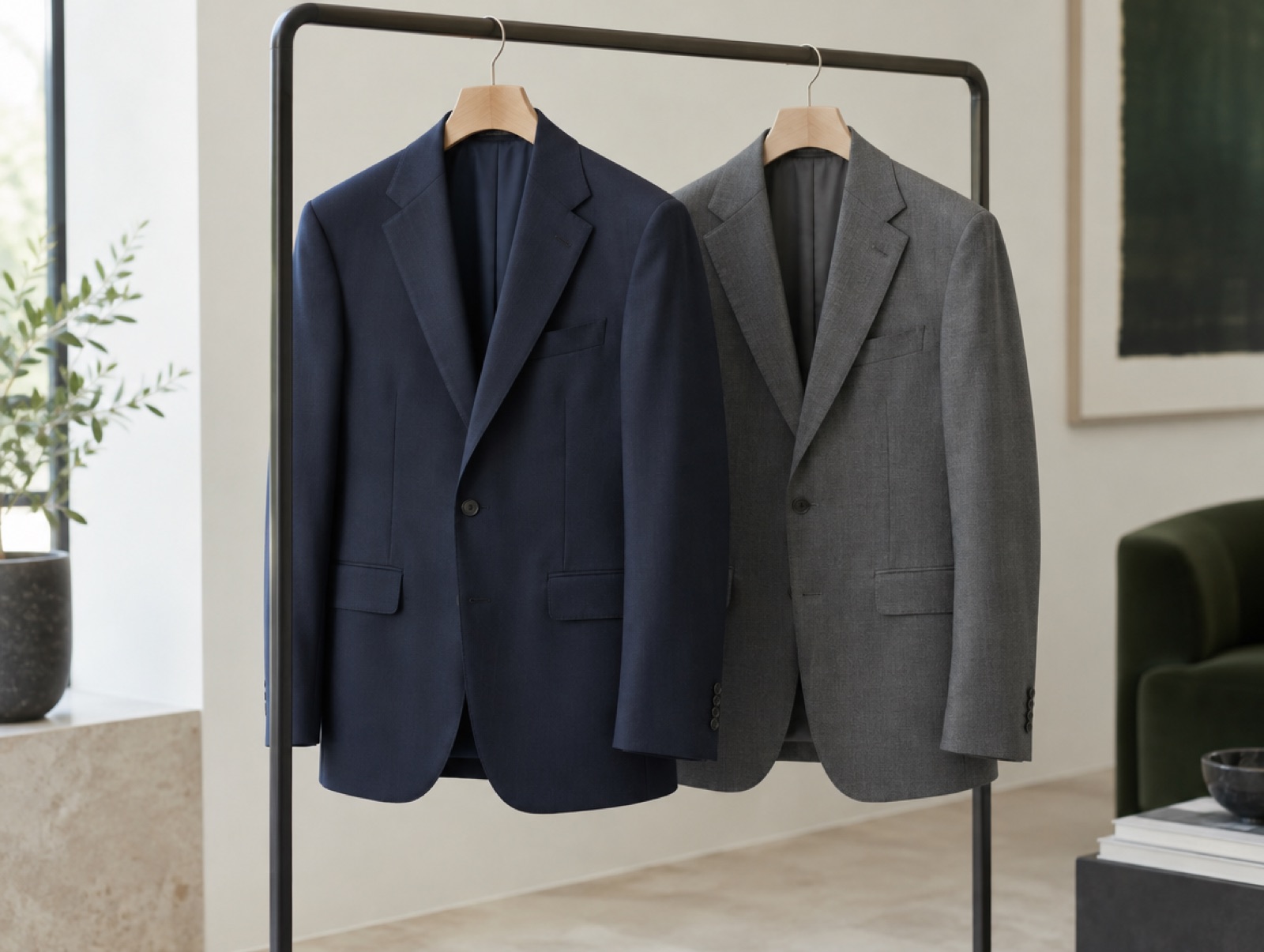
The specification
- Colour. Navy or mid-grey. Both work for business, weddings, funerals and dinner; neither draws attention. Charcoal is a close third and slightly more formal.
- Pattern. Plain, or a birdseye or nailhead that reads plain at a distance. Save the check for the third suit.
- Weight. 10–12 oz. Wearable most of the year, hangs properly, survives being worn.
- Construction. Half canvas at minimum. Full canvas if the budget stretches without sacrificing fit.
- Cut. Whatever suits you, not whatever is current. Ask yourself whether you would have liked it in 2015; if the answer is no, you will not like it in 2032.
Where the money should go
Fit first, always. A £900 suit properly altered beats a £2,500 suit worn as bought, and it is not close. Budget for the alterations at the point of purchase: sleeve length, trouser length and waist at minimum, and very likely the jacket waist and back.
Then construction. Then cloth. Then, a long way behind, everything else.
The three mistakes
Buying navy first is not a mistake, but buying something patterned, textured or unusual first is. It is the suit you will be recognised in, which is exactly what a first suit should not be.
Buying too small is the second. The current habit of cutting close reads as fashionable now and will read as dated quickly, and a coat that pulls at the button is not close-fitting, it is small.
Skipping alterations is the third and the most common. The alteration budget is part of the price of the suit, not an optional extra afterwards.
What to avoid
- Buying at the edge of your size and hoping. The shoulder cannot be fixed.
- A very fine Super number for a suit you intend to wear weekly.
- Black. It is a funeral and evening colour, it reads flat in daylight, and it is almost never the right answer for a first suit despite being the commonest choice.
- Anything with a trouser that will not reach your natural waist if you want it to.
- Buying online without trying the same maker's cut on a body first.
- 1
Shoulderends where yours ends; cannot be altered
- 2
Collaragainst the shirt collar, standing and moving
- 3
Chesta flat hand slides in; a fist does not
- 4
Sleeveto the wrist bone, a centimetre of cuff showing
- 5
Lengthcovers the seat
- 6
Waistsuppressed, but the front does not pull
At a glance
Picture credits 1
- A navy suit and a grey suit side by side: Original art · Il Sartoriale · Il Sartoriale · Il Sartoriale original art