Par ici · Start Here
How a great suit is actually made
A good tailored jacket has a horsehair and wool inner layer shaped with hand stitching, cloth shaped with an iron, and repeated fittings on the body.
A tailored jacket is built rather than sewn. Inside it is a canvas of horsehair and wool, shaped by hand with thousands of small stitches into a permanent curve. The cloth is shrunk and stretched with an iron into three dimensions before it is assembled. And the garment is made, looked at on the body, and remade.
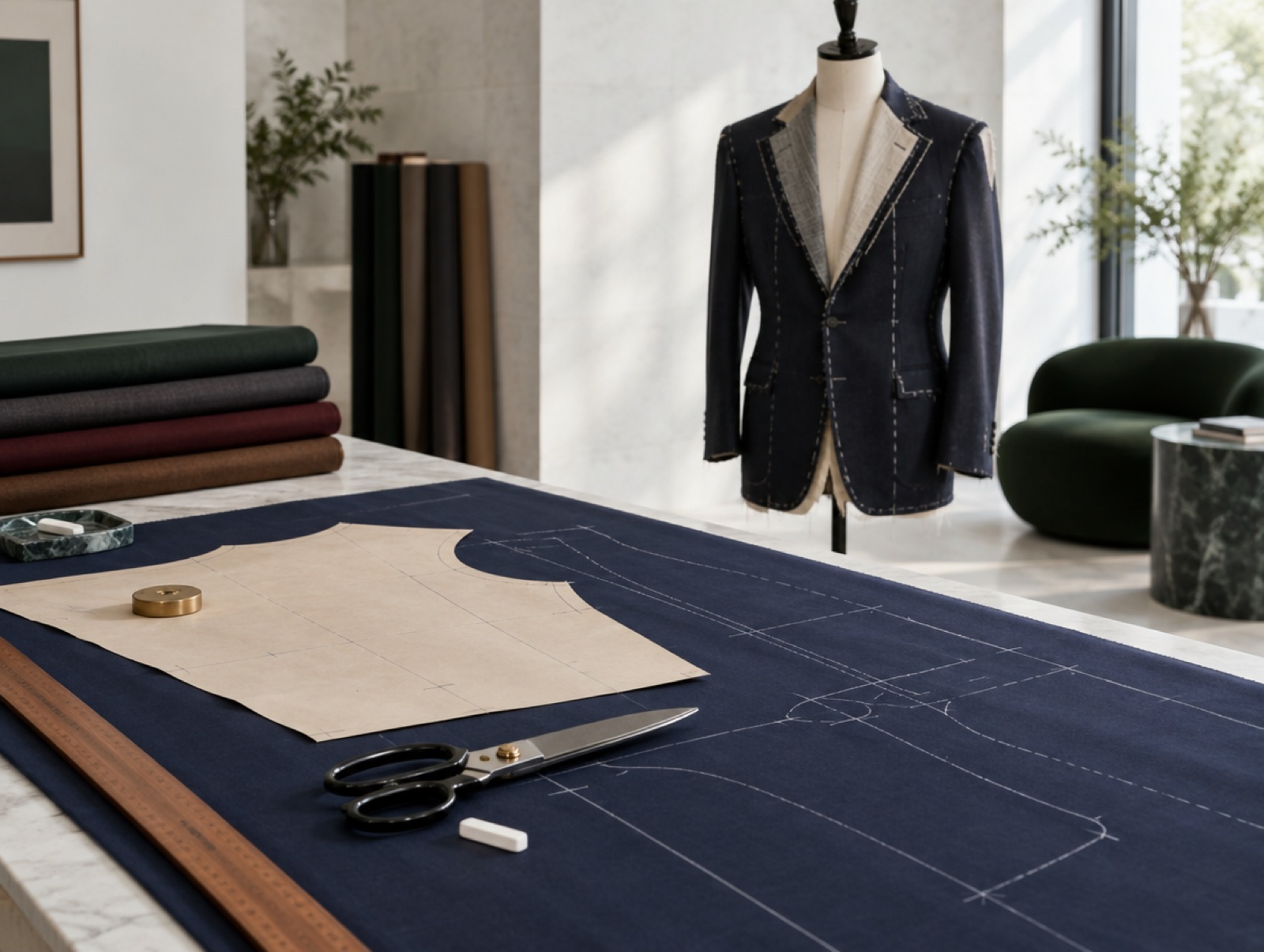
The sequence
- Measure and observe. Twenty or more measurements, and notes on posture and asymmetry that matter more.
- Draft. A paper pattern for this person, on this house's block or from nothing.
- Cut. One layer of cloth at a time, by hand, with inlays left in the seams for future alteration and the pattern matched across the seams.
- Shape the canvas. Rows of pad stitching curl the haircloth into a permanent chest and roll the lapel.
- Ironwork. Heat, steam and pressure shrink and stretch the cloth into three dimensions before anything is sewn together.
- Baste. Assemble loosely with long temporary stitches; no finished edges, sometimes one sleeve.
- Fit. Look at it on the body. Chalk the corrections. Pull it apart.
- Make. Sew it properly; set the sleeves by hand; attach the collar; work the buttonholes.
- Fit again, and finish.
The two things that surprise people
The first is how much of the work is invisible. The canvas, the ironwork, the inlays, the pitch of the sleeve: none of it can be seen in a finished garment, and all of it decides how the garment sits.
The second is that the garment is deliberately taken apart. A basted fitting exists so that a mistake can still be corrected in the cloth rather than patched by an alteration. That destruction-and-rebuilding is what you are paying for, more than the hand stitching.
What to watch at a fitting
Balance first: whether the coat hangs level, front to back. Nothing else can be judged until it does. Then the collar against the neck, standing still and moving. Then the shoulder line. Then the sleeve, hanging relaxed, for diagonal creases.
And stand as you actually stand. A coat fitted to a posture you are holding for the tailor will not fit you afterwards.
Images
Licences →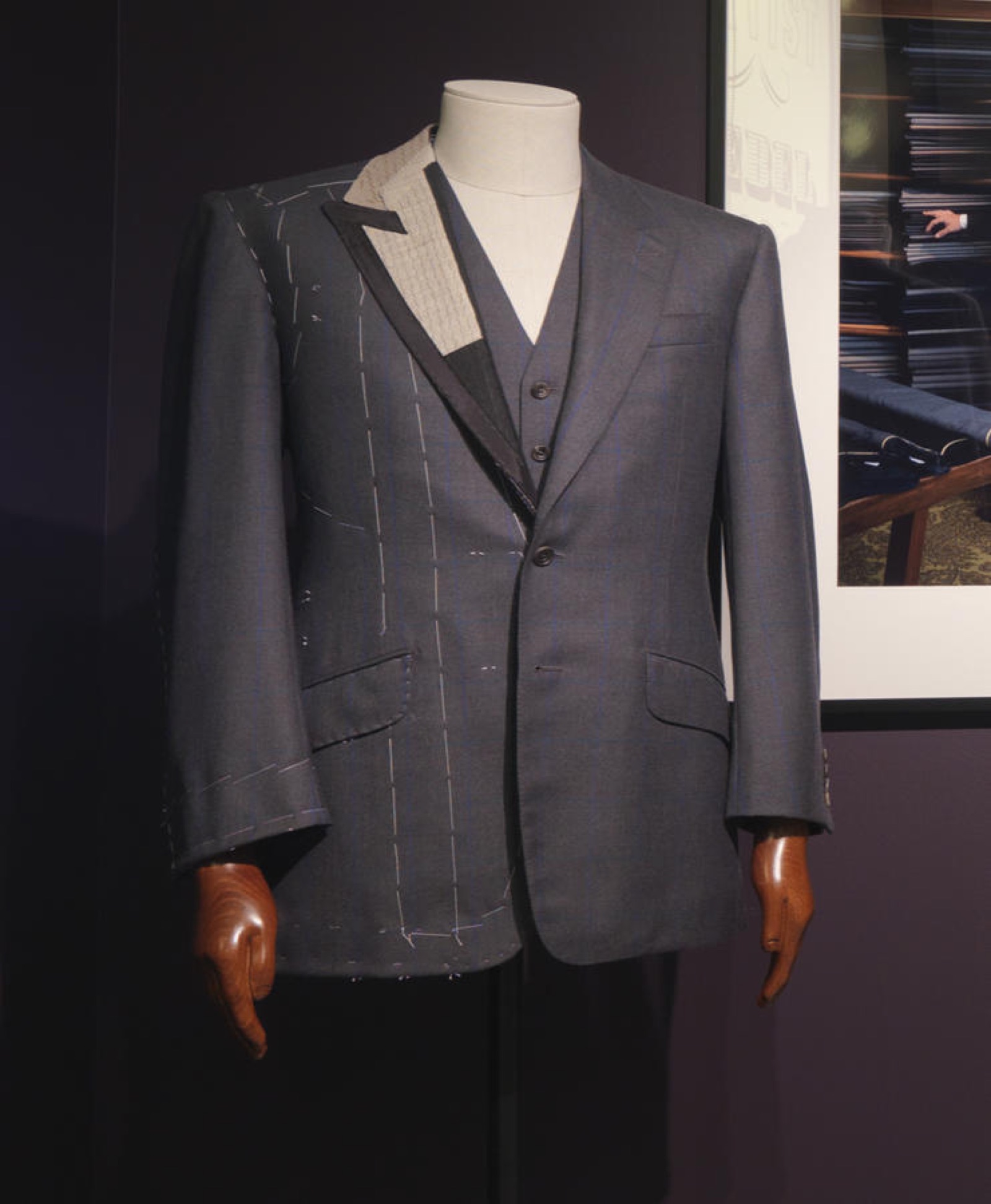
En un coup d'œil
Crédits photographiques 2
- A cutting table with pattern, chalk and shears: Original art · Il Sartoriale · Il Sartoriale · Il Sartoriale original art
- 2012-13 in-progress jacket and vest showing the tailoring process, by Kathryn Sargent of Savile Row: Photograph · Photographer for Rhode Island School of Design Museum of Art · Wikimedia Commons · CC0