Bắt đầu từ đây · Start Here
Why expensive clothes cost more
A £4,000 suit costs more than a £200 one mostly because of hours of skilled handwork and fittings, more than the cloth, though brand plays a part.
The difference between a £200 suit and a £4,000 one is mostly hours of skilled human work: shaping a canvas by hand, cutting a pattern for one person, setting a sleeve by hand, and fitting the garment on the body more than once. Cloth matters, but less than people assume. Brand matters too, and honest writing should say so.
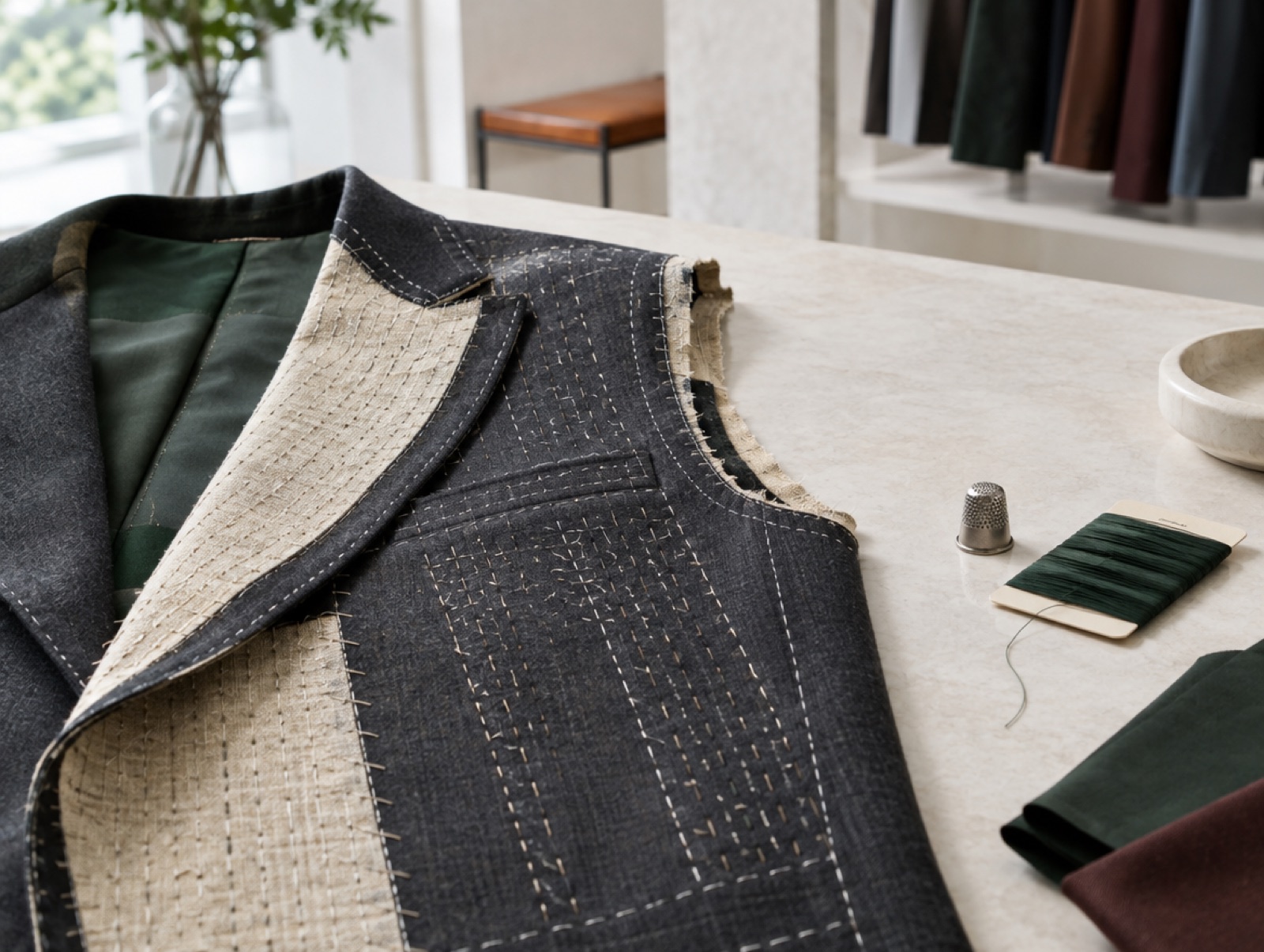
Where the money actually goes
Take a jacket apart in your head. The cloth is one cost, and at the top of the market a metre of good suiting is expensive but not extraordinary; cloth is rarely more than a fifth of a bespoke price. The buttons, lining, canvas and thread are small.
What is left is labour and overhead. A canvassed chest shaped by hand takes hours. A pattern drafted for one person takes hours. Fittings (making the garment, looking at it on a body, taking it apart and remaking it ) take more. A Savile Row coat is commonly described as fifty hours of skilled work, and skilled work in Mayfair is not cheap.
A factory suit removes almost all of that. A fusible interlining is bonded on in a minute rather than stitched over hours; the pattern is a standard size; there are no fittings. That is a difference of two orders of magnitude in labour, and it is most of the price gap.
What the money does not buy
Immediate comfort, necessarily. A hand-welted shoe is stiff for a fortnight. A canvassed jacket takes several wearings to mould to a chest.
Durability, necessarily. A fine wool suit in Super 150s is more delicate than one in Super 110s, and a cashmere overcoat wears out faster than a wool one. Fineness and longevity pull against each other in almost every material.
Fit, necessarily. A ready-to-wear suit that happens to fit you is a better garment than a bespoke one from a tailor who cannot cut. Money buys the possibility of fit, not the fact of it.
The part nobody likes saying
Some of the price is the name. At the very top of the market, the luxury groups rather than the workshops , a substantial share of what a customer pays covers retail on expensive streets, advertising, and margin, not making.
This is not a scandal and it is not unique to clothing. It is worth knowing so that the comparison you make is between garments rather than between shopfronts. Handle a Corneliani beside a suit at three times the price and the gap will be smaller than you expect.
How to think about it
The useful question is not 'is this worth it' in the abstract but 'what does this specific increment buy'. Moving from fused to half-canvassed construction buys drape and a lapel that rolls, for perhaps fifty per cent more. Moving from good ready-to-wear to bespoke buys a pattern cut for you, which matters enormously if your body is unusual and rather less if it is not.
Each step is answerable. Treating the whole ladder as one decision is what makes it feel irrational.
Where the money actually goes
In a garment made at a serious level, labour dominates. Cloth is a real cost and is rarely the largest one; the hours are.
That is why the price of hand-work has risen faster than the price of anything else in clothing, and why the gap between a machine-made and a hand-made garment widens every year: one of them gets cheaper to make and the other does not.
It is also why so much of the marketing at the top of the market talks about materials. Materials are photogenic, quantifiable and easy to name. Hours are none of those things.
Hình ảnh
Cấp phép →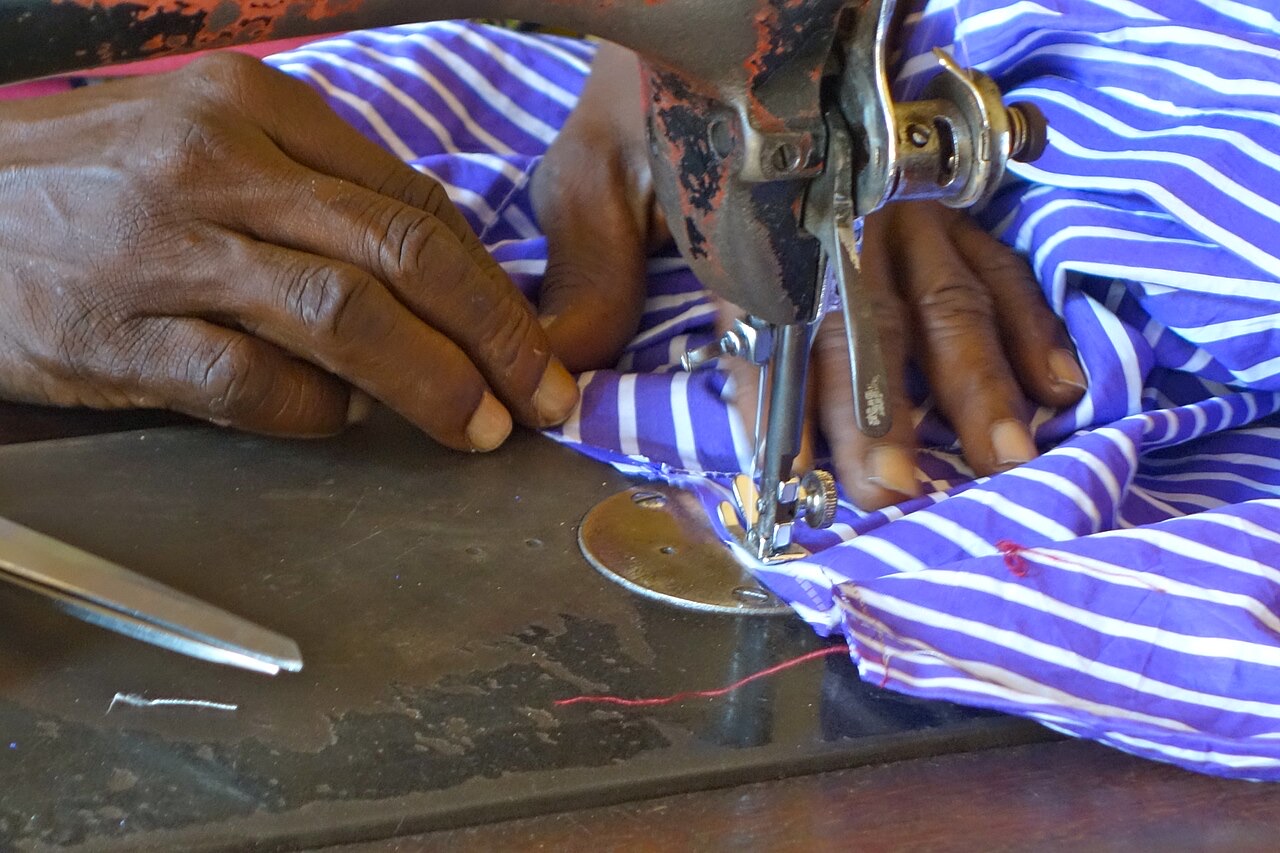
Tóm lược
Ghi công hình ảnh 2
- A half-made jacket showing its hand stitching: Original art · Il Sartoriale · Il Sartoriale · Il Sartoriale original art
- Tailors hands: Photograph · Kalilyoula · Wikimedia Commons · CC BY-SA 4.0