Tailoring style · Italy
Milanese tailoring
Milanese jackets are the most English of Italian styles, with defined shoulders, a nipped waist, a full inner layer and a clean, understated finish.
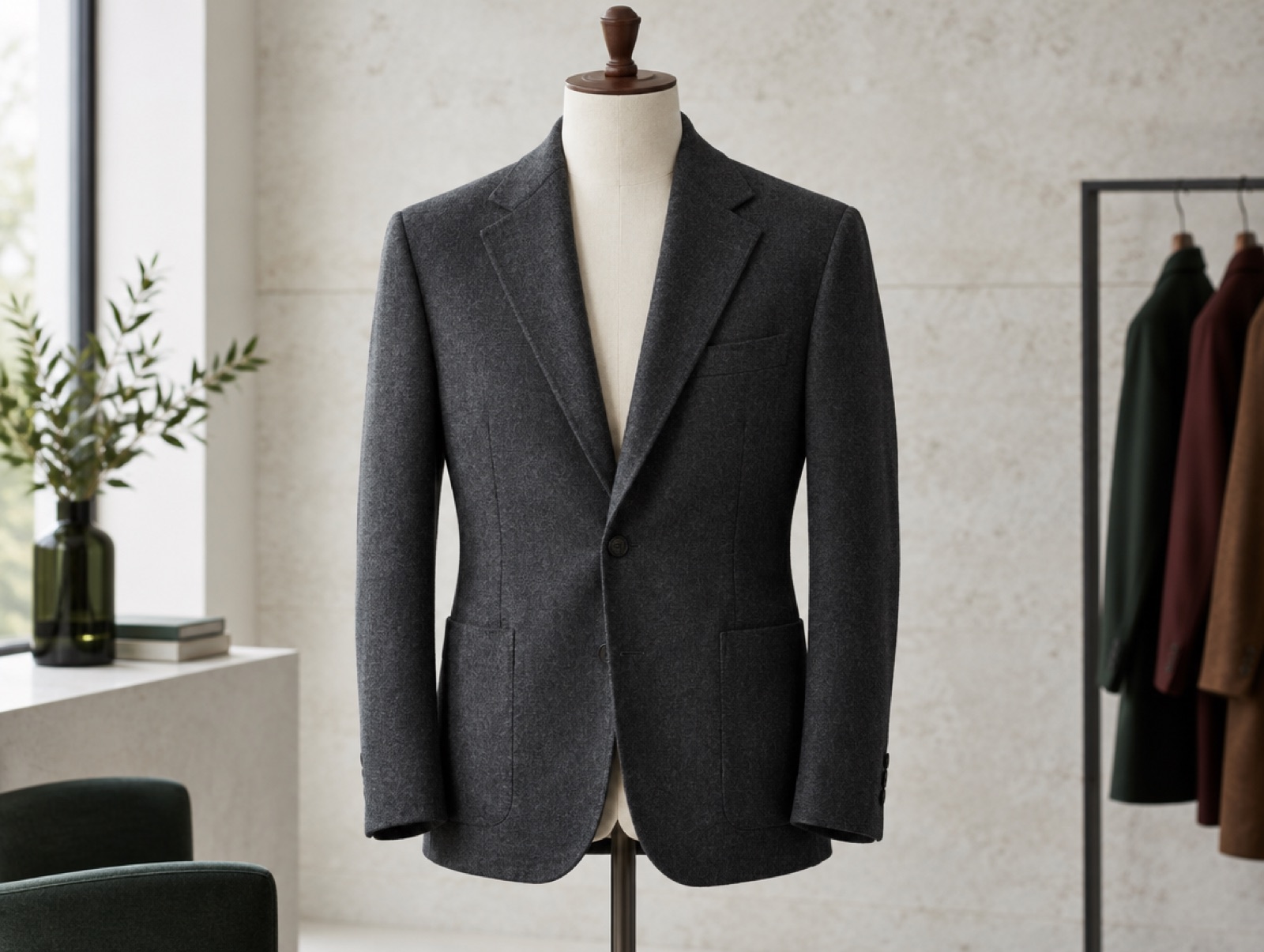
Milanese tailoring is structured, clean and restrained: a full canvas, a defined shoulder, a suppressed waist and very little in the way of visible signature. It is the Italian style closest to English practice, cut for a commercial city rather than a hot one.
Restraint as a position
Milan builds the coat properly and then declines to advertise it. There is no spalla camicia, no obviously curved breast pocket, no patch pockets on a business suit. The chest is canvassed and hand-shaped, the shoulder is clean, and the whole garment is meant to read as correct rather than as craft. This is a defensible aesthetic and a commercially sensible one. The Milanese customer historically wanted to look serious in a bank rather than relaxed on a terrace, and the coat reflects it.
What is actually in the coat
A full horsehair canvas, hand-padded through the chest and lapel; a shoulder with a modest pad and a lightly roped or cleanly set sleeve head; a suppressed waist; and a skirt cut to cover the seat. The armhole is cut moderately high.
Externally there is almost nothing to identify it. No gathered shoulder, no curved breast pocket, no patch pockets on a business suit. The identification comes from proportion and from the absence of signature.
The Caraceni problem
Several distinct firms trade under variations of the Caraceni name, in Milan and Rome, descending from a family that split more than once during the twentieth century. They are separate businesses with separate cutters and separate reputations.
The precise sequence of splits is disputed and much of what circulates online is unreliable. This site records what can be attributed and marks the rest as unresolved, which is unsatisfying and better than the alternative.
Who it suits
A customer who wants a coat that reads as correct in a formal setting and does not want to be asked about it. The construction flatters a fuller figure better than Neapolitan softness, because there is a canvas to impose a chest. It is also the Italian tradition closest to English practice, which makes it the natural comparison for someone who has commissioned in London and wants Italian handwork without Italian informality.
At a glance
Houses working in this tradition
-
 A. Caraceni
Milan
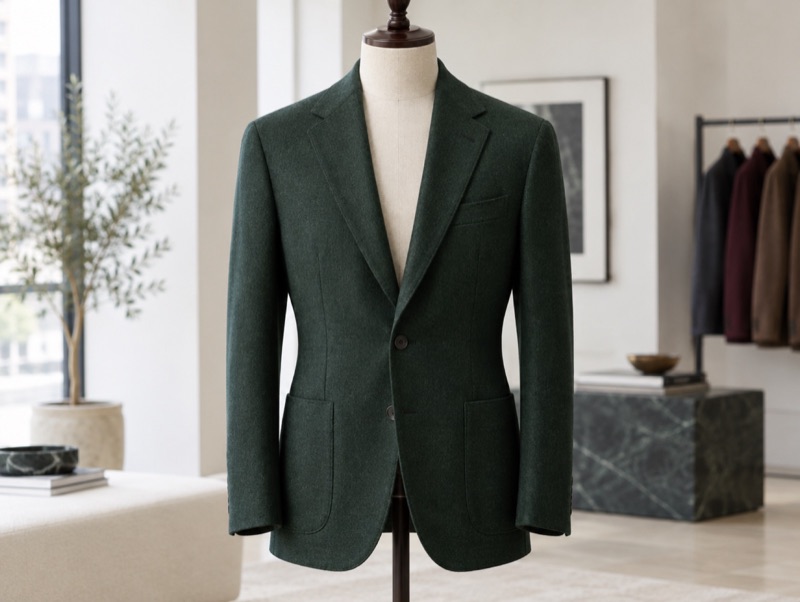
A. Caraceni is a Milan tailoring house, one of several family firms sharing the Caraceni name, making clean, firmly built jackets, founded in 1946 by Augusto Caraceni.
-
 Canali
Milan · 1934
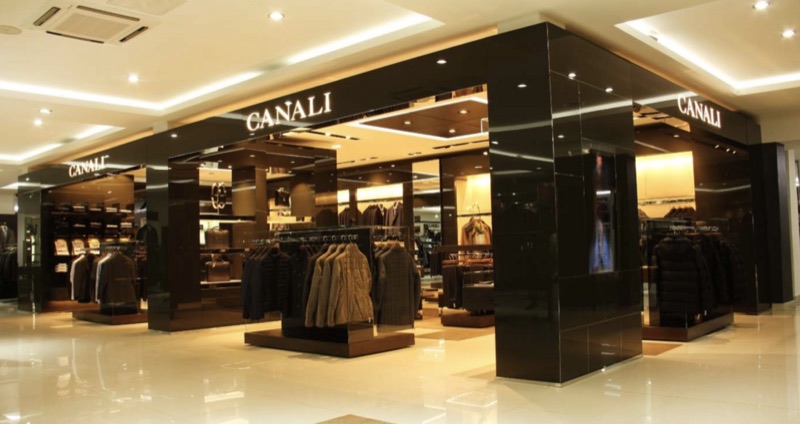
Canali is a family-owned Lombardy tailoring brand, around since 1934, making reliable upper-middle suits that are crisper than Naples ones but softer than English ones.
-
Ferdinando Caraceni
Milan
Ferdinando Caraceni was a separate Milan tailor making clothes to individual order, founded by Ferdinando and continued by his daughter Nicoletta until its closure was announced…
-
Musella Dembech
Milan
Musella Dembech is a small father-and-son Milan tailor whose jackets combine a high gorge with a soft shoulder.
How it is made
All techniques →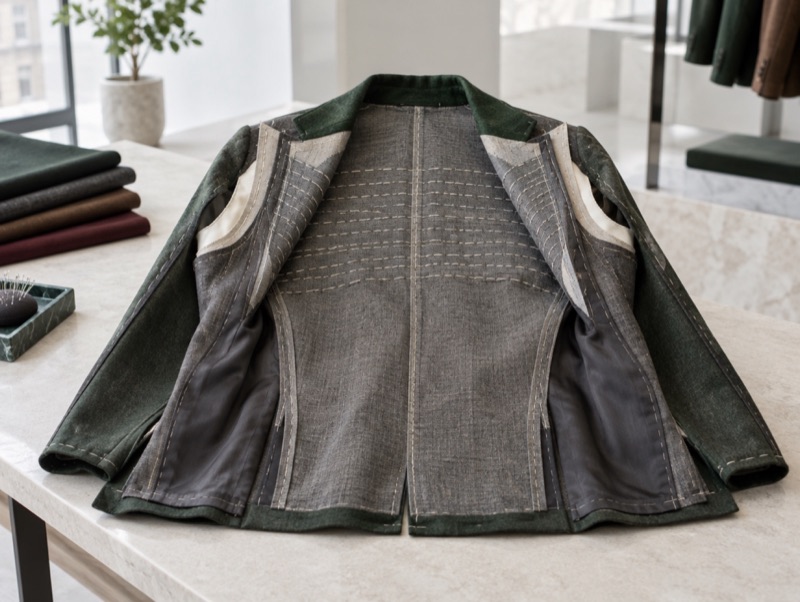
Picture credits 4
- A clean Milanese-cut jacket on a dummy: Original art · Il Sartoriale · Il Sartoriale · Il Sartoriale original art
- AI-generated illustration of a bespoke tailored jacket: Original art · Il Sartoriale · Il Sartoriale · Il Sartoriale original art
- Canali Khanburgedei Boutique: Photograph · Ikhtamir · Wikimedia Commons · CC BY-SA 4.0
- A jacket front showing its full canvas: Original art · Il Sartoriale · Il Sartoriale · Il Sartoriale original art