Teknik · Construction
How a bespoke commission works
A bespoke commission takes four to six months of measuring, a pattern made just for you, and repeated fittings, which are what you are paying for.
A bespoke commission runs: consultation and cloth selection, measuring and observation, a pattern drafted for you alone, cutting, a basted fitting in which the loosely tacked garment is marked and corrected, one or more forward fittings, then finishing. The pattern is kept and refined for the next commission.
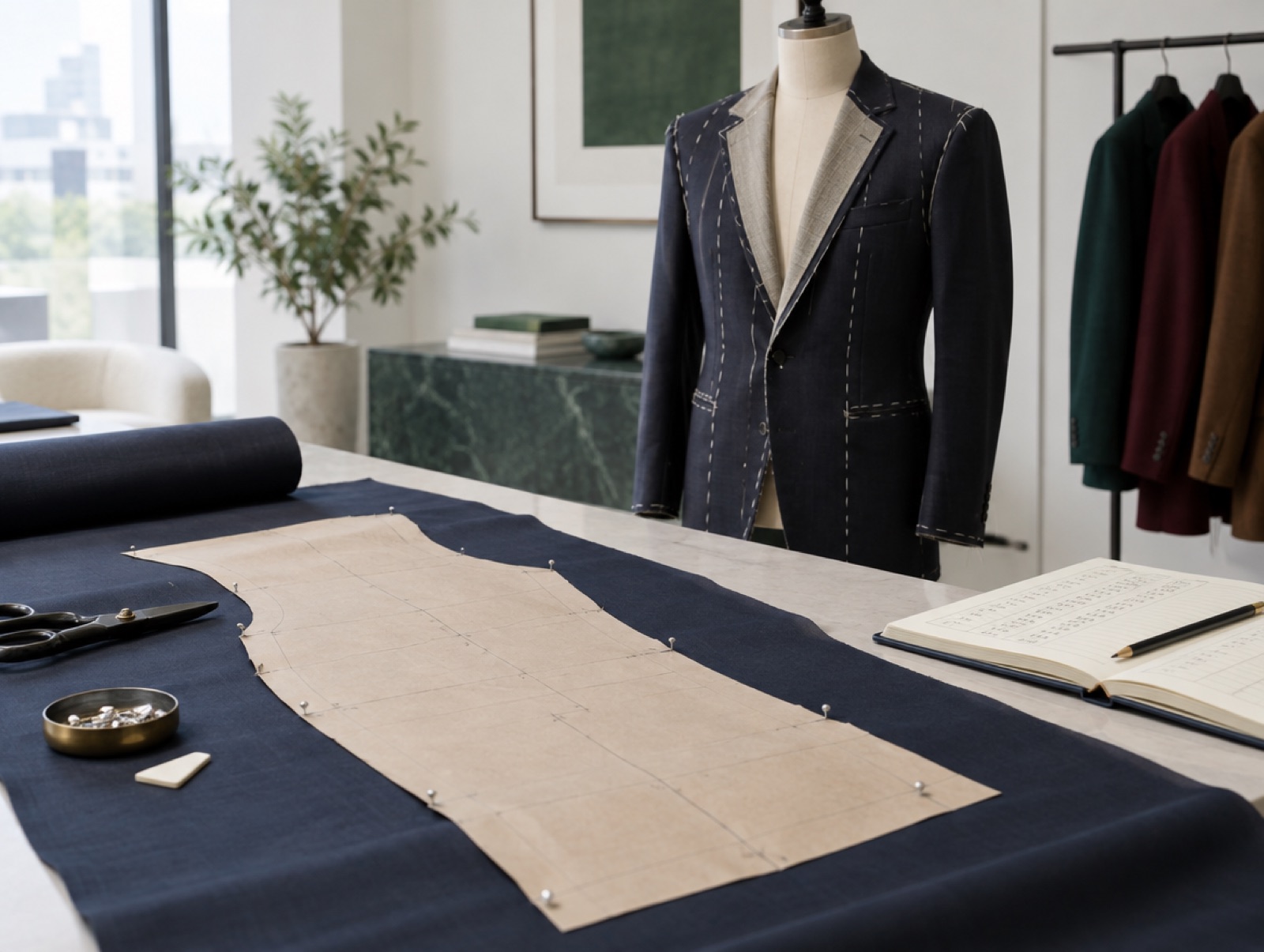
The stages
- Consultation. What the garment is for, and cloth. This takes longer than people expect and matters more than they think: the wrong cloth cannot be fixed by good cutting.
- Measuring. Twenty or more measurements, plus notes on posture, asymmetry and stance. The notes are the valuable part.
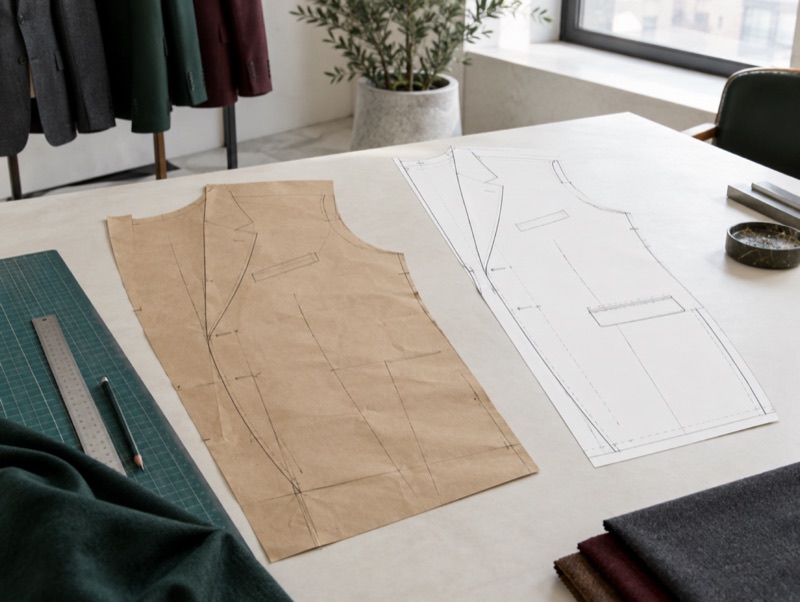
- Drafting and cutting. A paper pattern for you alone; cloth cut by hand, one layer.
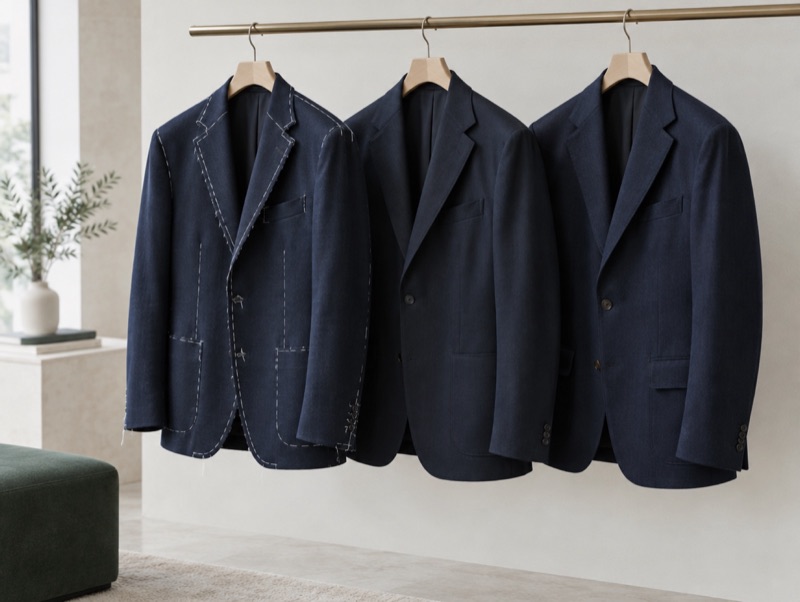
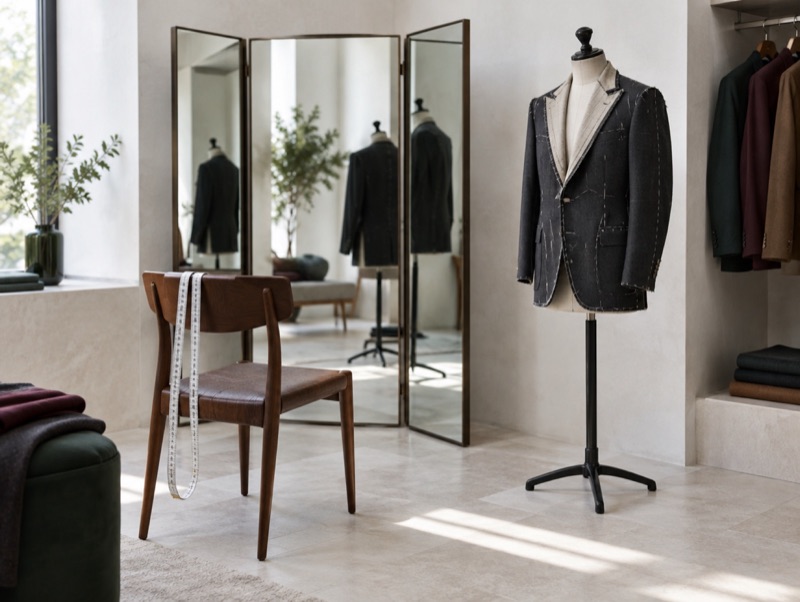
- Basted fitting. The garment tacked together with long stitches, no finished edges, often one sleeve. Marked in chalk, then pulled apart.
- Forward fitting. The garment made up further, checked again; more if needed.
- Finishing. Buttonholes, linings, pressing, final adjustments.
What you are actually paying for
Not primarily handwork. A very good made-to-measure garment can contain a great deal of handwork. What bespoke buys is the pattern drafted for you and the willingness to take the garment apart when it is wrong: an iterative process with a person who has looked at you standing up.
That is also why the second commission from the same house is usually better than the first. The pattern has been corrected once against reality.
Questions worth asking before you commit
- Is a paper pattern drafted for me and kept? (The operative test.)
- How many fittings are included, and what happens if the garment is still wrong after them?
- Where is the garment made, and by whom: in-house or by an outworker?
- What is included in the price, and what is extra? Cloth beyond the house bunch usually is.
- How long, realistically, and what happens if you travel to me rather than me to you?
What to commission first
Not a navy suit. A first commission with a new house is partly an experiment, and the sensible first garment is one where an imperfect result is still wearable: a sport coat, or a pair of trousers.
The second reason is that the pattern improves. A house's second garment for a customer is almost always better than its first, because the pattern has been corrected against a real body once. Spending the largest part of the budget on the first commission is the common and expensive mistake.
- Ukuran standar
- Dibeli jadi
- Diubah, mungkin
- Blok yang ada
- Disesuaikan dengan ukuran Anda
- Satu fitting, atau tidak sama sekali
- Pola dibuat khusus untuk Anda
- Dipotong dan di-baste
- Difitting, dibuka jahitannya, dipotong ulang
- Dua hingga empat kali
Sekilas pandang
Siapa yang menggunakannya
Rumah mode dan pabrik kain di situs ini yang memiliki keterkaitan terdokumentasi dengan How a bespoke commission works.
 01
Panduan
01
Panduan Bespoke vs made-to-measure
Bespoke means a pattern drawn from scratch for you and corrected over fittings, while made-to-measure adjusts a standard pattern, and hand stitching is not the difference.
 02
Mulai di sini
02
Mulai di sini Bespoke, made-to-measure and ready-to-wear
Ready-to-wear comes in standard sizes, made-to-measure adjusts a standard pattern, and bespoke draws a new pattern just for you, refined through fittings.
 03
Panduan
03
Panduan What to ask a tailor before you commission
Eight questions to ask a tailor before ordering tell you what you are buying, who is making it, and what happens if it goes wrong.
 04
Mulai di sini
04
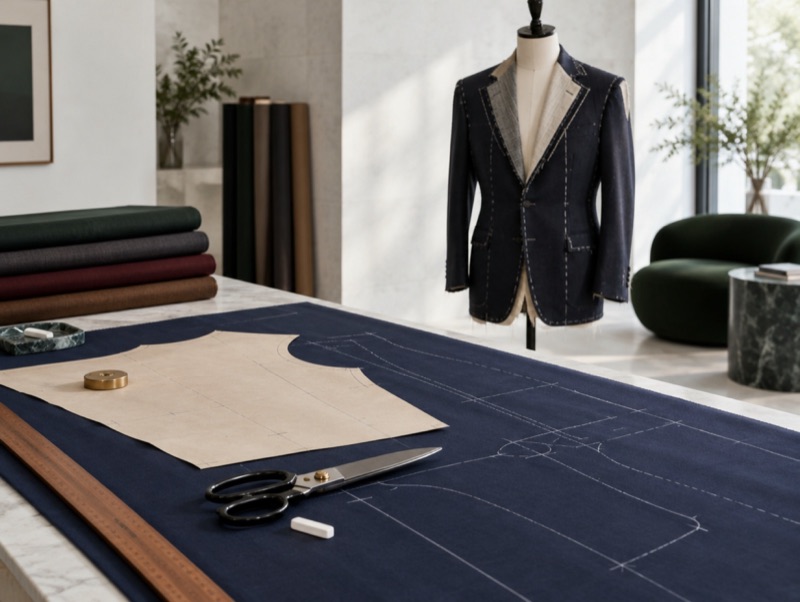
Mulai di sini How a great suit is actually made
A good tailored jacket has a horsehair and wool inner layer shaped with hand stitching, cloth shaped with an iron, and repeated fittings on the body.
 05
Panduan
05
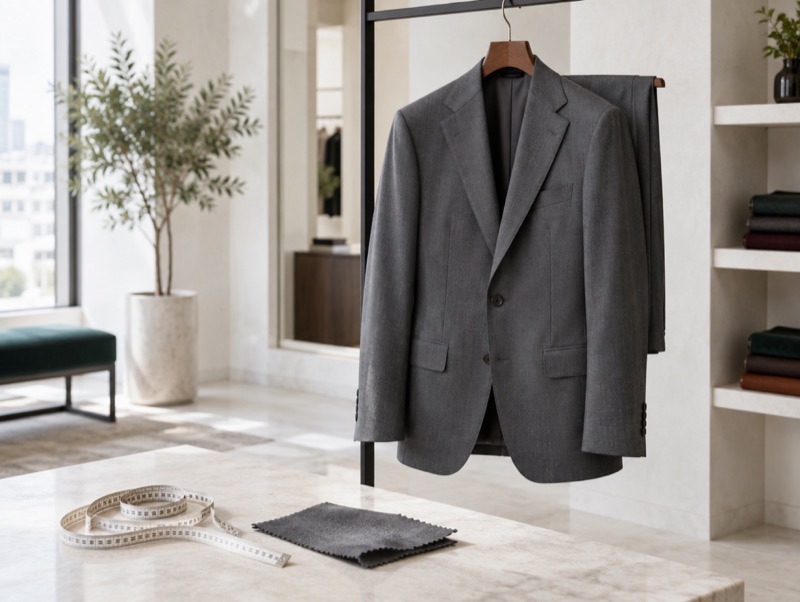
Panduan How much does a bespoke suit cost?
A bespoke two-piece suit costs from roughly $4,000 in Naples or Seoul to $12,000 and up in Paris or Milan, before tax and your chosen cloth.
 06
Teknik
06
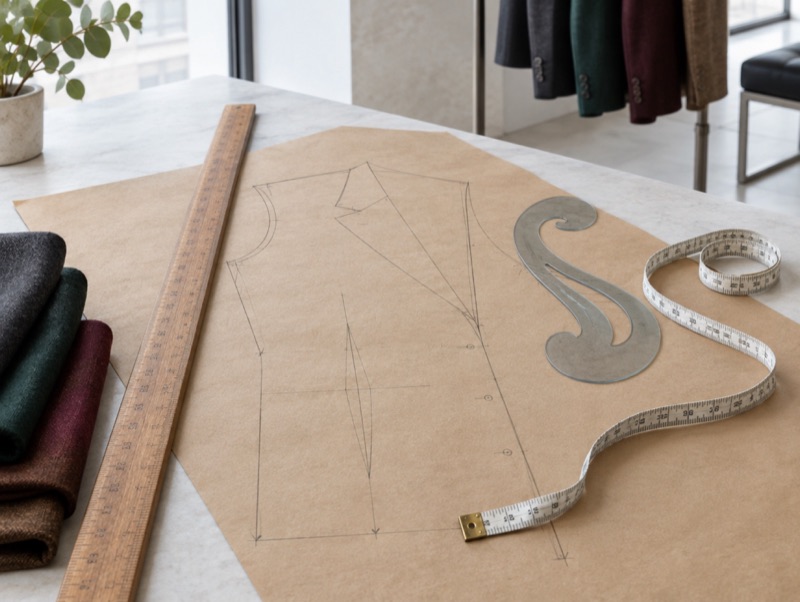
Teknik Pattern drafting
Turning a set of measurements and a look at a body into flat paper shapes. The part that decides everything.
-
Bespoke
Istilah glosarium
A garment cut from a pattern drafted for one person and made through fittings in which it is taken apart and corrected. From cloth being 'spoken for' by a customer. The operative…
-
Basting
Istilah glosarium
Long temporary stitches holding a garment together for fitting, removed afterwards. A basted garment can be pulled apart and recut, which is the point of the basted fitting.
-
Deposit
Istilah glosarium
The part-payment taken when a bespoke commission is placed, typically about half. It funds the cloth and the cutting, with the balance falling due on delivery, and it is normally…
-
Forward fitting
Istilah glosarium
A fitting after the basted one, with the garment made up further. How many there are depends on the figure and on how well the house already knows it.
-
House bunch
Istilah glosarium
The range of cloth a maker includes in its quoted price. Cloth outside it is charged separately, which is why an entry price and a final invoice can differ substantially.
-
Inlay
Istilah glosarium
Extra cloth left inside the seams of a bespoke garment so it can be let out later. Cut at the centre back, side seams, seat and sleeves. It is why a bespoke suit can be altered…
Kredit foto 7
- A cutting room with pattern, basted jacket and ledger: Original art · Il Sartoriale · Il Sartoriale · Il Sartoriale original art
- A hand-drawn pattern beside a standard block: Original art · Il Sartoriale · Il Sartoriale · Il Sartoriale original art
- Three jackets side by side, one still basted: Original art · Il Sartoriale · Il Sartoriale · Il Sartoriale original art
- A fitting room with a basted jacket: Original art · Il Sartoriale · Il Sartoriale · Il Sartoriale original art
- A cutting table with pattern, chalk and shears: Original art · Il Sartoriale · Il Sartoriale · Il Sartoriale original art
- A finished suit in a fitting room: Original art · Il Sartoriale · Il Sartoriale · Il Sartoriale original art
- A paper pattern drawn on brown paper: Original art · Il Sartoriale · Il Sartoriale · Il Sartoriale original art