Technique · Construction
Pattern drafting
Turning a set of measurements and a look at a body into flat paper shapes. The part that decides everything.
A cutter takes measurements, observes the body's asymmetries and posture, and draws a paper pattern for that person alone. Every subsequent operation depends on it. Drafting an individual pattern from scratch, rather than adjusting a standard block, is the operative distinction between bespoke and made-to-measure.
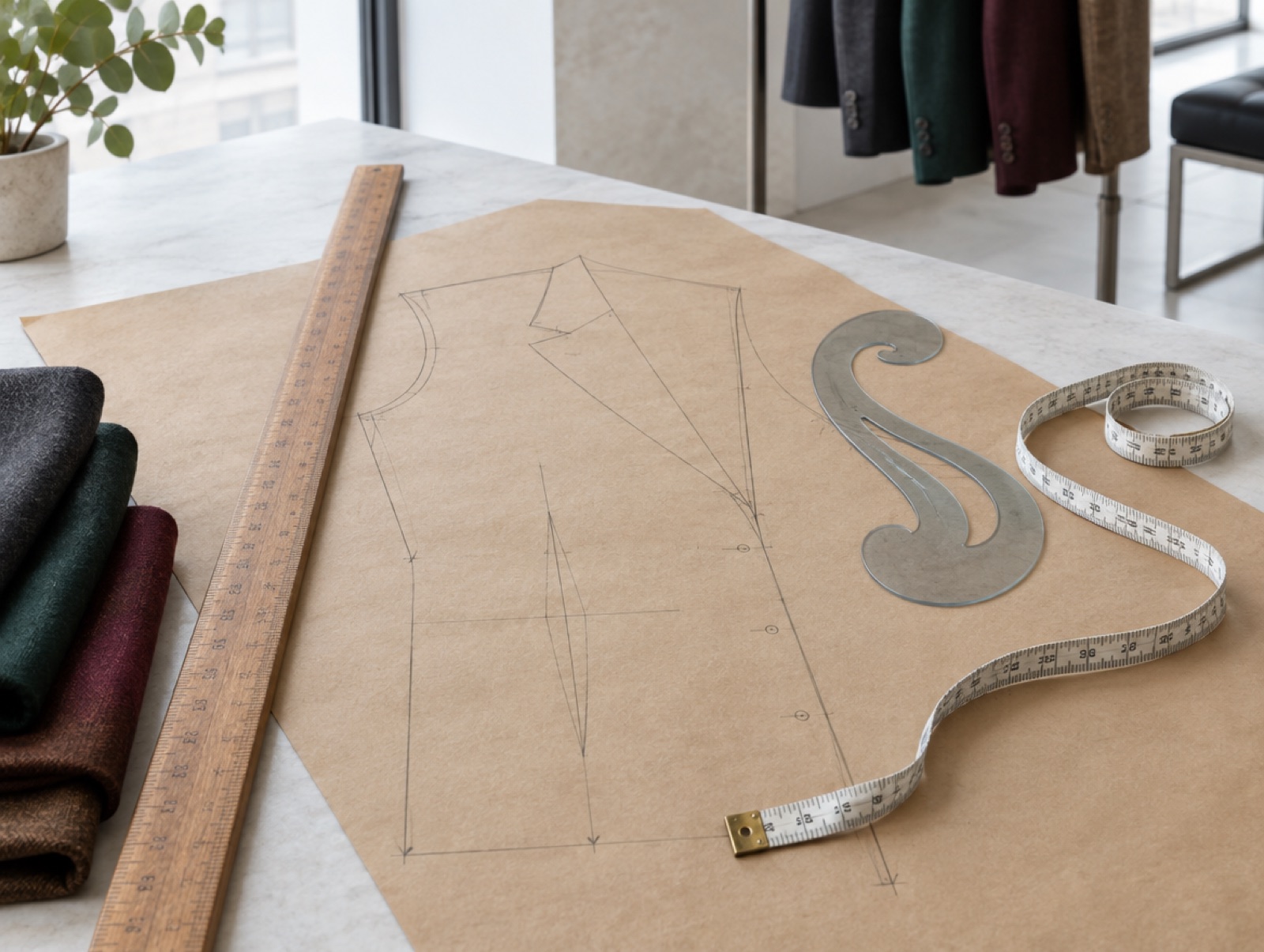
Measurements are the smaller half
Anyone can take a chest measurement. What a cutter is doing while measuring is looking: one shoulder lower than the other, which it almost always is; a forward head carriage; a prominent blade; a stance that throws weight onto one hip. These observations, not the numbers, are what make a bespoke pattern fit. This is why a good fitting is more diagnostic than a long list of measurements taken by post, and why remote made-to-measure has an upper limit however carefully the tape is used.
Block versus draft
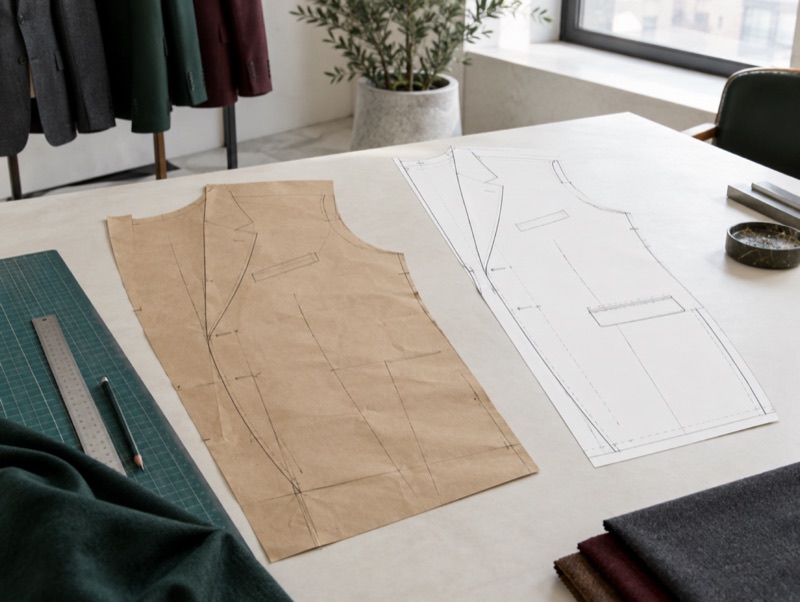
Made-to-measure starts from an existing block (a standard pattern in the nearest size) and modifies it: lengthen the sleeve, let out the waist, drop one shoulder. Bespoke draws the pattern from nothing for that customer.
The practical difference is what happens when a body is unusual. A block can absorb moderate adjustment; asked to accommodate a genuinely asymmetric figure it starts to distort elsewhere. A drafted pattern has no such limit, which is why bespoke's advantage grows the further a body is from average.
The pattern as a record
A bespoke house keeps the pattern. It is the customer's, in the sense that it is unusable for anyone else, and it is amended after every commission as the fit is refined and as the customer's shape changes. A house with twenty years of a customer's patterns has a record of his body that he does not have himself.
Whether a house will surrender a pattern to a departing customer varies, and there is no settled convention. Ask before you need to know.
What a cutter writes down
The measurements are a short list; the notes beside them are the useful part. A right shoulder 15 millimetres lower than the left. A forward head. A prominent right blade. A slight sway back. Weight carried on one hip. These are the observations that turn a set of numbers into a pattern that fits a person rather than an average. This is also why a good cutter watches the customer walk in before the tape comes out, and why the fitting matters more than the measuring.
Images
Licensing →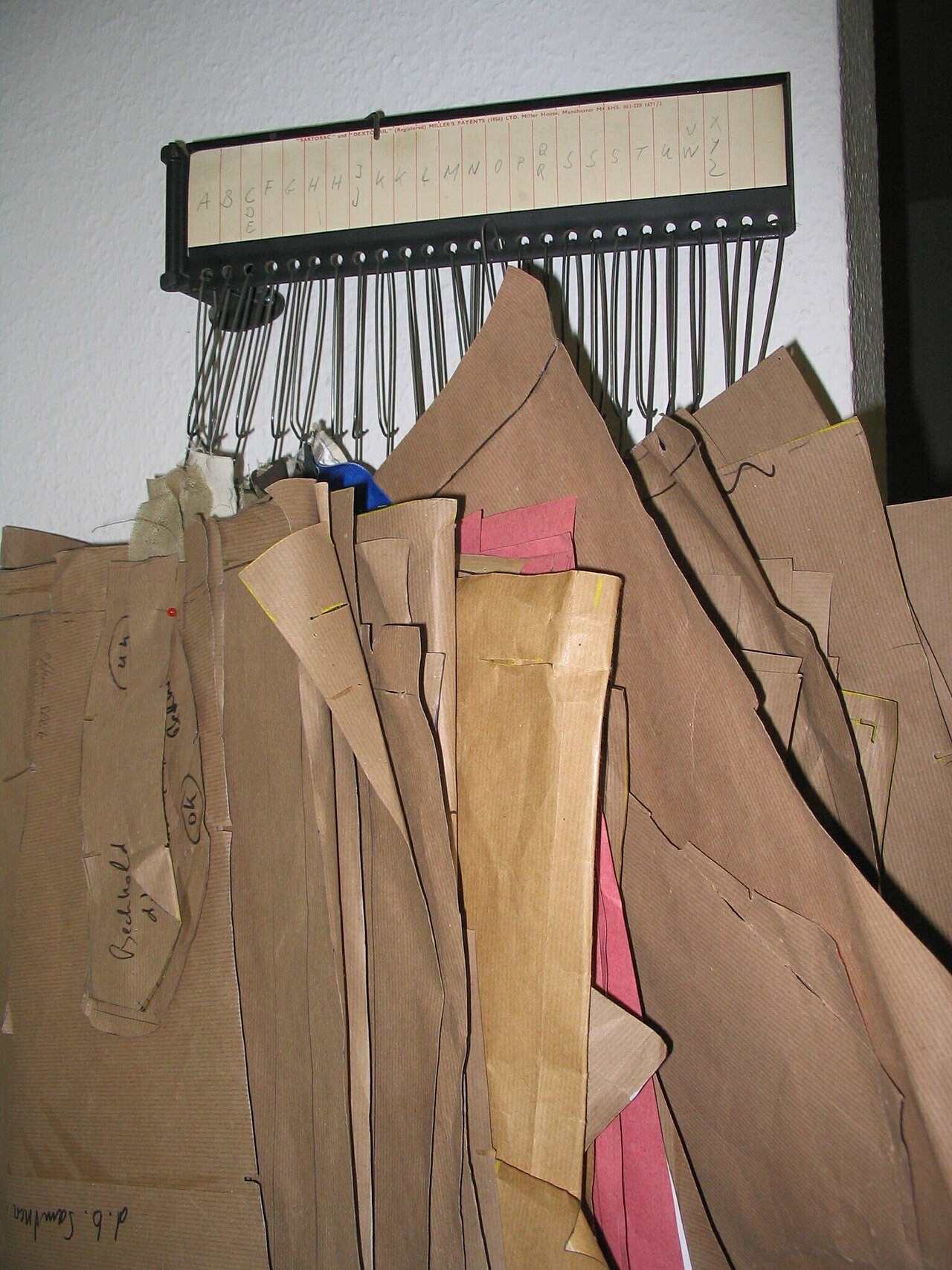
At a glance
Who works with it
Houses and mills on this site with a documented connection to Pattern drafting.
 01
Guide
01
Guide Bespoke vs made-to-measure
Bespoke means a pattern drawn from scratch for you and corrected over fittings, while made-to-measure adjusts a standard pattern, and hand stitching is not the difference.
 02
Start here
02
Start here Bespoke, made-to-measure and ready-to-wear
Ready-to-wear comes in standard sizes, made-to-measure adjusts a standard pattern, and bespoke draws a new pattern just for you, refined through fittings.
 03
Technique
03
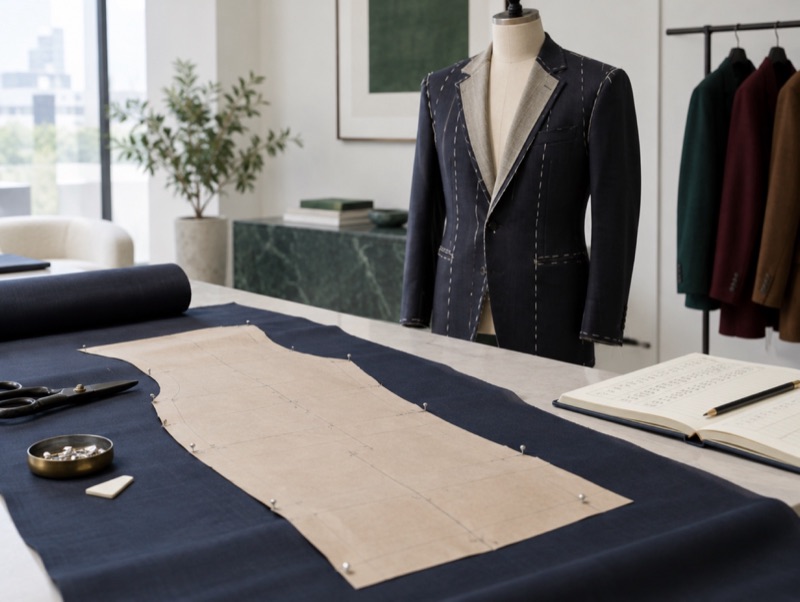
Technique How a bespoke commission works
A bespoke commission takes four to six months of measuring, a pattern made just for you, and repeated fittings, which are what you are paying for.
 04
Technique
04
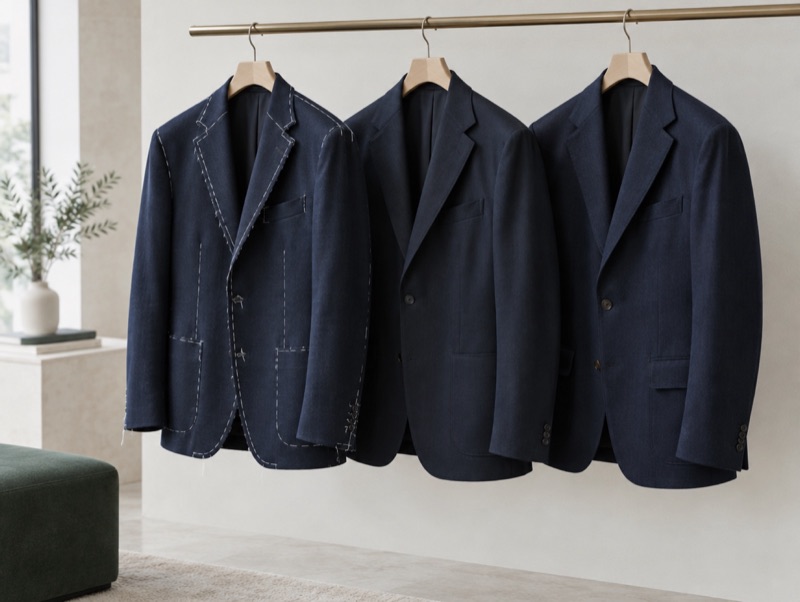
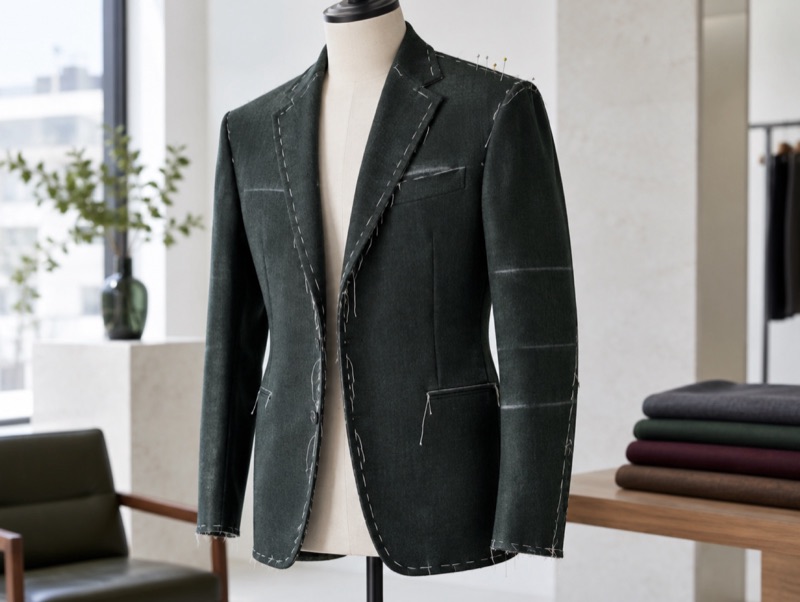
Technique The basted fitting
A garment loosely tacked together, tried on, marked in chalk, and then taken apart again.
 05
Technique
05
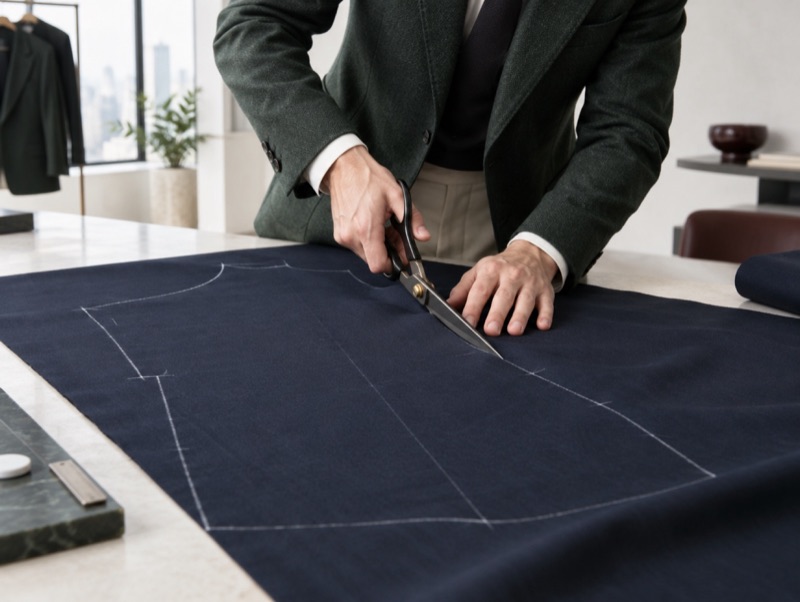
Technique Hand cutting
One person, one pair of shears, one layer of cloth at a time.
 06
Technique
06
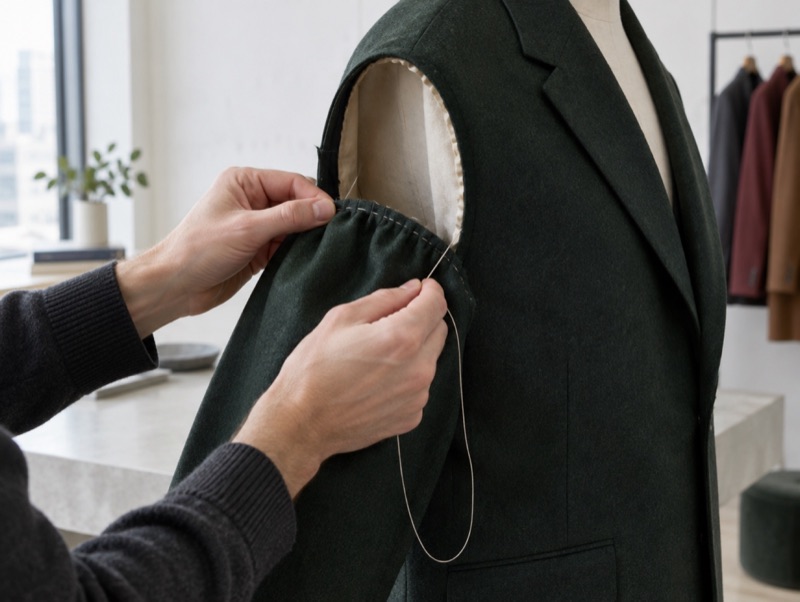
Technique The hand-set sleeve
The one seam that most rewards a person doing it, because it is the one seam that has to be eased.
-
Bespoke
Glossary term
A garment cut from a pattern drafted for one person and made through fittings in which it is taken apart and corrected. From cloth being 'spoken for' by a customer. The operative…
-
Block
Glossary term
A standard pattern in a given size, from which made-to-measure garments are modified. Bespoke draws a pattern from nothing instead; the distinction between block and draft is the…
-
Cutter
Glossary term
The person who measures the customer, drafts the pattern, cuts the cloth and runs the fittings. In the London system the cutter does not make the garment; a separate coatmaker…
-
Made-to-measure
Glossary term
A garment made by modifying an existing block pattern to a customer's measurements, usually with one fitting or none. A legitimate product, considerably cheaper than bespoke, and…
-
Balance
Glossary term
Whether a coat hangs level front to back. A coat out of balance rides up at the back of the neck or falls away at the front, and nothing else about the fit can be judged until it…
Picture credits 8
- A paper pattern drawn on brown paper: Original art · Il Sartoriale · Il Sartoriale · Il Sartoriale original art
- Tailors and furriers Tool - pattern holder - Schnittmusterhalter: Photograph · -- Kürschner ( talk ) 17:55, 27 March 2010 (UTC) · Wikimedia Commons · Public domain
- A hand-drawn pattern beside a standard block: Original art · Il Sartoriale · Il Sartoriale · Il Sartoriale original art
- Three jackets side by side, one still basted: Original art · Il Sartoriale · Il Sartoriale · Il Sartoriale original art
- A cutting room with pattern, basted jacket and ledger: Original art · Il Sartoriale · Il Sartoriale · Il Sartoriale original art
- A basted jacket marked in chalk: Original art · Il Sartoriale · Il Sartoriale · Il Sartoriale original art
- Shears cutting chalk-marked cloth: Original art · Il Sartoriale · Il Sartoriale · Il Sartoriale original art
- A sleeve being set into an armhole by hand: Original art · Il Sartoriale · Il Sartoriale · Il Sartoriale original art