Technique · Construction
Full canvas construction
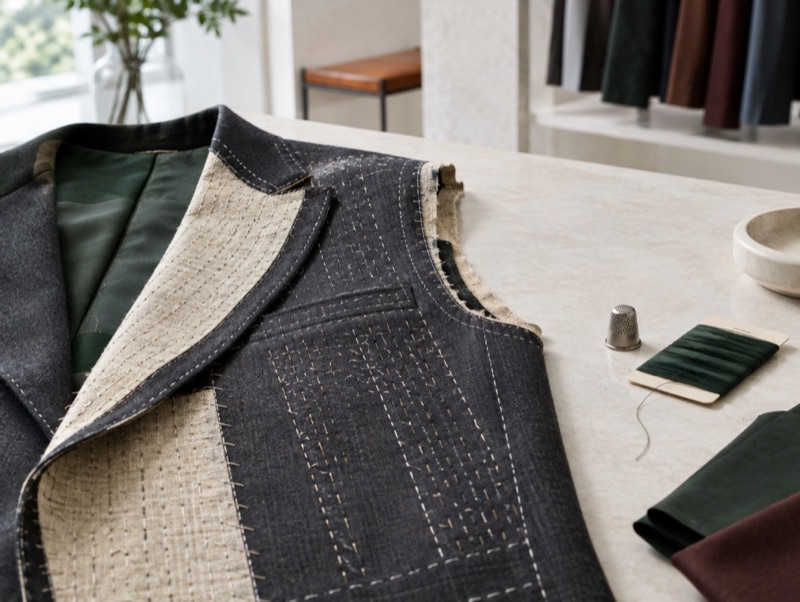
A hand-shaped skeleton of horsehair and wool, sewn (never glued) between cloth and lining.
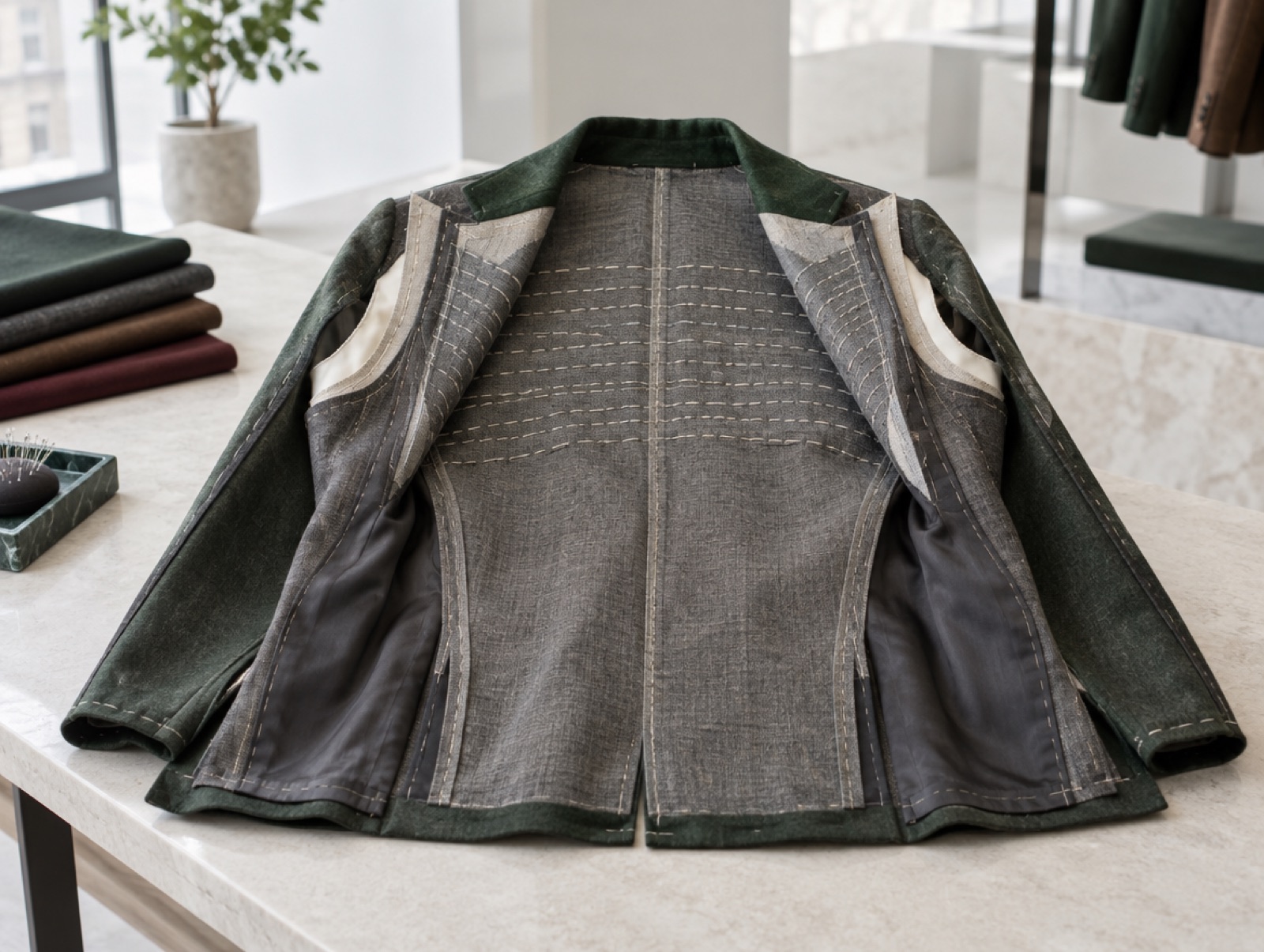
In a fully canvassed jacket, a layer of stiffened cloth runs from the shoulder to the hem inside the front of the coat, attached with stitching rather than adhesive. It gives the jacket its chest shape, lets the cloth move independently, moulds to the wearer over time, and can be altered. It is the most expensive way to build a jacket and the reason a good one lasts decades.
What the canvas is
The canvas is an interlining, usually built in layers: a base of linen or wool, a chest piece of haircloth woven with horsehair, and often a soft felt domette over the top so the hair does not work through the cloth. It runs the full length of the jacket front, from shoulder to hem, and it is attached by stitching at the edges, floating free across the middle.
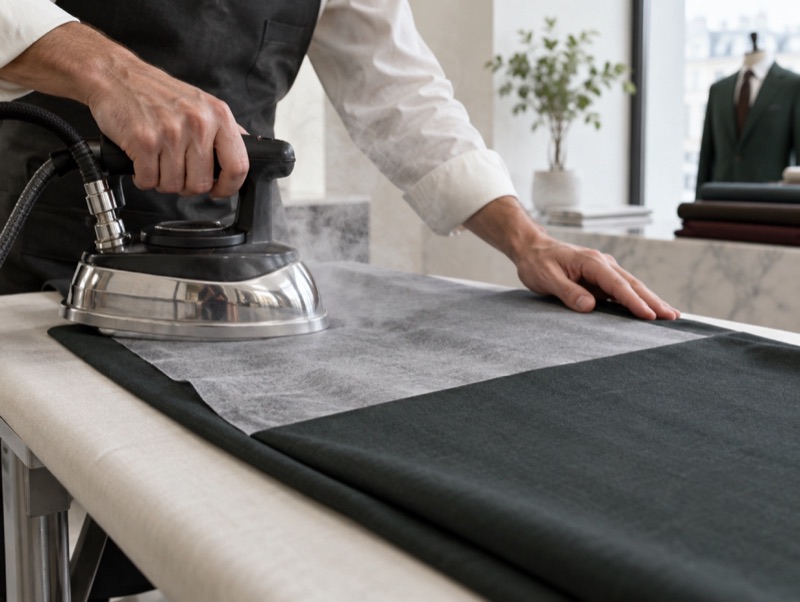
That freedom is the point. The canvas and the outer cloth are two separate layers that can shift against each other, so the jacket drapes rather than behaving like a board. A fused jacket, where an adhesive interlining is bonded to the cloth with heat and pressure, is one layer and behaves like one.
How it gets its shape
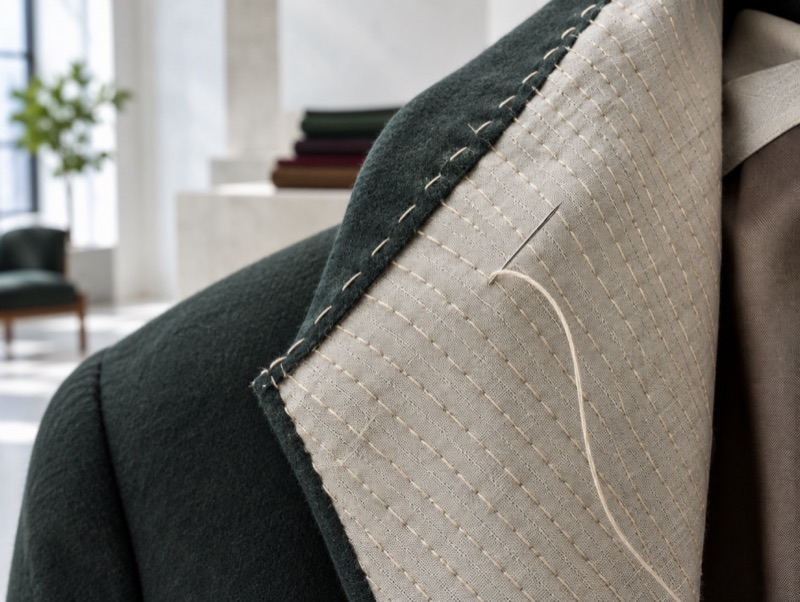
By hand, with pad stitching. Rows of small diagonal stitches are worked through the canvas while it is held in a curve over the maker's hand; each row tightens one layer relative to the other, so the canvas takes a permanent three-dimensional curve. The chest is shaped this way, and so is the lapel, which is why a well-made lapel rolls softly instead of creasing along a pressed line. This is slow. Pad-stitching a pair of lapels and a chest by hand is measured in hours, not minutes, and it is the single largest reason a canvassed coat costs what it does.
How to tell
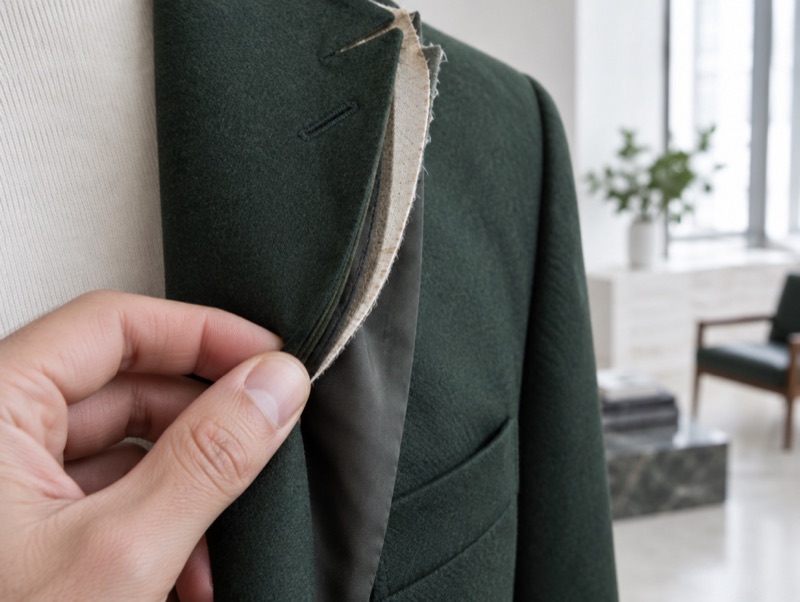
The pinch test is the usual advice and it is only half reliable. Take the cloth of the front panel, below the buttonhole and away from the pocket, and pinch it between finger and thumb, then try to separate the outer cloth from the lining. If you can feel a third loose layer moving between them, there is a floating canvas there. If the cloth feels like a single stiff board, it is fused.
The unreliability is in the middle. A half-canvassed jacket will pass the test in the chest and fail it lower down, and some fusible interlinings are soft enough to feel convincing. If it matters, ask, and prefer a maker who answers precisely over one who says “fully hand-made”, which means nothing.
Whether it is worth it
For a jacket you intend to keep, yes, and the reasons are practical rather than romantic. A floating canvas moulds to the wearer's chest over a few dozen wearings and stays moulded. It survives dry cleaning and pressing; a fused front can bubble and delaminate, and once it has, the jacket cannot be repaired. And a canvassed coat can be altered substantially (let out, taken in, recut) because the structure is sewn and can be unsewn.
For a jacket you will wear twice a year for five years, the argument is much weaker, and it is honest to say so. A good fused jacket that fits is a better garment than a canvassed one that does not.
It moulds to you
A floating canvas takes the shape of the wearer's chest over a few dozen wearings and keeps it. That is why a well-made canvassed jacket feels better after a year than it did in the shop, and why a second-hand one from someone else's chest never quite fits the way it should. It is also why the same jacket can be recut a decade later when the owner's shape has changed. The structure is sewn, so it can be unsewn.
At a glance
Who works with it
Houses and mills on this site with a documented connection to Full canvas construction.
 01
Start here
01
Start here How a great suit is actually made
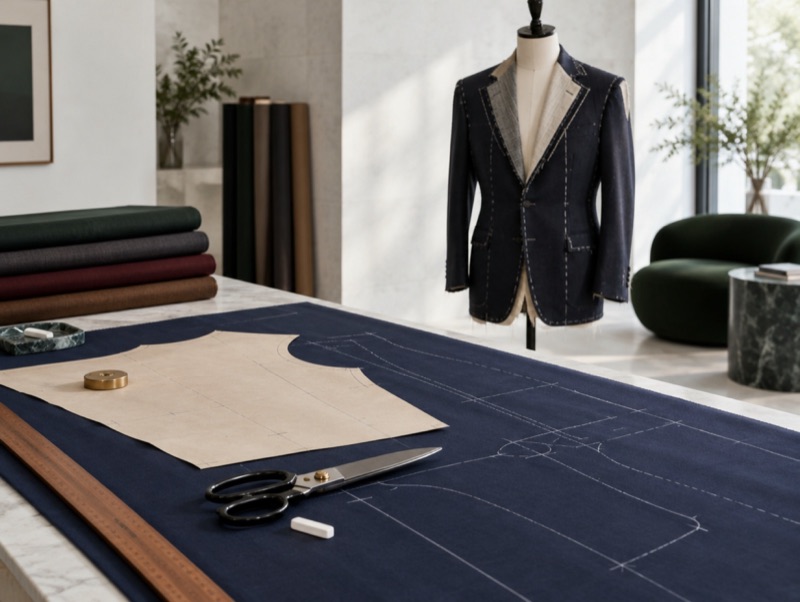
A good tailored jacket has a horsehair and wool inner layer shaped with hand stitching, cloth shaped with an iron, and repeated fittings on the body.
 02
Technique
02
Technique Pad stitching
Thousands of small diagonal stitches that curl flat cloth into a permanent three-dimensional shape.
 03
Tailoring style
03
Tailoring style Savile Row
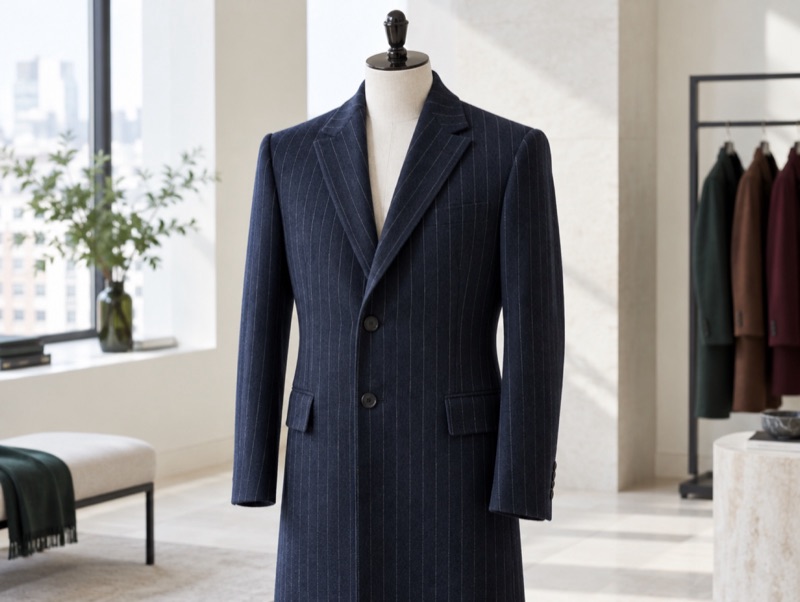
Savile Row jackets are shaped by hand around a horsehair and wool inner layer, giving defined shoulders, a nipped waist and an upright look for decades.
 04
Start here
04
Start here What full canvas means
There is a hand-shaped skeleton inside a good jacket. You can feel it in ten seconds.
 05
Technique
05
Technique Fused construction
An interlining bonded to the cloth with heat and adhesive. Fast, cheap, and the reason most suits feel like boards.
 06
Technique
06
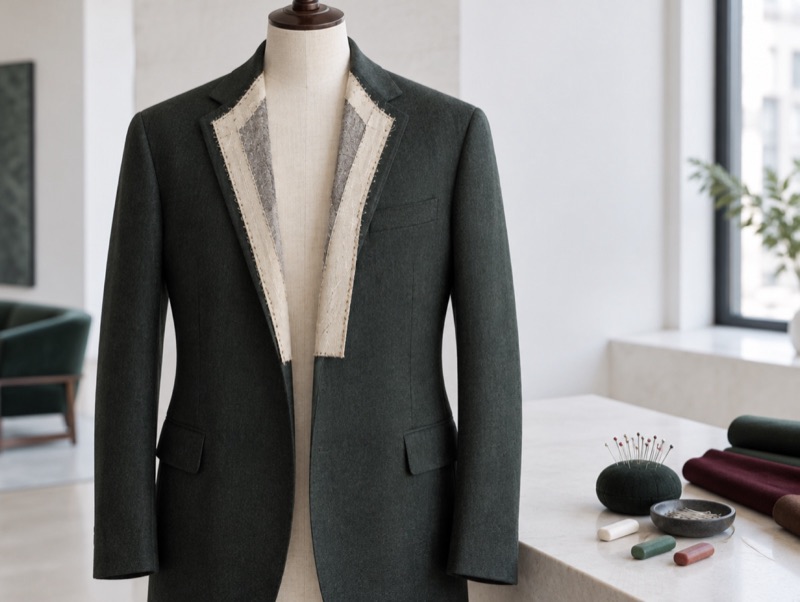
Technique Half canvas construction
Canvas through the chest and lapel, fusible below: the compromise most good ready-to-wear makes.
-
 How to tell a well-made jacket in ninety seconds
Guide
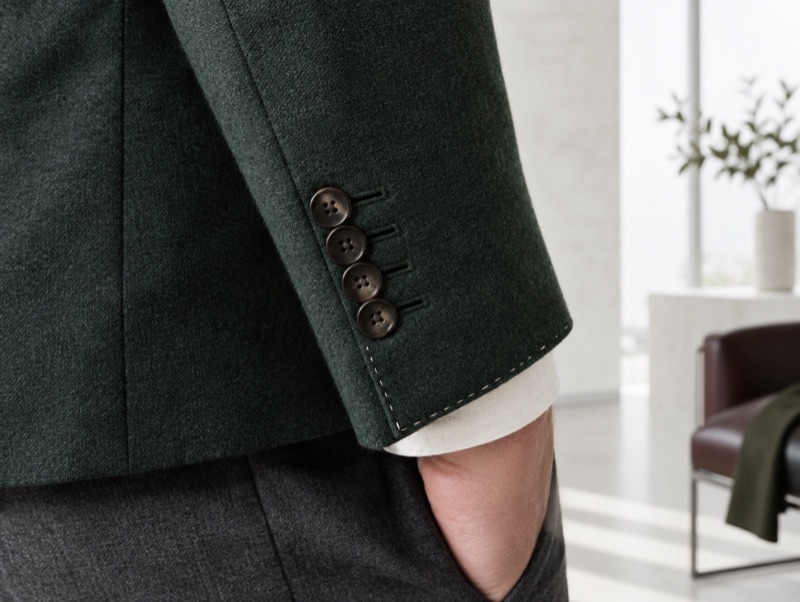
How to tell a well-made jacket in ninety seconds
GuideSix shop checks, such as buttonholes, lining, shoulder and whether patterns line up at seams, reveal how well a jacket was made.
-
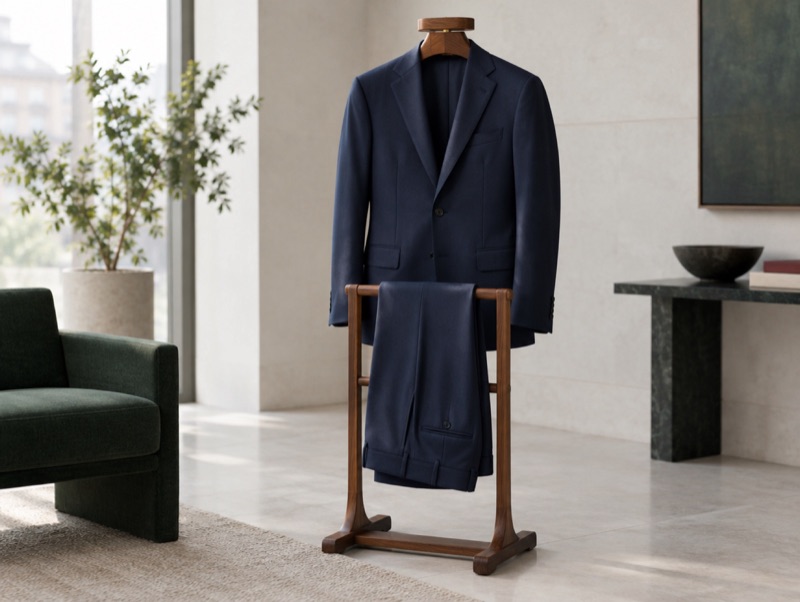 The suit
Garment
The suit
GarmentA suit is simply a jacket and trousers, sometimes with a waistcoat, made from the same cloth at once so they match exactly.
-
 Why expensive clothes cost more
Start here
Why expensive clothes cost more
Start hereA £4,000 suit costs more than a £200 one mostly because of hours of skilled handwork and fittings, more than the cloth, though brand plays a part.
-
Canvas
Glossary term
The stiffened interlining that gives a jacket its chest shape. Traditionally layers of linen, wool and horsehair, attached by stitching. See full canvas for how it works and why…
-
The pinch test
Glossary term
Pinching a jacket's front panel to feel for a third loose layer between cloth and lining. It identifies a floating canvas, and must be done low on the front as well as at the…
-
Chest piece
Glossary term
The layered haircloth-and-domette assembly inside a jacket's chest, pad-stitched by hand into a permanent curve. It is the part of a canvassed coat that actually makes the chest…
Compared with
All comparisons →Picture credits 10
- A jacket front showing its full canvas: Original art · Il Sartoriale · Il Sartoriale · Il Sartoriale original art
- A cutting table with pattern, chalk and shears: Original art · Il Sartoriale · Il Sartoriale · Il Sartoriale original art
- Rows of pad stitches on a lapel canvas: Original art · Il Sartoriale · Il Sartoriale · Il Sartoriale original art
- A structured English-cut coat on a dummy: Original art · Il Sartoriale · Il Sartoriale · Il Sartoriale original art
- A lapel pinched to feel the canvas: Original art · Il Sartoriale · Il Sartoriale · Il Sartoriale original art
- Fusible interlining pressed onto cloth: Original art · Il Sartoriale · Il Sartoriale · Il Sartoriale original art
- A jacket front showing a half canvas: Original art · Il Sartoriale · Il Sartoriale · Il Sartoriale original art
- A cuff with working buttonholes: Original art · Il Sartoriale · Il Sartoriale · Il Sartoriale original art
- A navy suit on a valet stand: Original art · Il Sartoriale · Il Sartoriale · Il Sartoriale original art
- A half-made jacket showing its hand stitching: Original art · Il Sartoriale · Il Sartoriale · Il Sartoriale original art