Technique · Construction
Fused construction
An interlining bonded to the cloth with heat and adhesive. Fast, cheap, and the reason most suits feel like boards.
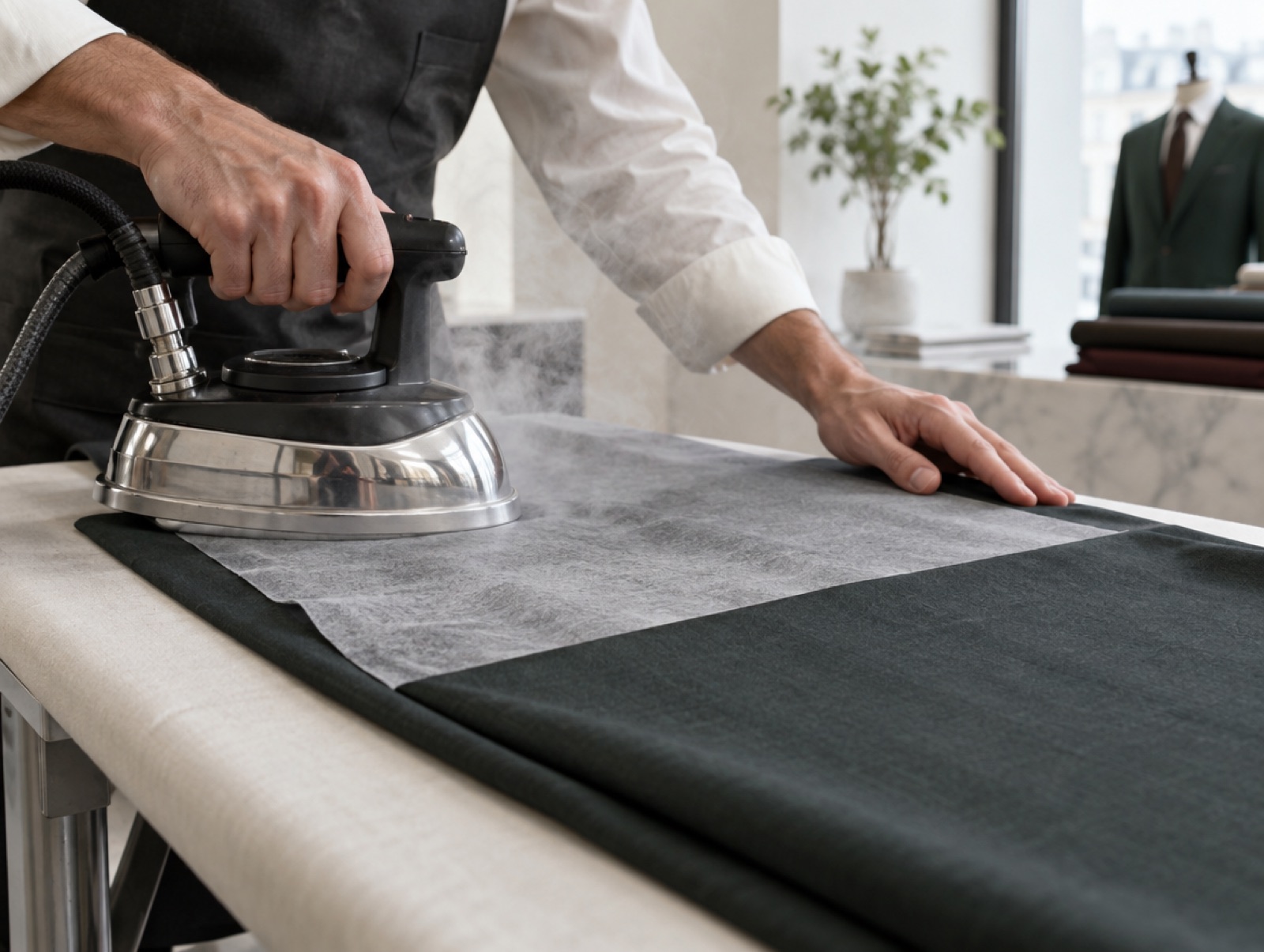
Fusing bonds a stiffening interlining directly to the back of the jacket cloth using heat and adhesive. It takes minutes rather than hours, needs no skilled hand labour, and produces a flat, stable front. It cannot mould to the wearer, cannot be altered freely, and can eventually bubble.
Why it exists
Because pad stitching a canvas by hand takes hours and fusing takes a machine and a minute. Fusible interlinings, introduced industrially in the middle of the twentieth century, are the single largest reason a suit can be sold for the price of a pair of shoes. It is not a scandal. It is an engineering trade-off, and for a great deal of clothing it is the right one. What is objectionable is charging a canvassed price for a fused garment, which happens often enough to be worth checking.
What you lose
- Drape. The cloth and interlining are one bonded layer, so the front cannot move independently or fall softly.
- Moulding. A fused front stays exactly as it was made; it never takes the wearer's shape.
- Alterability. Serious alterations mean cutting through a bonded panel.
- Longevity, eventually. Adhesive degrades (heat, steam, dry cleaning, time) and a delaminated front shows as bubbles or ripples that cannot be repaired.
How to identify it
Pinch the front panel below the buttonhole. If the cloth and lining feel like one stiff sheet with nothing loose between them, it is fused. Look also at the lapel: a fused lapel tends to have a sharp pressed crease at the fold, where a canvassed one rolls in a soft curve.
Manufacturers rarely state fusing on a label. Full canvas is advertised because it is expensive; fusing is signalled by silence.
Modern fusibles are better than the reputation
The horror stories about bubbling fronts come largely from the 1970s and 1980s, when adhesives were poorer and dry-cleaning solvents harsher. Contemporary fusibles from good suppliers are considerably more stable, and a well-made fused jacket from a serious factory will not delaminate in normal use. The remaining objections stand: it cannot mould to the wearer, it cannot drape, and it cannot be altered freely. Those are permanent properties of the construction rather than defects that better glue will fix.
At a glance
Who works with it
Houses and mills on this site with a documented connection to Fused construction.
 01
Technique
01
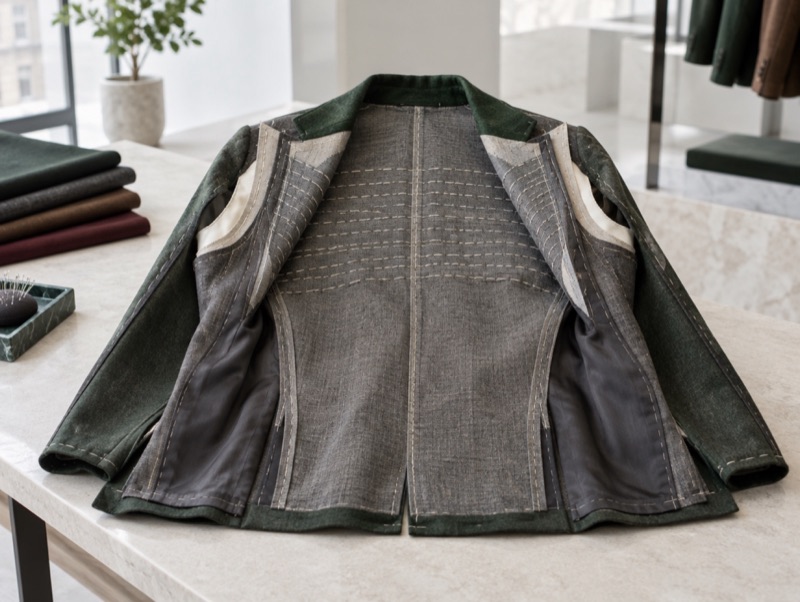
Technique Full canvas construction
A hand-shaped skeleton of horsehair and wool, sewn (never glued) between cloth and lining.
 02
Technique
02
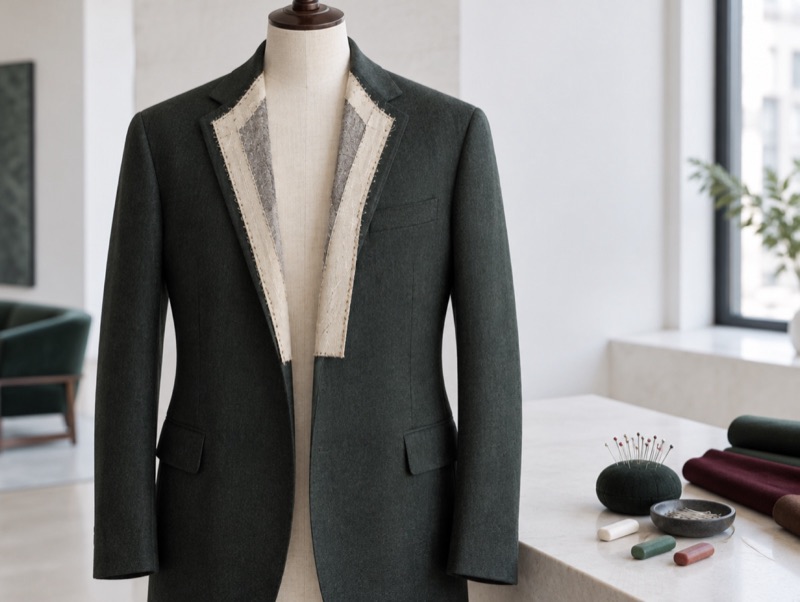
Technique Half canvas construction
Canvas through the chest and lapel, fusible below: the compromise most good ready-to-wear makes.
 03
History
03
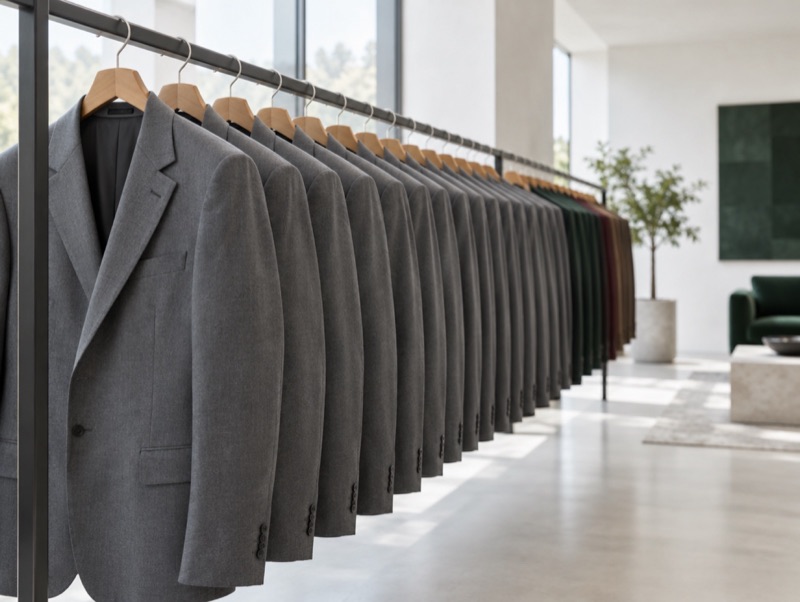
History The rise of ready-to-wear
Ready-made clothing took off in the nineteenth century when making uniforms, especially for the American Civil War, showed how body sizes vary.
 04
Start here
04
Start here What full canvas means
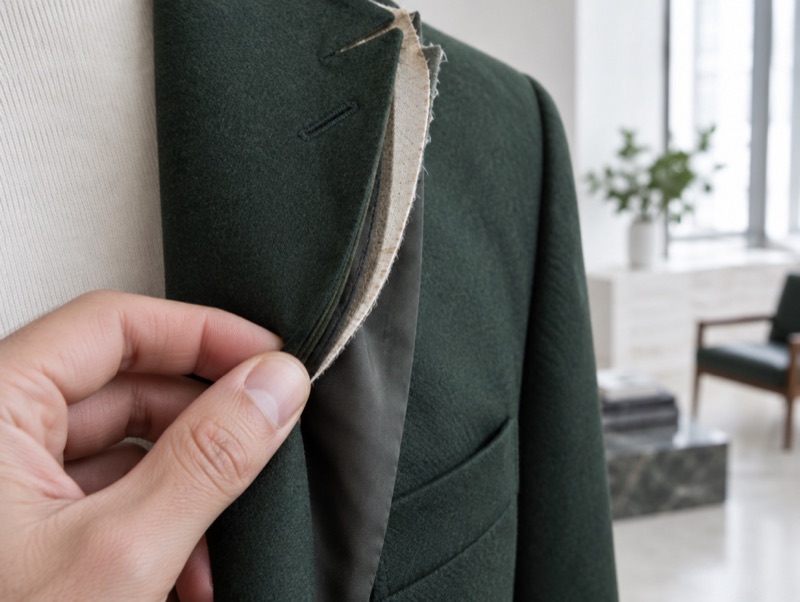
There is a hand-shaped skeleton inside a good jacket. You can feel it in ten seconds.
 05
Start here
05
Start here Why expensive clothes cost more
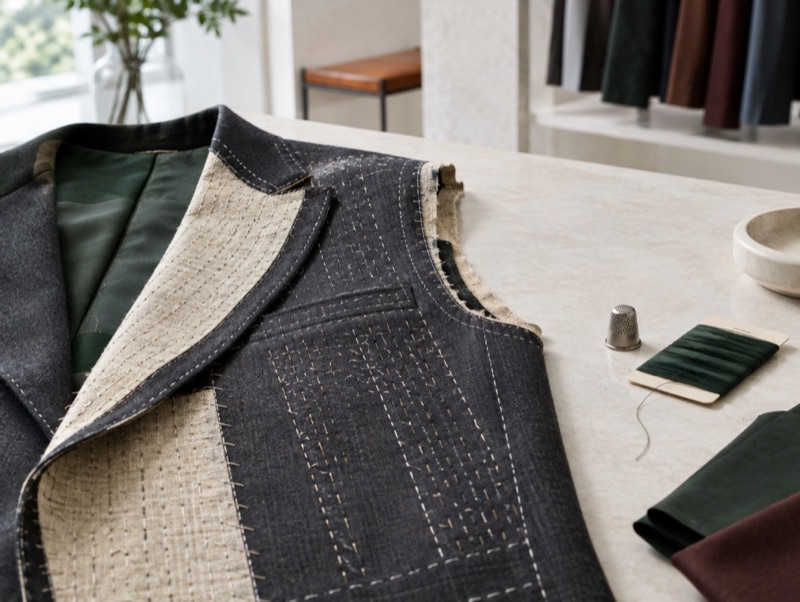
A £4,000 suit costs more than a £200 one mostly because of hours of skilled handwork and fittings, more than the cloth, though brand plays a part.
 06
Technique
06
Technique Pad stitching
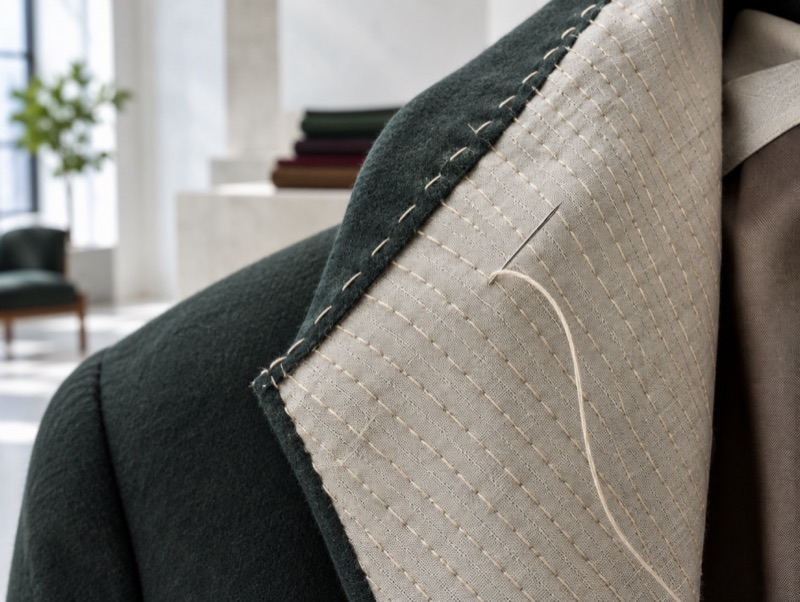
Thousands of small diagonal stitches that curl flat cloth into a permanent three-dimensional shape.
-
 The suit
Garment
The suit
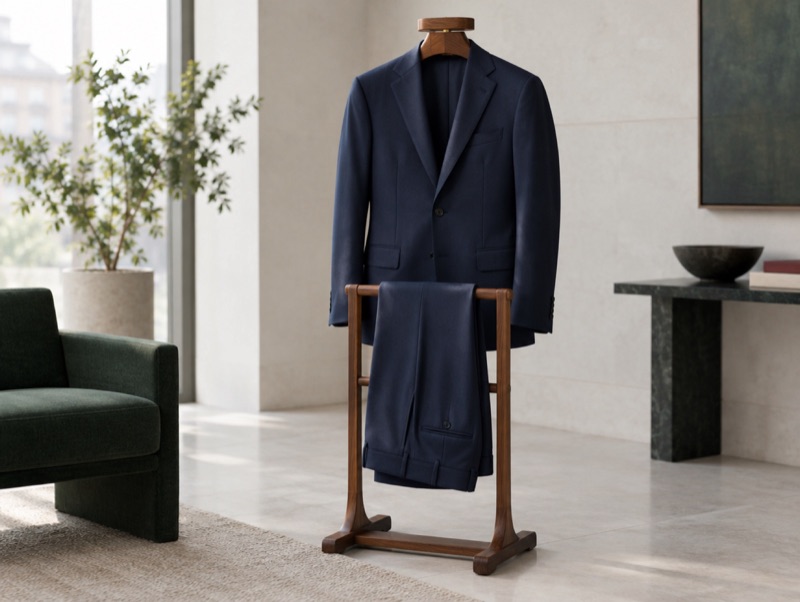
GarmentA suit is simply a jacket and trousers, sometimes with a waistcoat, made from the same cloth at once so they match exactly.
-
Delamination
Glossary term
The failure of a fused interlining, where the adhesive gives way and the outer cloth bubbles. Not repairable. The characteristic failure mode of fused construction.
-
The pinch test
Glossary term
Pinching a jacket's front panel to feel for a third loose layer between cloth and lining. It identifies a floating canvas, and must be done low on the front as well as at the…
Picture credits 8
- Fusible interlining pressed onto cloth: Original art · Il Sartoriale · Il Sartoriale · Il Sartoriale original art
- A jacket front showing its full canvas: Original art · Il Sartoriale · Il Sartoriale · Il Sartoriale original art
- A jacket front showing a half canvas: Original art · Il Sartoriale · Il Sartoriale · Il Sartoriale original art
- A long rail of identical suits in a showroom: Original art · Il Sartoriale · Il Sartoriale · Il Sartoriale original art
- A lapel pinched to feel the canvas: Original art · Il Sartoriale · Il Sartoriale · Il Sartoriale original art
- A half-made jacket showing its hand stitching: Original art · Il Sartoriale · Il Sartoriale · Il Sartoriale original art
- Rows of pad stitches on a lapel canvas: Original art · Il Sartoriale · Il Sartoriale · Il Sartoriale original art
- A navy suit on a valet stand: Original art · Il Sartoriale · Il Sartoriale · Il Sartoriale original art