Technique · Shoemaking
Goodyear welting
Goodyear welting is the durable machine-stitched construction used on good English and American shoes, letting a worn sole be replaced without touching the top.
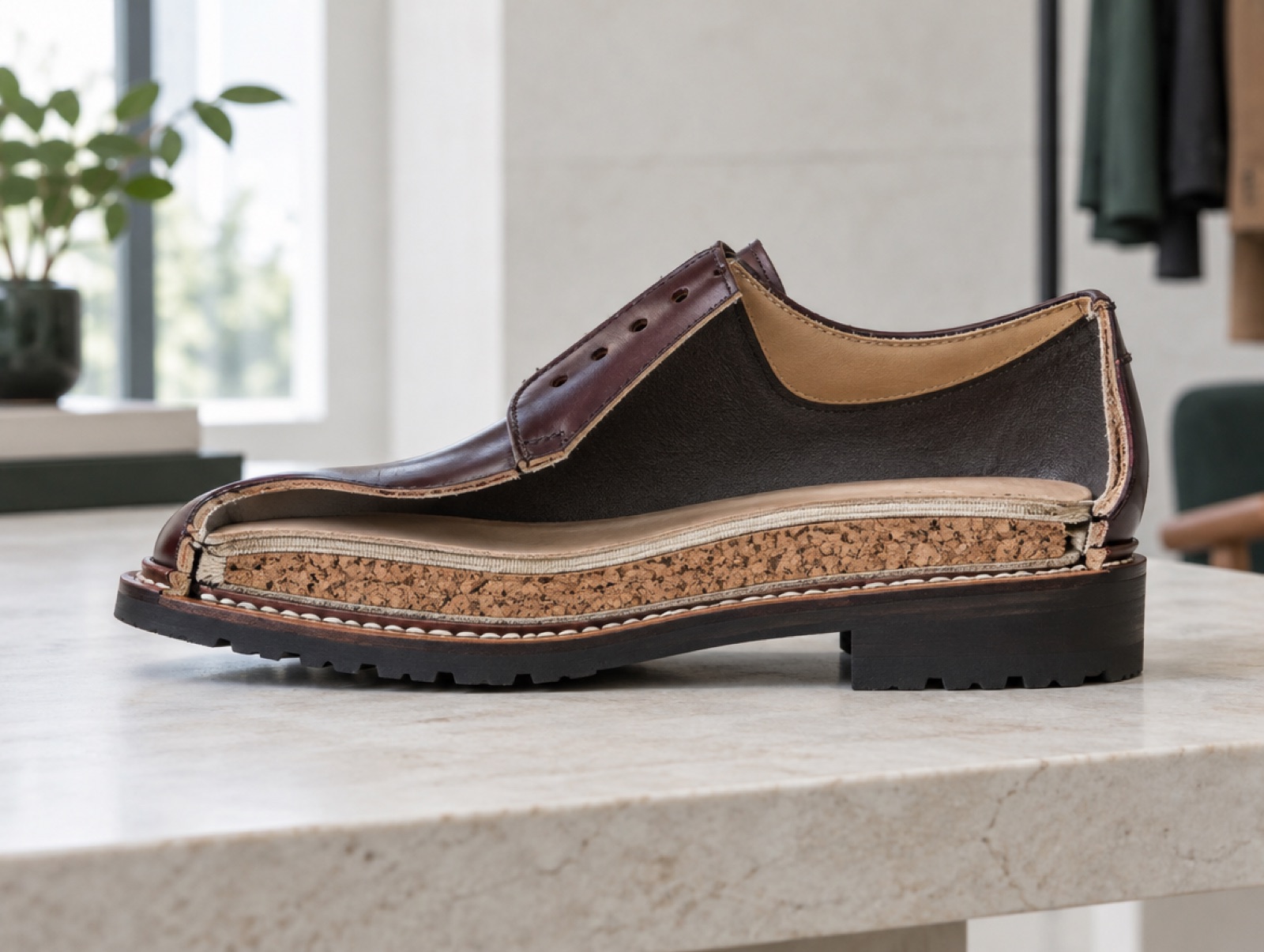
Goodyear welting stitches the upper and a canvas rib on the insole to a leather welt, then stitches the outsole to the welt. The two seams are independent, so the sole can be replaced without touching the upper. It is machine work, it is durable, and it is the standard construction of good English and American shoes.
How it works
A canvas rib, gemming, is glued to the underside of the insole. The welt, the upper and the lining are stitched to that rib. The space inside the rib is filled with cork or a similar material, and the outsole is then stitched to the welt from the outside.
Because the sole is attached to the welt rather than to the upper, a cobbler can cut the sole stitching, remove the sole, and stitch on a new one without disturbing the shoe's structure. That is the entire economic argument for an expensive shoe: five resolings makes a £600 pair cheaper per year than a £120 pair replaced annually.
Where it is weaker than hand welting
The gemming. It is glued canvas, and it is the one component that can fail, usually after several resolings, when it tears away from the insole and the shoe becomes uneconomic to repair. Hand welting has no gemming, which is why it lasts longer.
Goodyear construction also needs more room. The rib and the cork filling add bulk under the foot, so the waist of the shoe is thicker and the sole less flexible when new. Both are trade-offs for a construction that can be made in quantity by machine.
The invention
The machine is named for Charles Goodyear Jr., who developed it in the 1870s from earlier welt-stitching machinery, and whose father is the Goodyear of vulcanised rubber. It arrived at the moment Northampton was industrialising, and it is the reason a welted shoe stopped being a luxury and became a category.
When to resole
Before the sole wears through, not after. Once a hole opens, water reaches the welt stitching and the insole, and what would have been a routine resole becomes a rebuild, or the end of the shoe.
Look at the sole under the ball of the foot every few months. When the leather is thin enough that the stitching is starting to wear on the outsole, book the repair.
At a glance
Who works with it
Houses and mills on this site with a documented connection to Goodyear welting.
 01
Shoemaker
01
Shoemaker Crockett & Jones
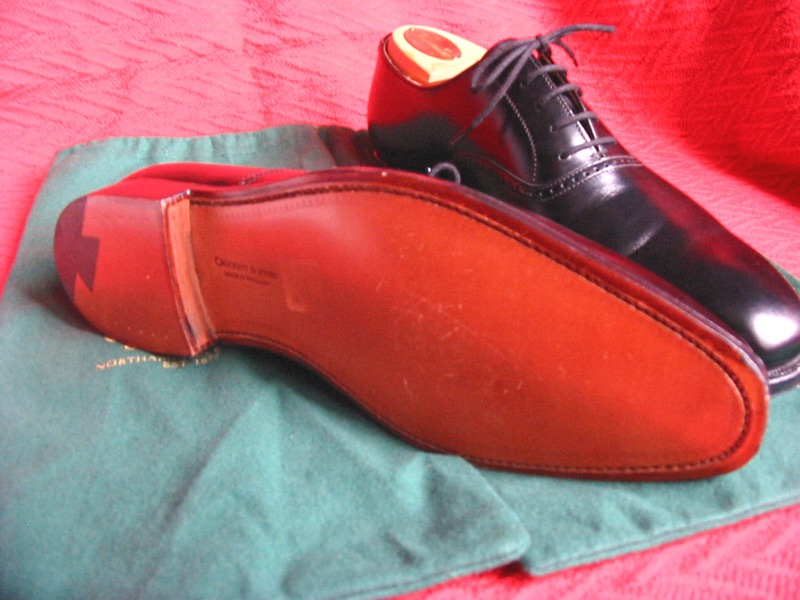
Crockett & Jones is a family-owned Northampton shoemaker whose wide range runs from standard well-made shoes to a much more finely finished premium line.
 02
Shoemaker
02
Shoemaker Edward Green
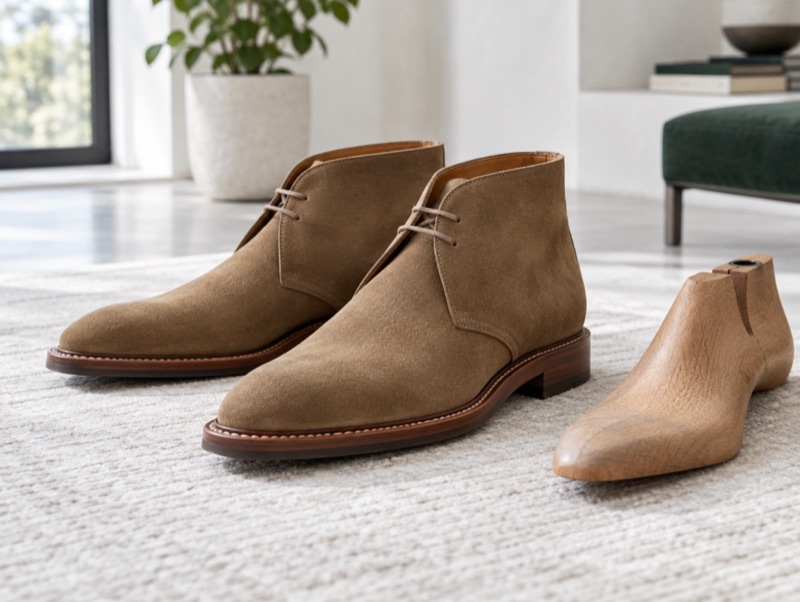
Edward Green is a Northampton shoemaker, around since 1890, making top-tier off-the-shelf shoes with far more hand shaping and finishing than most factory shoes.
 03
Technique
03
Technique Hand welting
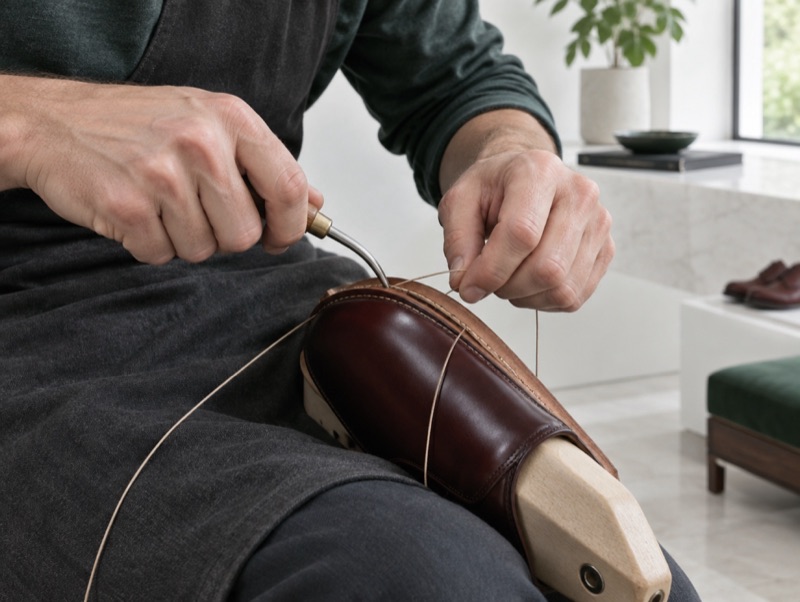
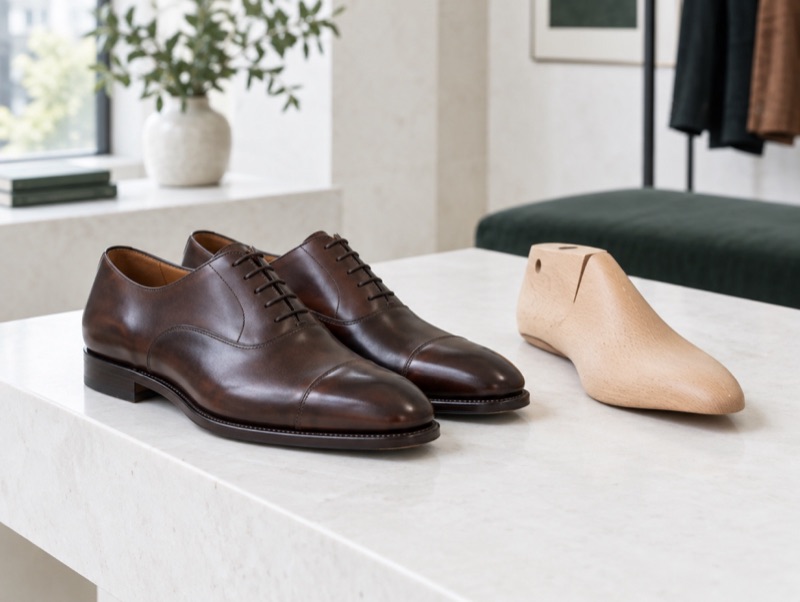
The shoemaking equivalent of a hand-padded canvas: slow, invisible, and the basis of everything above it.
 04
History
04
History How men's shoes reached their present form
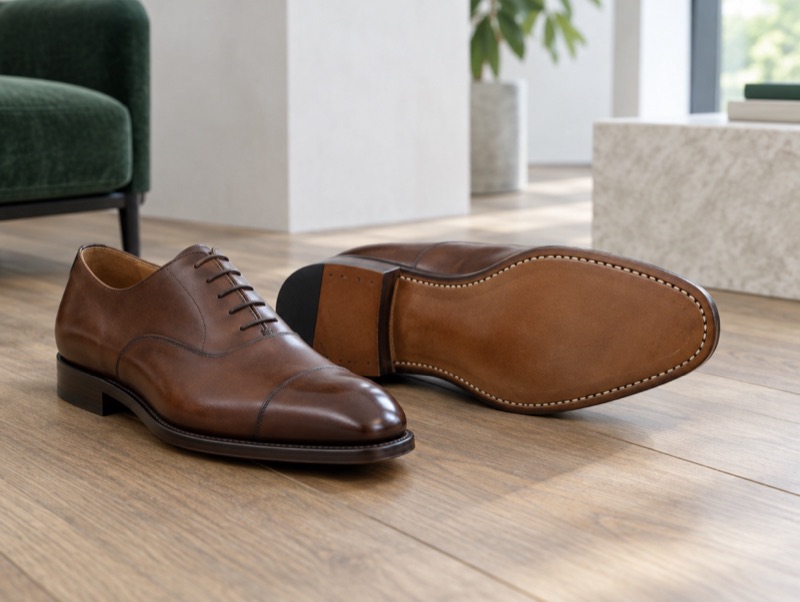
Ordinary dress shoes owe a lot to the 1870s Goodyear welting machine, which let machines build shoes that could still be repaired.
 05
Start here
05
Start here Understanding shoes
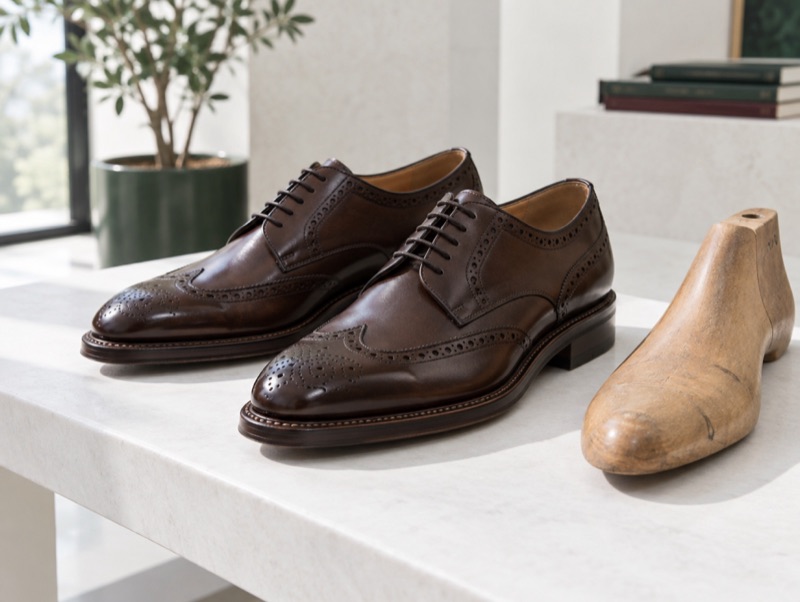
A shoe's construction decides whether it can be resoled, which is what makes an expensive pair an investment rather than an extravagance.
 06
Shoemaker
06
Shoemaker Alden
New England's surviving welted shoemaker, and the house most associated with shell cordovan.
-
 Carmina
Shoemaker · 1866
Carmina
Shoemaker · 1866Mallorcan Goodyear-welted shoes at a price that reset expectations for the category.
-
 Church's
Shoemaker · Northampton · 1873
Church's
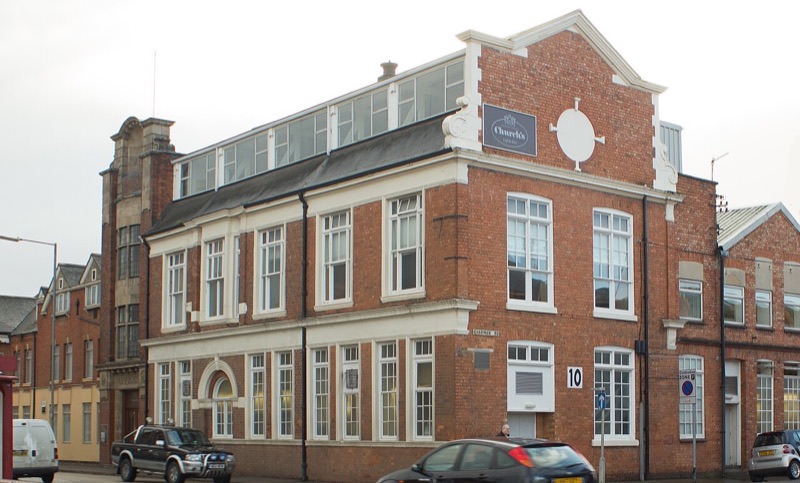
Shoemaker · Northampton · 1873Church's is the best-known English shoe brand, owned by Prada since 1999, and quality now varies across its range, so the name alone guarantees less.
-
Charles Goodyear Jr.
Craftsman
Mechanised the welt in the 1870s and made a repairable shoe affordable.
-
Gemming
Glossary term
The canvas rib glued to the insole in Goodyear-welted construction, to which the welt is stitched. The one component that can fail, usually after several resolings.
-
Goodyear machine
Glossary term
The welt-stitching machinery developed in the 1870s by Charles Goodyear Jr. It made welted construction producible in quantity, which is what turned a repairable shoe from a…
-
Welt
Glossary term
The strip of leather stitched between the upper and the sole in welted construction. It carries the sole stitching, which is why the sole can be replaced without disturbing the…
Compared with
All comparisons →Picture credits 9
- A welted shoe cut in cross-section: Original art · Il Sartoriale · Il Sartoriale · Il Sartoriale original art
- Crockett & Jones men's dress shoes, type Dalton, black calf leather 02: Photograph · OlafJanssen · Wikimedia Commons · CC BY-SA 3.0
- An illustration of a welted shoe of the kind the house makes. Not a photograph of the house's own work.: Original art · Il Sartoriale · Il Sartoriale · Il Sartoriale original art
- Hand-stitching a welt to an insole: Original art · Il Sartoriale · Il Sartoriale · Il Sartoriale original art
- New welted oxfords beside a last: Original art · Il Sartoriale · Il Sartoriale · Il Sartoriale original art
- An oxford turned to show its welted sole: Original art · Il Sartoriale · Il Sartoriale · Il Sartoriale original art
- An illustration of a welted shoe of the kind the house makes. Not a photograph of the house's own work.: Original art · Il Sartoriale · Il Sartoriale · Il Sartoriale original art
- Tienda carmina: Photograph · carmina shoemaker · Wikimedia Commons · CC BY-SA 4.0
- Church's Works in St James Northampton: Photograph · Cj1340 · Wikimedia Commons · CC BY-SA 3.0