Technique · Construction
Half canvas construction
Canvas through the chest and lapel, fusible below: the compromise most good ready-to-wear makes.
A half-canvassed jacket has a floating canvas in the chest and lapel, where shape matters most, and a fused interlining below the chest, where it matters least. It costs considerably less than full canvas, keeps most of the visible benefit, and is what the majority of well-made ready-to-wear uses.
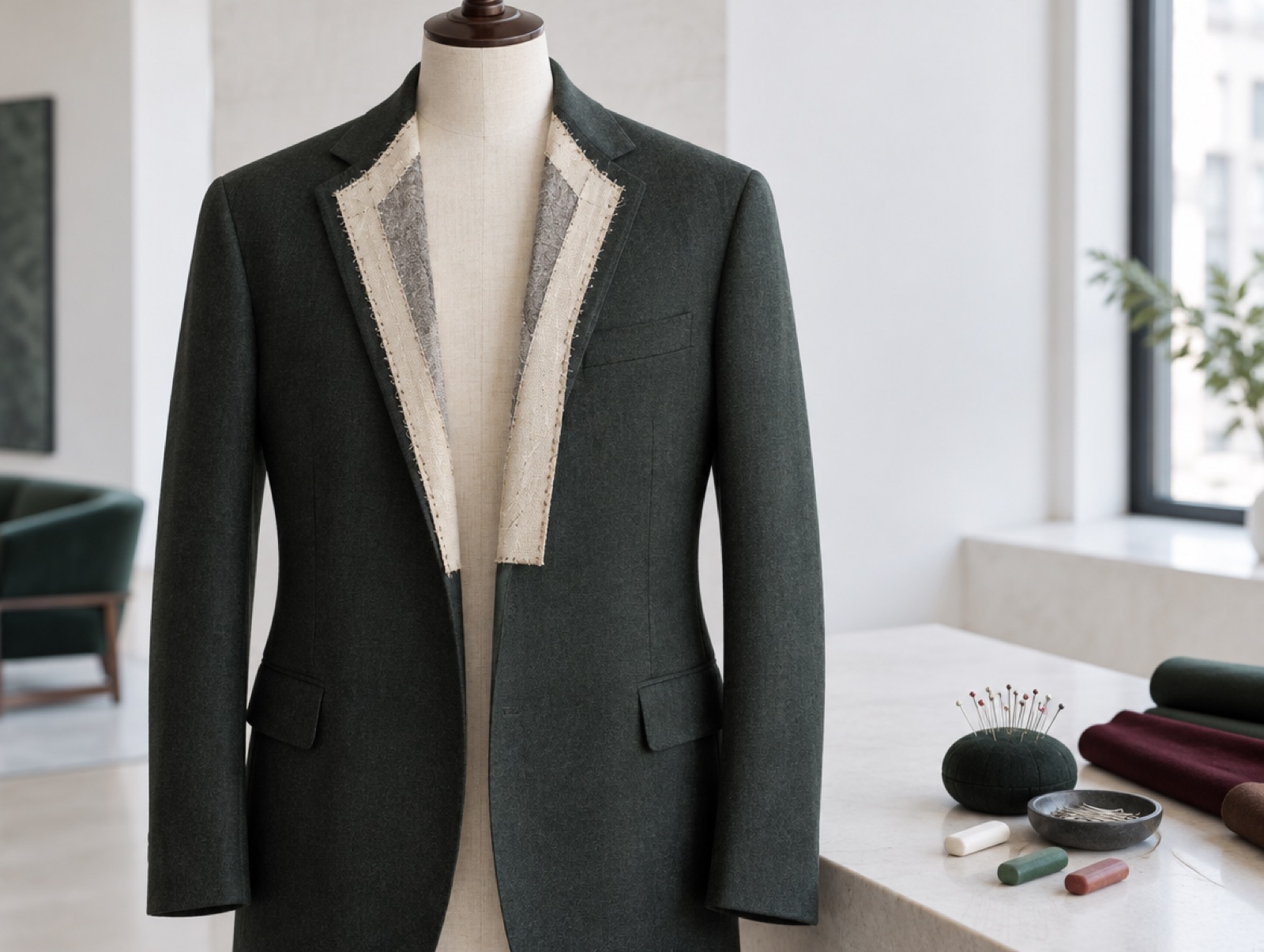
Where the canvas stops
The canvas covers the chest and runs up into the lapel, then ends somewhere around the level of the second button. Below that the front is fused. Since the chest and lapel do nearly all the visible shaping work, and the skirt of the jacket mostly just hangs, the compromise is a sensible one rather than a cynical one. The honest summary: half canvas gets you most of the roll in the lapel and most of the shape in the chest. What it does not get you is the full drape of the front panel, or the ability to alter the jacket as freely.
The failure mode
The fused portion can still delaminate (the adhesive gives way and the cloth bubbles) and when it does it is in the least visible part of the coat, which is some consolation. Modern fusibles are considerably better than those of the 1980s, and delamination on a good garment is now uncommon rather than expected.
In price terms, half canvas is the sensible default. Below roughly the middle of the ready-to-wear market it is the best construction realistically available, and a well-cut half-canvassed jacket from a good maker beats a poorly cut fully canvassed one comfortably.
Where the money goes
Half canvas costs perhaps a third of what full canvas costs in labour, and it buys most of the visible benefit: the lapel still rolls, the chest still holds a shape, and the front still has some independence from the lining. What it gives up is the drape of the lower front and the freedom to alter the garment radically.
For a jacket in the middle of the ready-to-wear market this is the right engineering decision, and a maker who states it plainly is being straight with the customer. The failure mode is a house charging full-canvas money and staying quiet about which one you are getting.
At a glance
Who works with it
Houses and mills on this site with a documented connection to Half canvas construction.
 01
Technique
01
Technique Full canvas construction
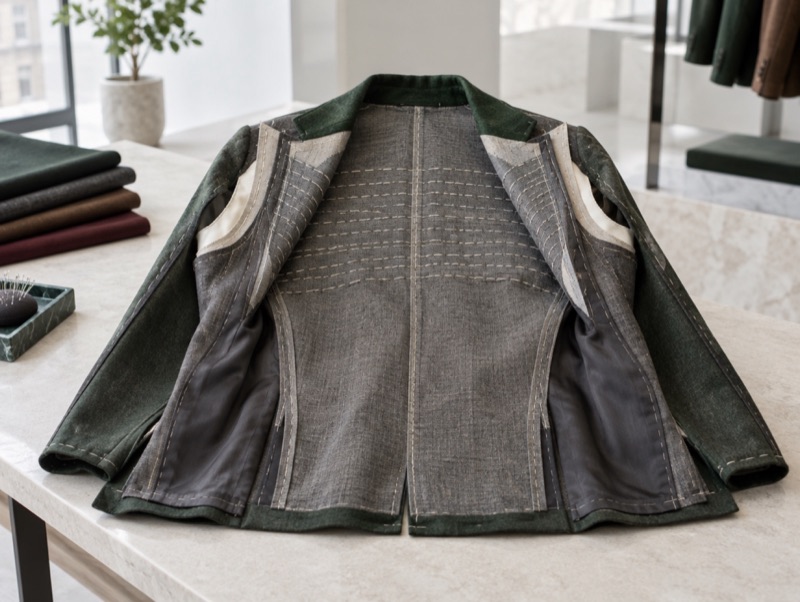
A hand-shaped skeleton of horsehair and wool, sewn (never glued) between cloth and lining.
 02
Technique
02
Technique Fused construction
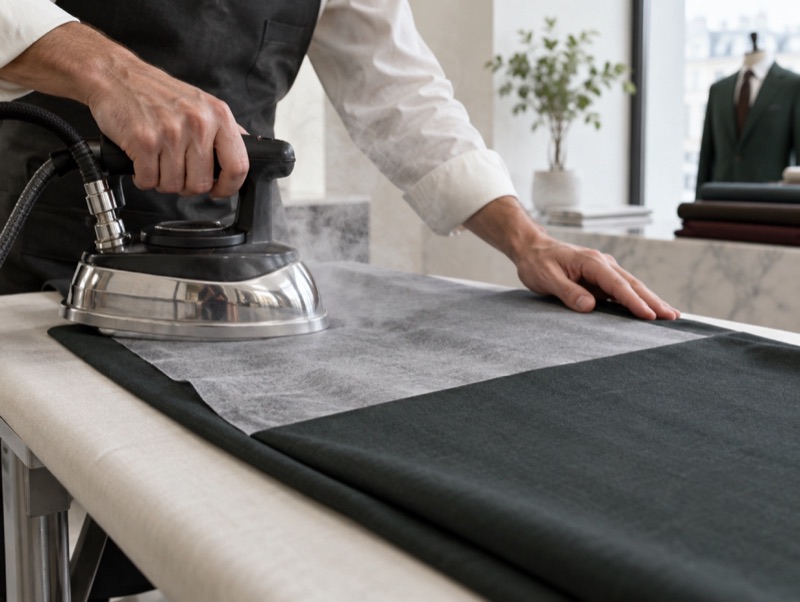
An interlining bonded to the cloth with heat and adhesive. Fast, cheap, and the reason most suits feel like boards.
 03
Start here
03
Start here What full canvas means
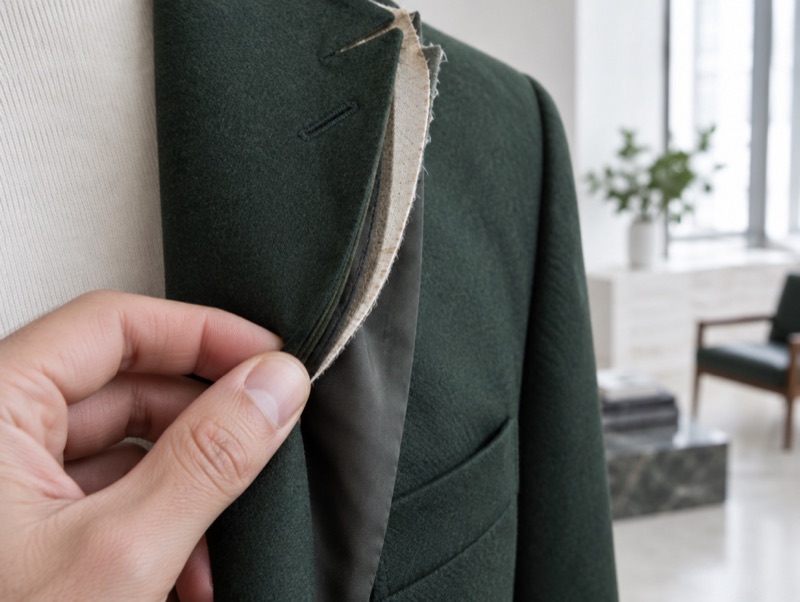
There is a hand-shaped skeleton inside a good jacket. You can feel it in ten seconds.
 04
Start here
04
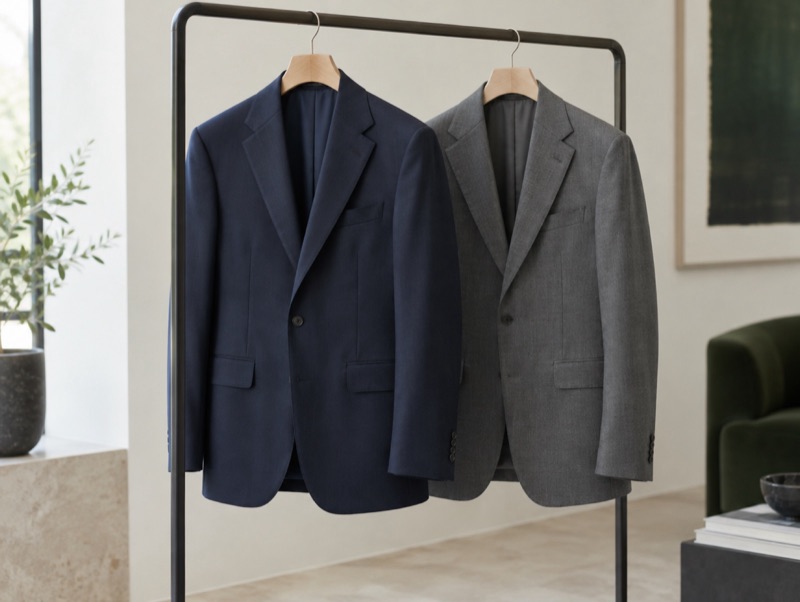
Start here Choosing your first serious suit
Navy or mid-grey, plain, eleven ounces, half canvas at least, and spend the difference on alterations.
 05
Technique
05
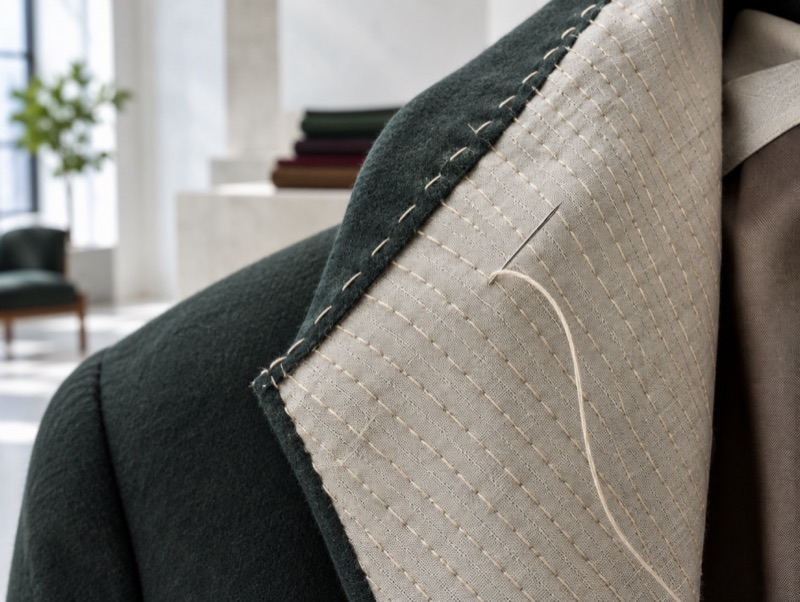
Technique Pad stitching
Thousands of small diagonal stitches that curl flat cloth into a permanent three-dimensional shape.
 06
Garment
06
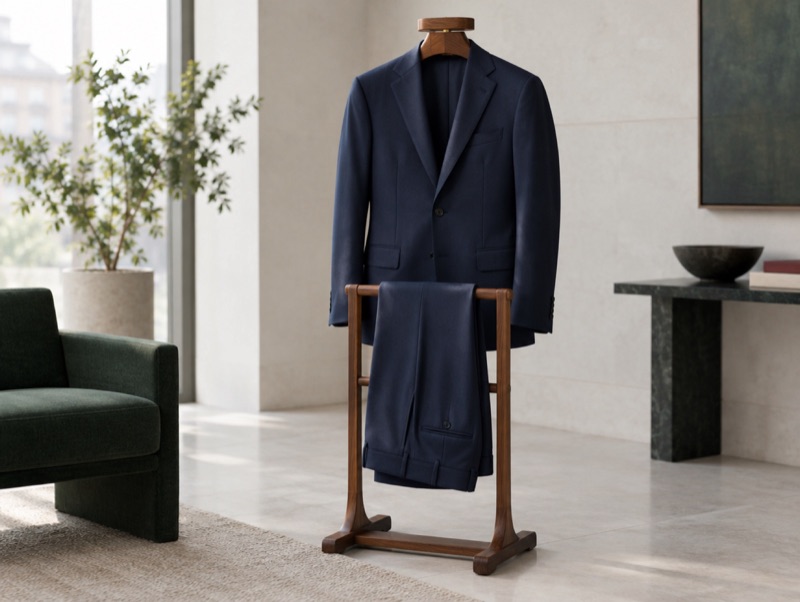
Garment The suit
A suit is simply a jacket and trousers, sometimes with a waistcoat, made from the same cloth at once so they match exactly.
-
 The sport coat
Garment
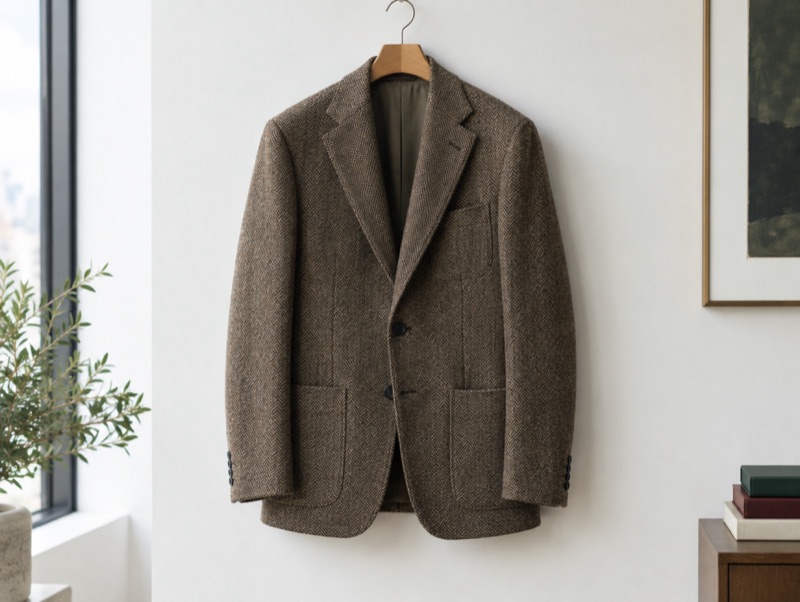
The sport coat
GarmentA sport coat is a jacket worn with non-matching trousers, traditionally in textured cloth like tweed with patch pockets and a softer feel than suit jackets.
-
The pinch test
Glossary term
Pinching a jacket's front panel to feel for a third loose layer between cloth and lining. It identifies a floating canvas, and must be done low on the front as well as at the…
-
Canvas
Glossary term
The stiffened interlining that gives a jacket its chest shape. Traditionally layers of linen, wool and horsehair, attached by stitching. See full canvas for how it works and why…
-
Delamination
Glossary term
The failure of a fused interlining, where the adhesive gives way and the outer cloth bubbles. Not repairable. The characteristic failure mode of fused construction.
Compared with
All comparisons →Picture credits 8
- A jacket front showing a half canvas: Original art · Il Sartoriale · Il Sartoriale · Il Sartoriale original art
- A jacket front showing its full canvas: Original art · Il Sartoriale · Il Sartoriale · Il Sartoriale original art
- Fusible interlining pressed onto cloth: Original art · Il Sartoriale · Il Sartoriale · Il Sartoriale original art
- A lapel pinched to feel the canvas: Original art · Il Sartoriale · Il Sartoriale · Il Sartoriale original art
- A navy suit and a grey suit side by side: Original art · Il Sartoriale · Il Sartoriale · Il Sartoriale original art
- Rows of pad stitches on a lapel canvas: Original art · Il Sartoriale · Il Sartoriale · Il Sartoriale original art
- A navy suit on a valet stand: Original art · Il Sartoriale · Il Sartoriale · Il Sartoriale original art
- A tweed sport coat on a hanger: Original art · Il Sartoriale · Il Sartoriale · Il Sartoriale original art