Technik · Construction
Hand cutting
One person, one pair of shears, one layer of cloth at a time.
Hand cutting means the cloth is cut by a person with shears, following a pattern, one garment at a time, as opposed to a factory cutting many layers at once with a machine or laser. It allows the cutter to place the pattern with regard to the cloth's pattern, nap and any flaw in the piece.
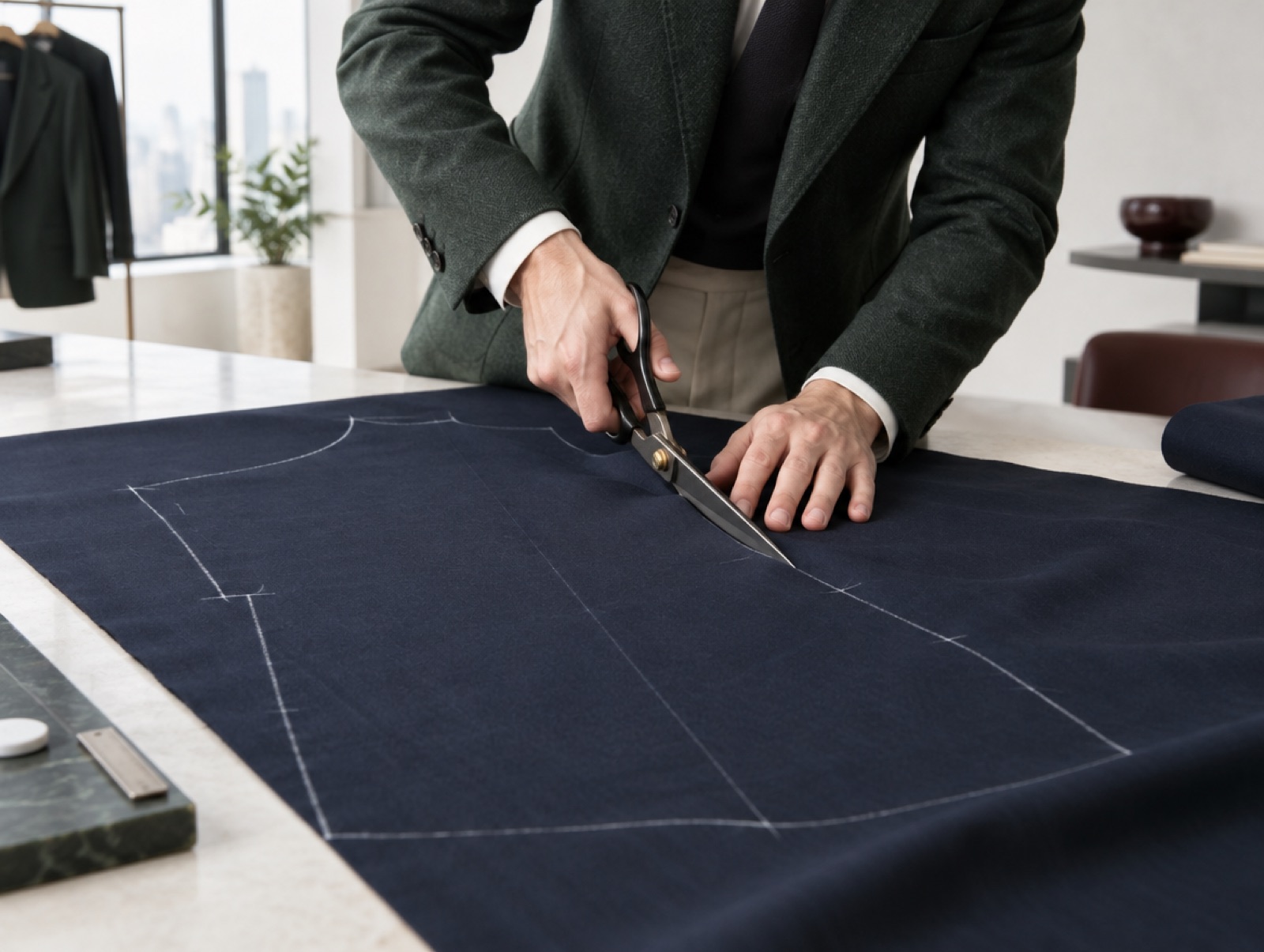
What the cutter is deciding
Where to put the pattern pieces. On a striped or checked cloth that means matching across the seams, across the pockets, and around the collar: decisions that determine whether a checked jacket looks made or assembled. On a napped cloth it means running every piece the same way, so the colour does not shift between panels. And on any cloth it means working around the small flaws every woven piece contains.
A layered machine cut cannot make those decisions individually. It is faster and more consistent, and for plain cloth in a factory it is entirely sensible.
Inlays
A hand-cut bespoke garment is cut with inlays (extra cloth left in the seams, particularly at the centre back, the side seams, the seat and the sleeve) so it can be let out later. A factory garment is cut with minimal seam allowance because cloth is the largest material cost and inlays waste it. This is the practical reason a bespoke suit can be altered for twenty years and a cheap one cannot be altered at all. It is decided at the cutting table, before a single stitch is sewn.
What it costs in cloth
Cutting one garment at a time, with inlays, matching a pattern, and working around flaws uses noticeably more cloth than layered machine cutting. A bespoke two-piece suit typically takes something over three metres where a factory might use less; on a bold check it can be considerably more.
The customer pays for that cloth. It is a real part of why bespoke costs what it does, and it is rarely itemised.
Auf einen Blick
Wer damit arbeitet
Häuser und Manufakturen auf dieser Site mit einer dokumentierten Verbindung zu Hand cutting.
 01
Technik
01
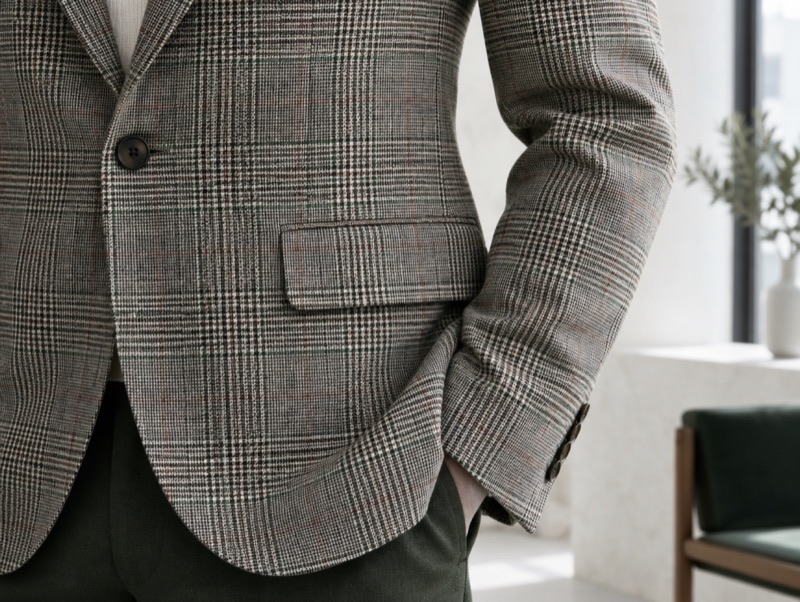
Technik Pattern matching
Pattern matching means lining up stripes or checks across seams and pockets so the design looks unbroken, a quick sign of careful making.
 02
Technik
02
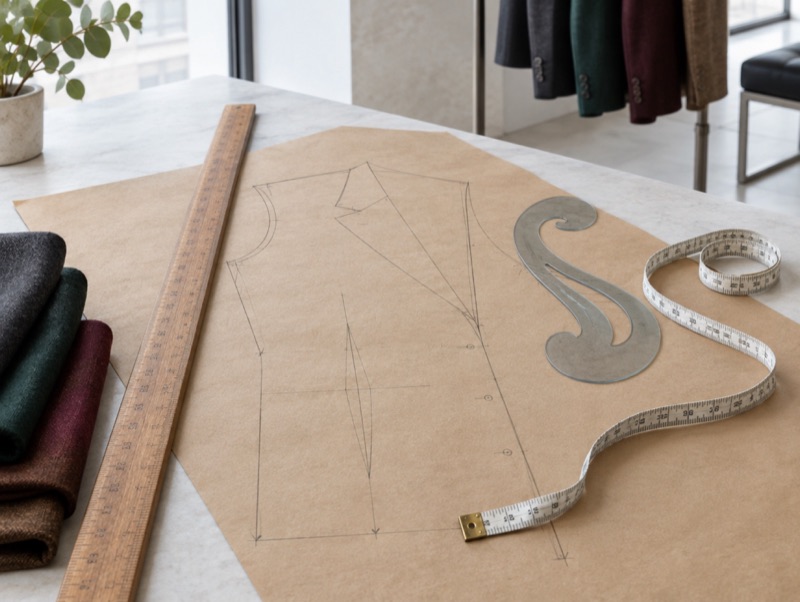
Technik Pattern drafting
Turning a set of measurements and a look at a body into flat paper shapes. The part that decides everything.
 03
Technik
03
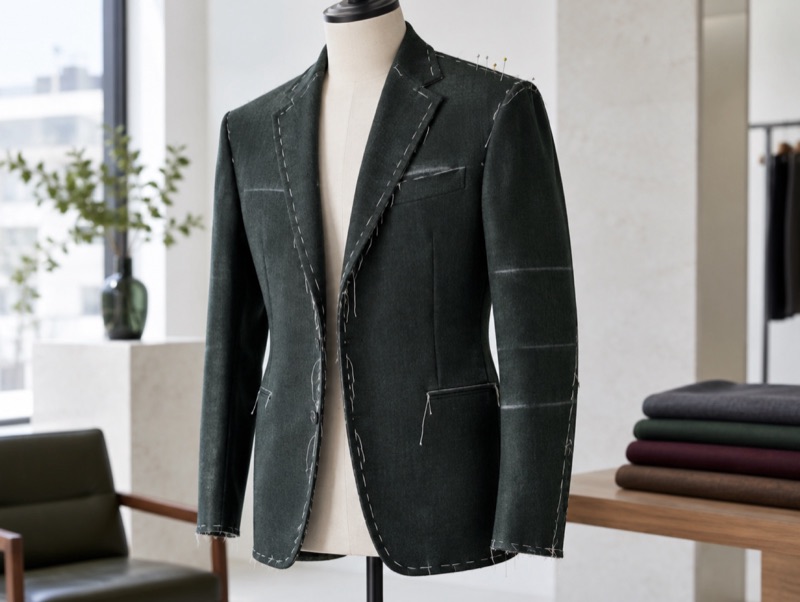
Technik The basted fitting
A garment loosely tacked together, tried on, marked in chalk, and then taken apart again.
 04
Kleidungsstück
04
Kleidungsstück The suit
A suit is simply a jacket and trousers, sometimes with a waistcoat, made from the same cloth at once so they match exactly.
Bildnachweise 5
- Shears cutting chalk-marked cloth: Original art · Il Sartoriale · Il Sartoriale · Il Sartoriale original art
- A check matched across a pocket flap: Original art · Il Sartoriale · Il Sartoriale · Il Sartoriale original art
- A paper pattern drawn on brown paper: Original art · Il Sartoriale · Il Sartoriale · Il Sartoriale original art
- A basted jacket marked in chalk: Original art · Il Sartoriale · Il Sartoriale · Il Sartoriale original art
- A navy suit on a valet stand: Original art · Il Sartoriale · Il Sartoriale · Il Sartoriale original art