Technique · Shoemaking
Hand lasting
Hand lasting is pulling wet leather over a wooden foot form with pincers, varying the tension by area for a closer, cleaner shape than machines give.
Lasting is stretching the shoe's upper over the last and fixing it there while it dries into shape. Done by hand with pincers, the maker can pull each area to a different tension: tight over the toe, eased at the joint, which is what produces a close waist and a clean line. Machine lasting applies uniform force.
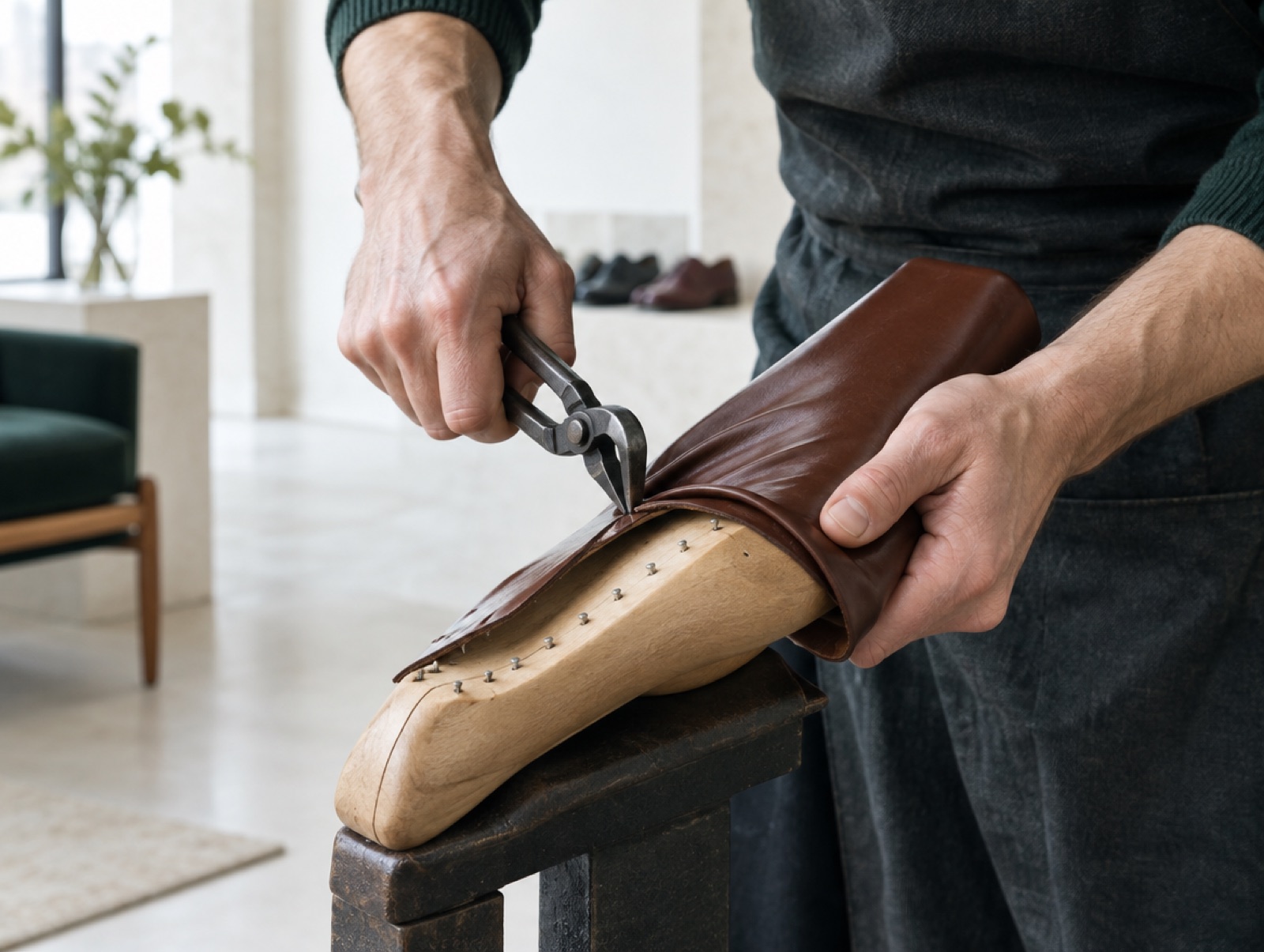
The operation
The upper is dampened, drawn over the last with lasting pincers, and tacked or stitched down at the insole. As it dries it takes the last's shape permanently. Everything about how a finished shoe looks (the line of the toe, the closeness of the waist, whether the vamp is smooth or wrinkled) is decided here.
Hand lasting allows the maker to vary the pull. The waist can be drawn in hard for a sculpted shape while the joint is left with enough room for the foot to splay. A machine cannot make that distinction.
The last itself
In bespoke shoemaking the last is carved for one customer's feet (both of them, which are never the same) from measurements, tracings and observation of the foot's shape and the way it stands. It is kept by the maker, adjusted after the trial shoe, and used for every subsequent pair. This is the shoemaking equivalent of a tailor's pattern, and the same question applies: ask what happens to it if you stop ordering.
How long the shoe stays on the last
Longer is better. Leather takes its shape as it dries, and a shoe left on the last for weeks holds that shape far better than one pulled off after a day. Bespoke makers commonly leave a lasted shoe for a fortnight or more; factories cannot afford to. This is one of the quiet differences between price tiers that never appears in any specification, and it is a large part of why an expensive shoe keeps its line after five years.
At a glance
Who works with it
Houses and mills on this site with a documented connection to Hand lasting.
 01
Shoemaker
01
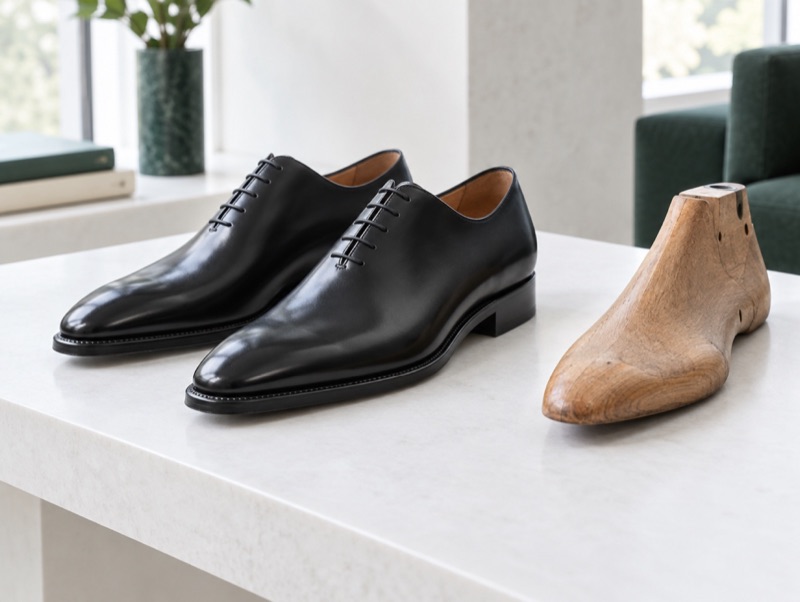
Shoemaker Saint Crispin's
Austrian method, Romanian workshop, and a made-to-order shoe close to bespoke in construction.
 02
Technique
02
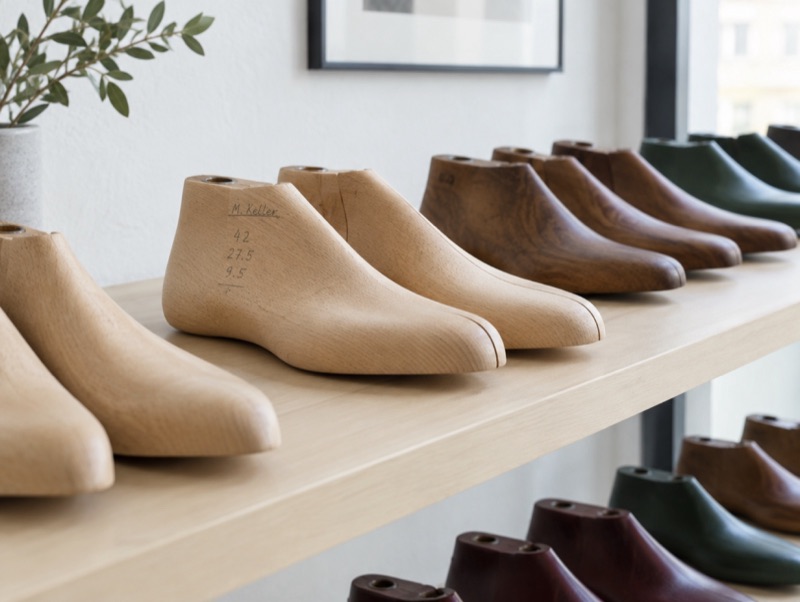
Technique The last
A last is the designed wooden foot form a shoe is built around, and it sets how the shoe fits and looks.
 03
Technique
03
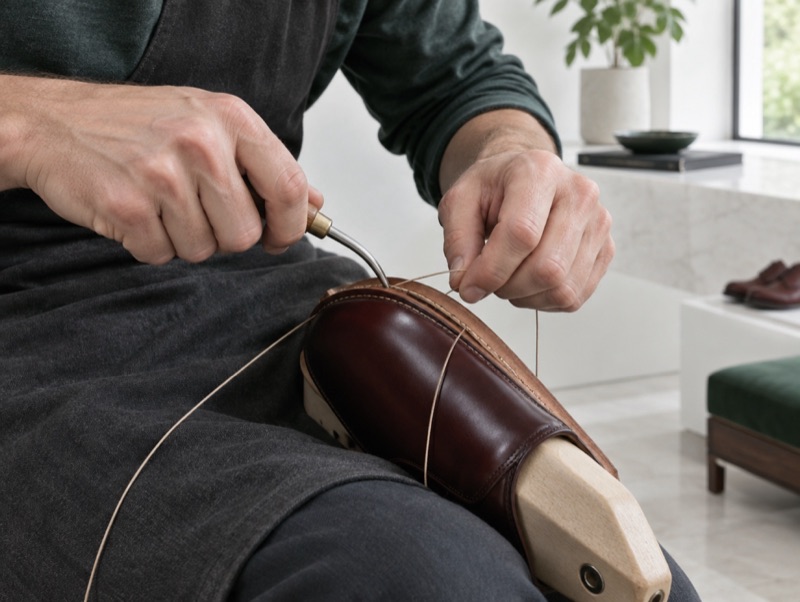
Technique Hand welting
The shoemaking equivalent of a hand-padded canvas: slow, invisible, and the basis of everything above it.
 04
Fabric
04
Fabric Leather
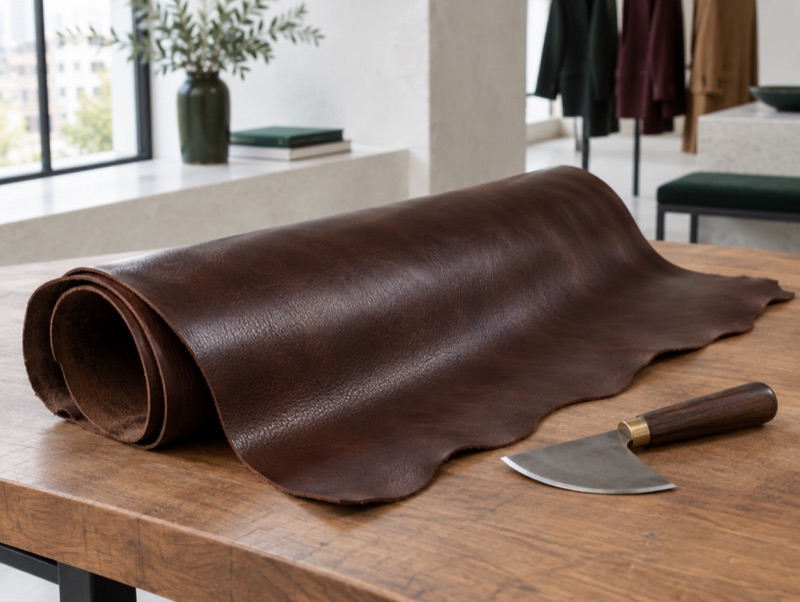
Leather is treated animal hide, and how good it is depends on the animal, the layer of skin used and how it was tanned.
 05
Garment
05
Garment The oxford shoe
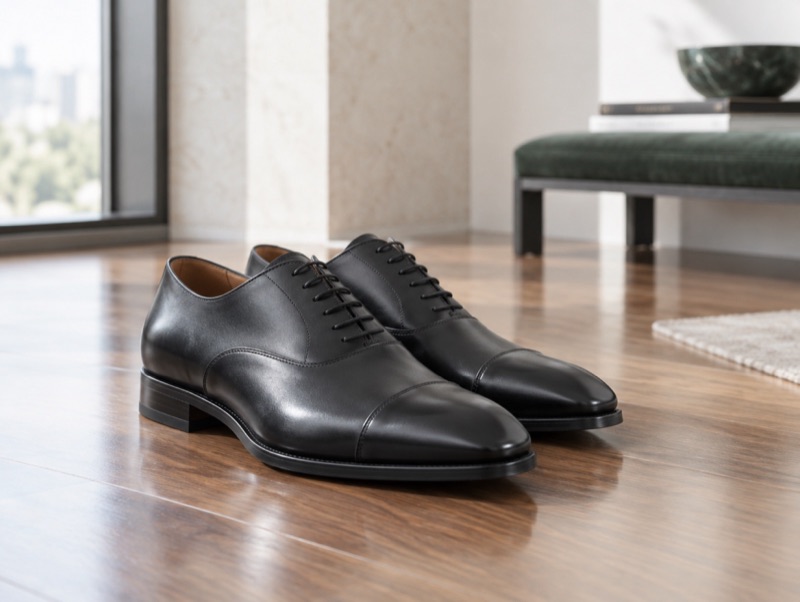
An oxford is a lace-up shoe whose eyelet flaps are stitched under the front, giving a clean V and making it more formal than a derby.
-
Last
Glossary term
The wooden or plastic form a shoe is built around. Not a copy of a foot: a designed object accounting for how a foot behaves under load. See the full article for what that means…
-
Closing
Glossary term
Sewing the cut pieces of a shoe upper together, including the lining. Done by a closer, who is a separate specialist from the clicker and the maker.
-
Counter
Glossary term
The stiffener at the back of a shoe that holds the heel. A leather counter moulds to the wearer; a synthetic one does not, and heel slippage in an otherwise well-fitting shoe…
-
Last room
Glossary term
The room where a bespoke shoemaker stores customers' lasts. A long-established house holds thousands of them, including the lasts of clients long dead, and they are the most…
Picture credits 6
- Leather pulled over a last with pincers: Original art · Il Sartoriale · Il Sartoriale · Il Sartoriale original art
- An illustration of a welted shoe of the kind the house makes. Not a photograph of the house's own work.: Original art · Il Sartoriale · Il Sartoriale · Il Sartoriale original art
- Hand-shaped wooden lasts on a shelf: Original art · Il Sartoriale · Il Sartoriale · Il Sartoriale original art
- Hand-stitching a welt to an insole: Original art · Il Sartoriale · Il Sartoriale · Il Sartoriale original art
- A rolled calf hide on a tanner's bench: Original art · Il Sartoriale · Il Sartoriale · Il Sartoriale original art
- Black cap-toe oxford shoes: Original art · Il Sartoriale · Il Sartoriale · Il Sartoriale original art