Techniek · Construction
Ironwork
Ironwork is a tailor using heat, moisture and pressure to shrink and stretch wool into body-shaped curves, like a rounded shoulder, before sewing it.
Wool can be shrunk and stretched with heat, moisture and pressure, and a tailor uses that to build three-dimensional shape into flat cloth before it is sewn: hollowing the chest, rounding the shoulder, curving the trouser leg to the thigh. It is the oldest skill in the trade and the least visible.
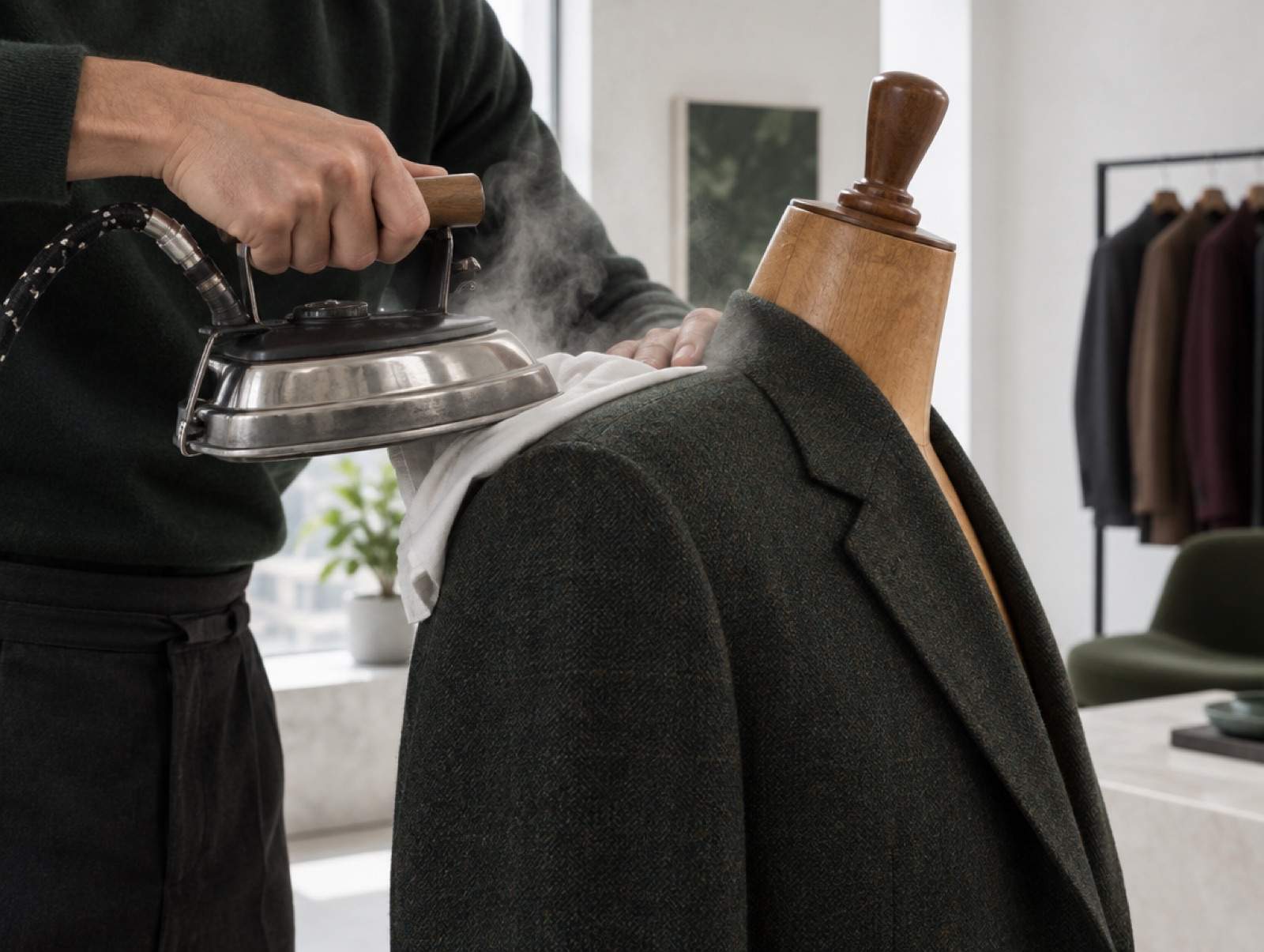
What the iron does
Wool fibres relax under steam and set as they cool. A tailor exploits this to move cloth: shrink a shoulder so it curves over the deltoid, stretch a chest so it fills, hollow the small of the back, ease a trouser at the knee. None of this is visible in the finished garment and all of it changes how the garment sits. This is why a jacket cut from a synthetic or a heavily blended cloth is harder to make well. Polyester does not respond to the iron; the tailor loses the ability to shape and must rely on cutting alone.
Under-pressing and final pressing
Pressing during construction, under-pressing, is the shaping work, and it happens continuously as the garment is built. Final pressing is cosmetic: setting the edges, the lapel roll and the creases.
A good final press makes a badly made garment look better for a day. Under-pressing is what makes a well-made one stay right for years.
Why synthetics resist it
Wool's scales and its crimp let it be shrunk and stretched permanently with heat and moisture. Polyester and most synthetics have neither; they can be heat-set into a crease but not moulded into a three-dimensional shape, and they melt before they yield. This is the practical reason a tailor will steer a customer away from a heavy synthetic blend for a bespoke commission. It is not snobbery about the fibre; it is that half his craft stops working.
In één oogopslag
Wie ermee werkt
Huizen en molens op deze site met een gedocumenteerde relatie met Ironwork.
 01
Begin hier
01
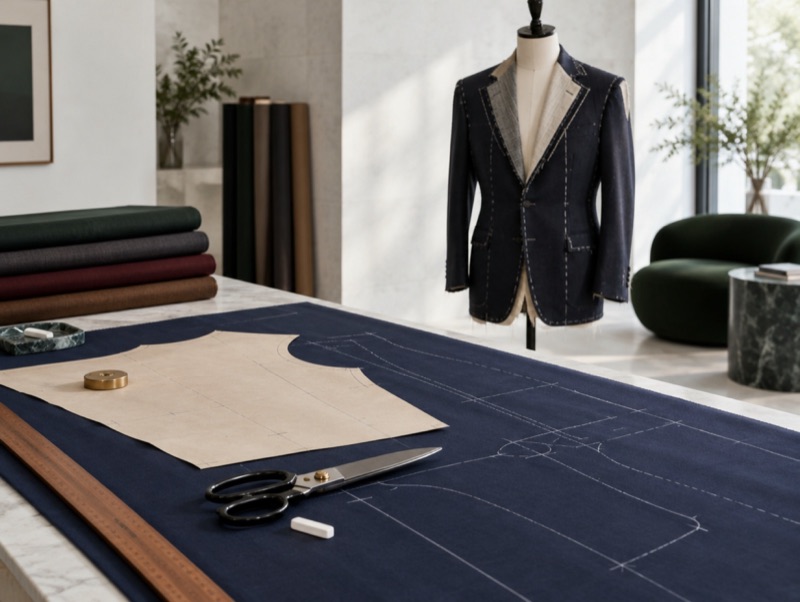
Begin hier How a great suit is actually made
A good tailored jacket has a horsehair and wool inner layer shaped with hand stitching, cloth shaped with an iron, and repeated fittings on the body.
 02
Techniek
02
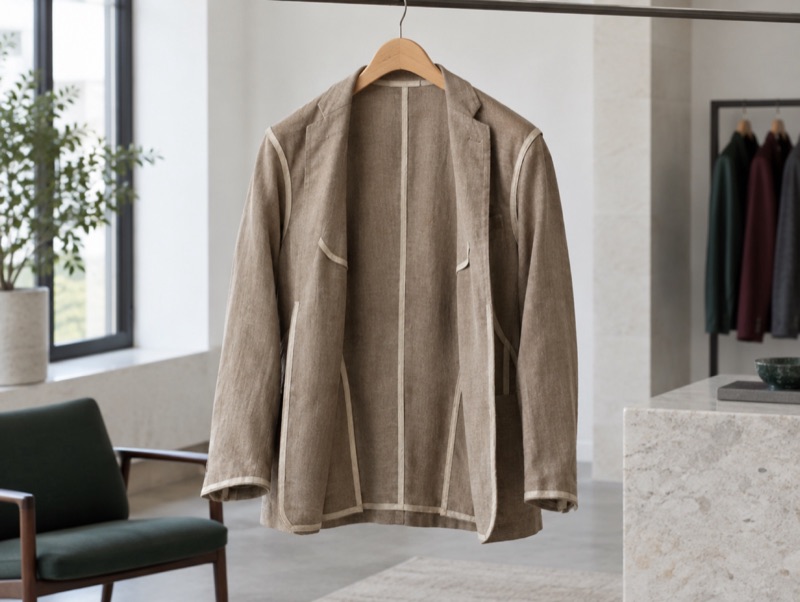
Techniek Unstructured construction
Shape from cutting and ironwork alone, with nothing inside the coat to help.
 03
Stof
03
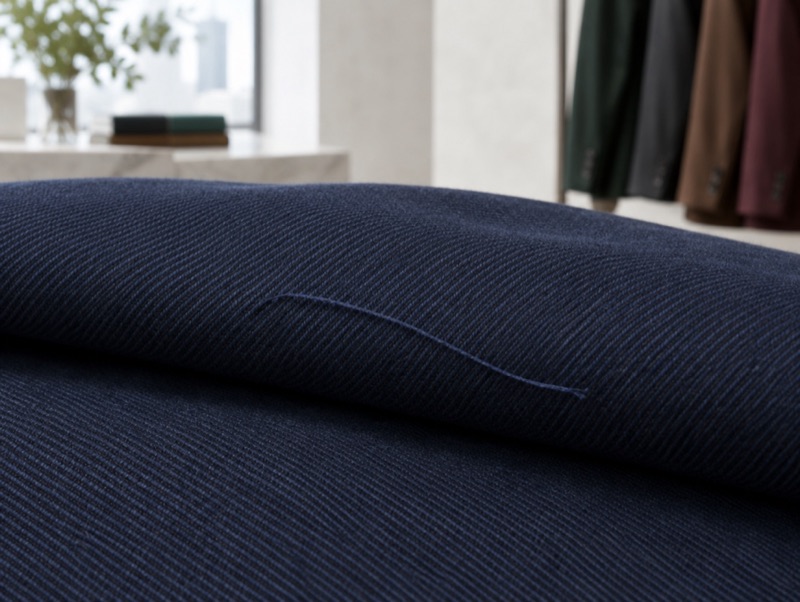
Stof Wool
The default fibre of tailoring, for reasons that are structural rather than traditional.
 04
Techniek
04
Techniek How a bespoke commission works
A bespoke commission takes four to six months of measuring, a pattern made just for you, and repeated fittings, which are what you are paying for.
 05
Kledingstuk
05
Kledingstuk The suit
A suit is simply a jacket and trousers, sometimes with a waistcoat, made from the same cloth at once so they match exactly.
-
Crease
Glossariumterm
The pressed line running down the front and back of a trouser leg. Set with an iron and held by the wool; a cloth with high synthetic content or a very soft finish will not keep…
-
Sponge and press
Glossariumterm
Cleaning and reshaping a garment with steam and pressure rather than solvent. Far gentler than dry cleaning and available from any good tailor. Ask for it.
Fotorechten 6
- A tailor's iron shaping a shoulder over a ham: Original art · Il Sartoriale · Il Sartoriale · Il Sartoriale original art
- A cutting table with pattern, chalk and shears: Original art · Il Sartoriale · Il Sartoriale · Il Sartoriale original art
- An unlined jacket turned inside out: Original art · Il Sartoriale · Il Sartoriale · Il Sartoriale original art
- Navy worsted wool suiting, close up: Original art · Il Sartoriale · Il Sartoriale · Il Sartoriale original art
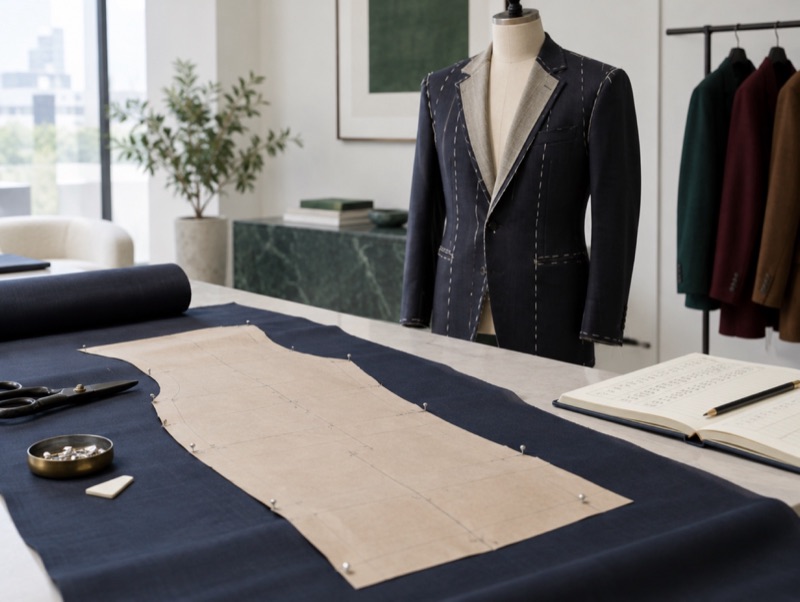
- A cutting room with pattern, basted jacket and ledger: Original art · Il Sartoriale · Il Sartoriale · Il Sartoriale original art
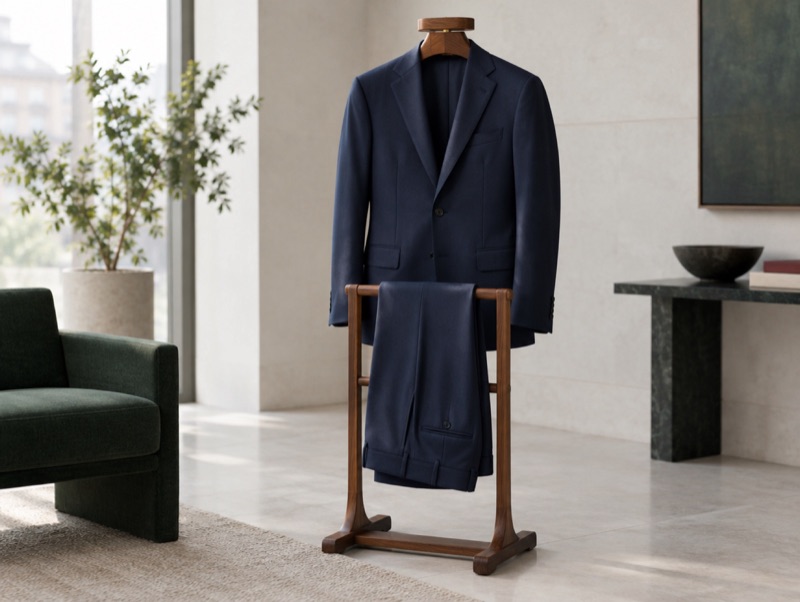
- A navy suit on a valet stand: Original art · Il Sartoriale · Il Sartoriale · Il Sartoriale original art