Technique · Shoemaking
Tanning
Tanning turns hide into leather that won't rot, with quick chrome tanning giving soft shoe tops and slow bark tanning giving firmer soles that age nicely.
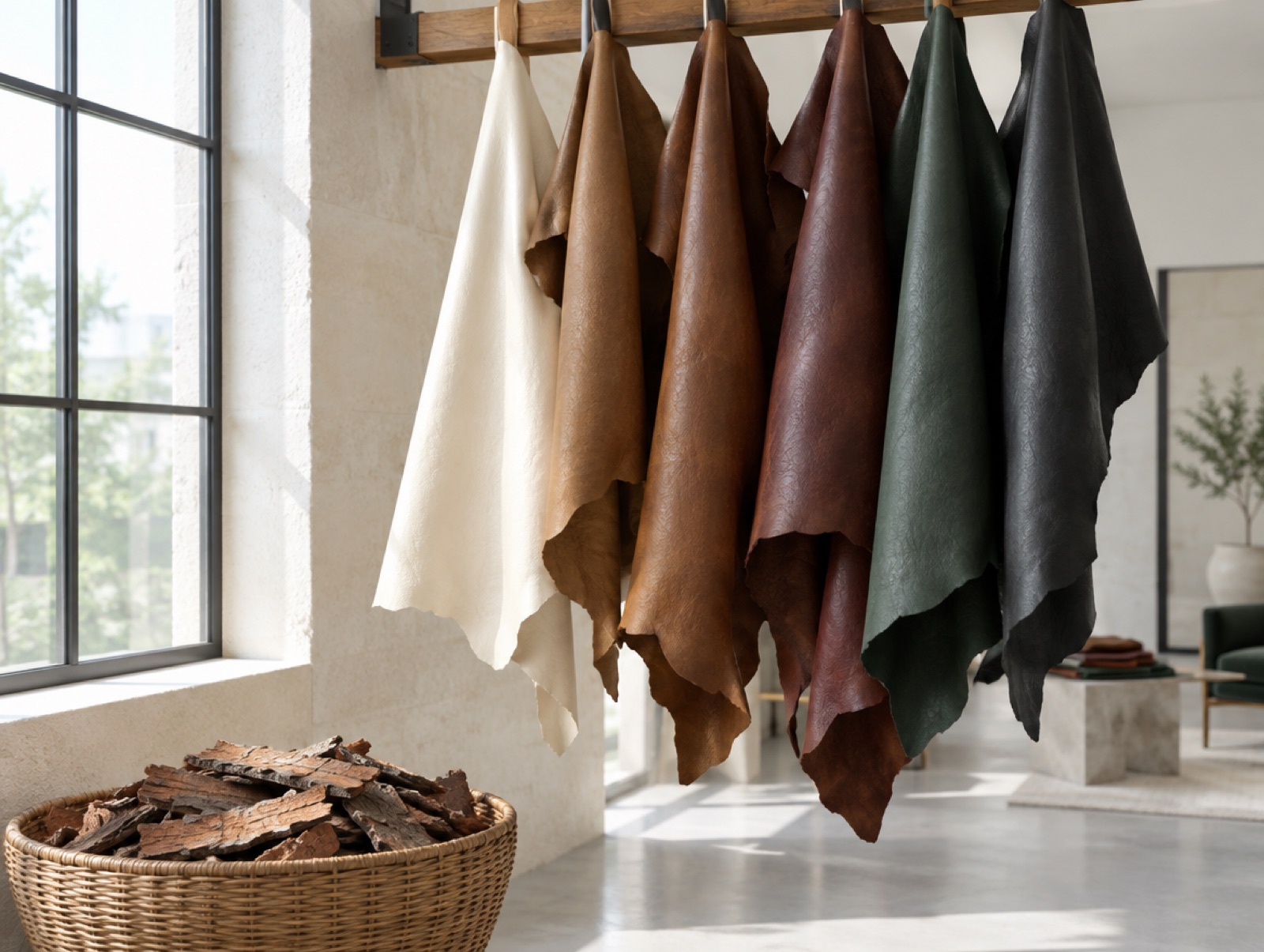
Tanning stabilises animal hide so it stays flexible and does not decompose. Chrome tanning, using chromium salts, takes about a day and produces soft, supple, water-resistant leather; vegetable tanning, using tannins from bark, takes months to years and produces a firmer leather that develops patina and can be tooled. Most shoe uppers are chrome-tanned; most soles are vegetable-tanned.
Two chemistries
Vegetable tanning is the older method: hides are moved through a series of pits of increasing tannin concentration, drawn from oak, chestnut or mimosa bark, over months. The result is a firm, dense leather that burnishes, darkens with use and holds a shape.
Chrome tanning, developed in the nineteenth century, uses chromium salts and takes roughly a day. It produces a softer, more elastic, more water-resistant leather in a far wider colour range, and it is the reason leather goods are affordable. Around four fifths of the world's leather is chrome-tanned.
Where each is used
| Use | Typical tannage | Why |
|---|---|---|
| Shoe uppers | Chrome, or combination | Softness, elasticity, water resistance, colour range |
| Shoe soles | Vegetable, often oak bark | Density and firmness; wears rather than tears |
| Belts and straps | Vegetable | Holds shape, takes tooling, develops patina |
| Bag linings and garment leather | Chrome | Suppleness and drape |
Named tanneries
A handful of tanneries are named on the products they supply, which is unusual in a supply chain that is otherwise silent. Horween in Chicago is named for shell cordovan and Chromexcel; Ilcea and other Italian tanneries for box calf; Baker in England for oak-bark-tanned sole leather, produced in pits over roughly a year.
Where a maker names a tannery it is a genuine signal, because the tannery's reputation is at stake too. Where a maker says only “Italian leather”, that phrase covers everything from exceptional to ordinary.
What to ask about leather
Three questions cover most of it: which animal and which part of the hide, is it full grain or corrected, and which tannery. A maker who can answer all three is telling you the supply chain is real; one who says 'Italian leather' is telling you nothing at all.
The word to be most careful of is 'genuine leather', which sounds like an assurance and is in fact a grade below top grain.
Images
Licensing →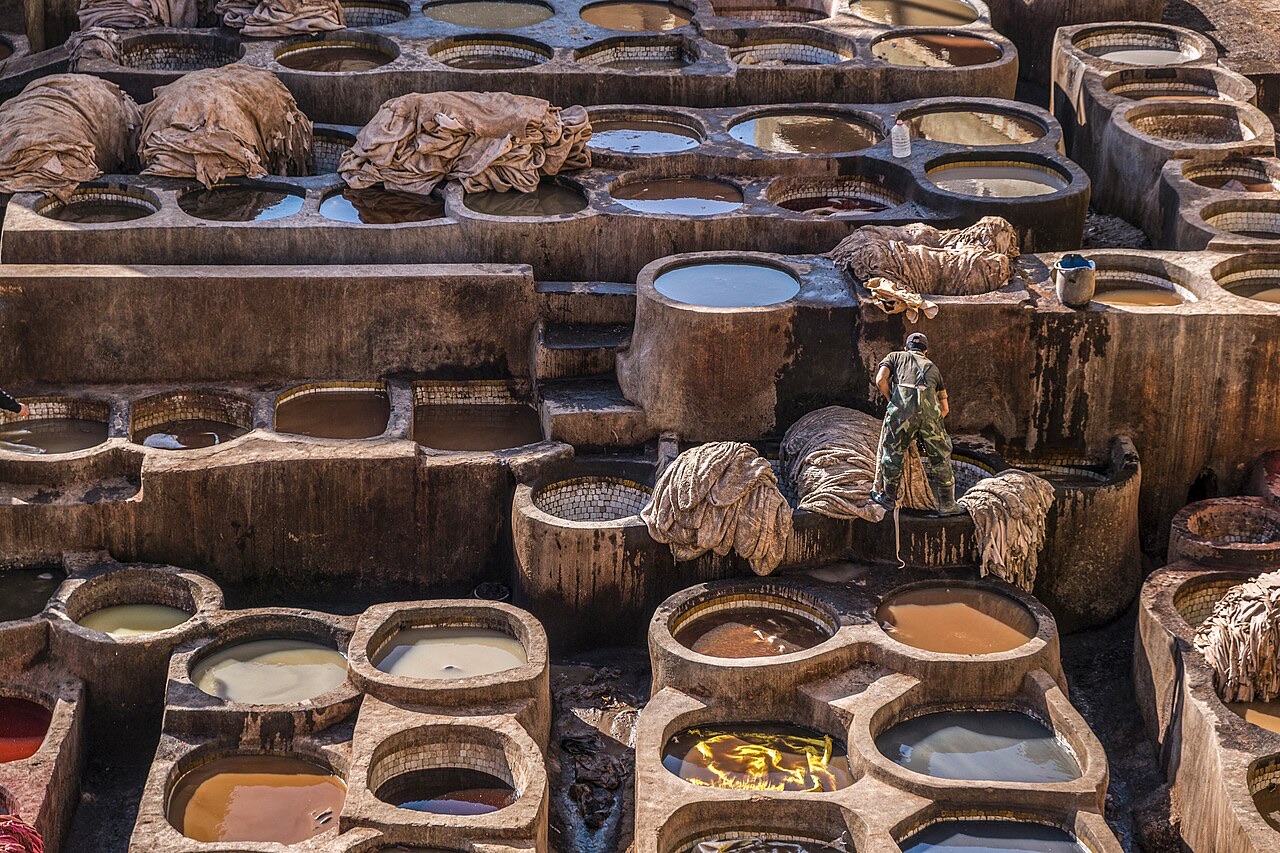
At a glance
Who works with it
Houses and mills on this site with a documented connection to Tanning.
 01
Fabric
01
Fabric Leather
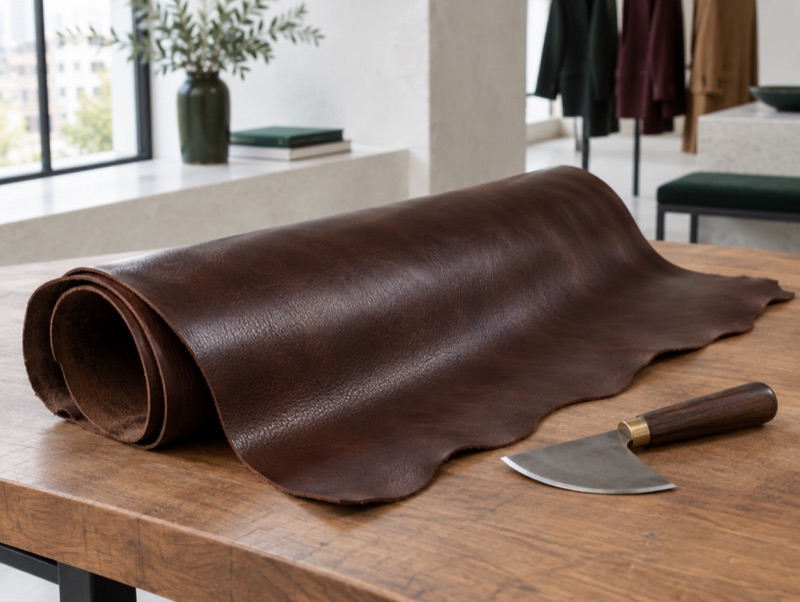
Leather is treated animal hide, and how good it is depends on the animal, the layer of skin used and how it was tanned.
 02
Fabric
02
Fabric Shell cordovan
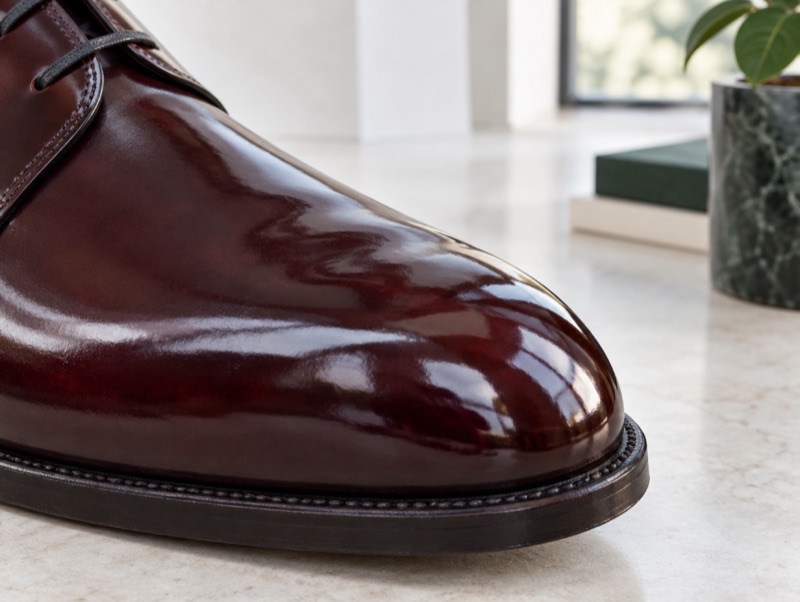
Shell cordovan is a dense, rare shoe leather from a horse's hindquarters that ripples rather than creases and is the most sought-after there is.
 03
Garment
03
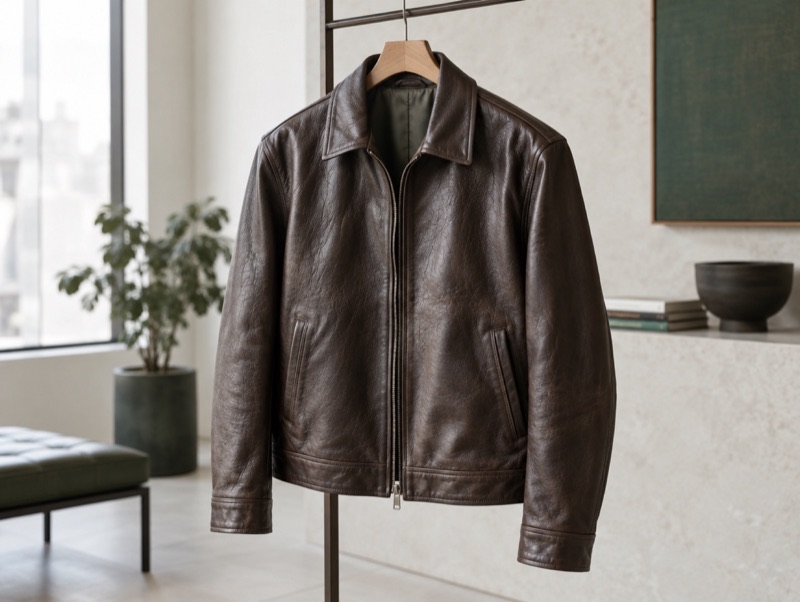
Garment The leather jacket
A leather jacket's quality depends on the hide, how it was tanned and the cut, with most styles coming from military flight and motorcycle jackets.
 04
Fabric
04
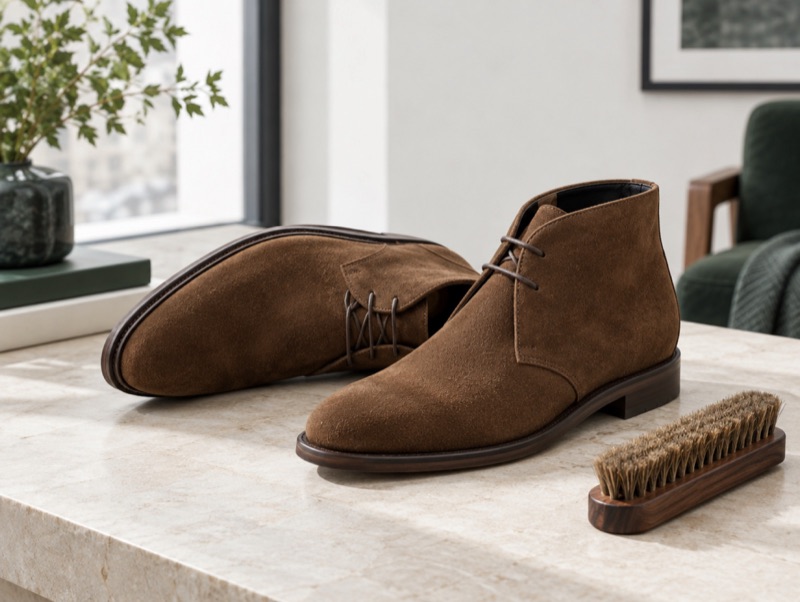
Fabric Suede
Suede is leather buffed to a soft, fuzzy surface, lighter and more breathable than smooth leather and tougher than its reputation if brushed and protected.
 05
Accessory
05
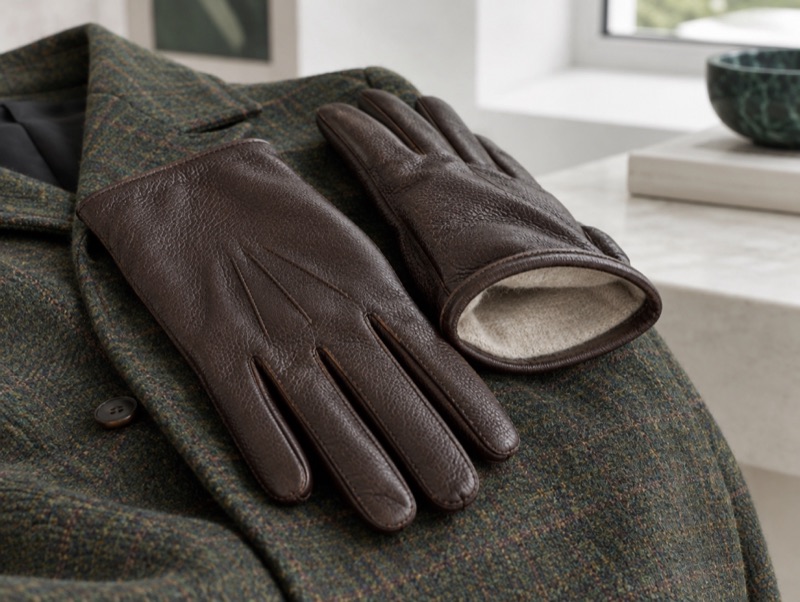
Accessory Gloves
Good leather gloves are cut to follow how your hand moves and finely sewn, often lined in cashmere or silk, which explains their price.
-
J & FJ Baker
Cloth maker
J & FJ Baker is England's last oak-bark tannery, slowly tanning sole leather in Devon over about a year for custom and high-end shoes.
-
Box calf
Glossary term
Chrome-tanned calfskin finished to a smooth, close-grained surface with a fine box-like grain. The standard leather for dress shoes: fine enough to shape closely over a last, and…
-
Horween Leather Company
Cloth maker · 1905
Horween is a Chicago tannery, working since 1905, famous for shell cordovan and Chromexcel leathers, and rare in being named on other brands' shoes.
Picture credits 7
- Hides drying in a tannery loft: Original art · Il Sartoriale · Il Sartoriale · Il Sartoriale original art
- Leather tanning in Fez, Morocco: Photograph · Wowan1978 · Wikimedia Commons · CC BY-SA 4.0
- A rolled calf hide on a tanner's bench: Original art · Il Sartoriale · Il Sartoriale · Il Sartoriale original art
- The gleam of burgundy shell cordovan: Original art · Il Sartoriale · Il Sartoriale · Il Sartoriale original art
- A brown horsehide leather jacket: Original art · Il Sartoriale · Il Sartoriale · Il Sartoriale original art
- Snuff suede chukka boots with a brush: Original art · Il Sartoriale · Il Sartoriale · Il Sartoriale original art
- Peccary leather gloves on a tweed coat: Original art · Il Sartoriale · Il Sartoriale · Il Sartoriale original art