Accessory · Care
Shoe care
Good shoes can last twenty years if you use shoe trees, rest them between wearings, apply cream and wax, and resole them before the sole wears through.
Leather fails by drying out and cracking at the flex points. The remedies are simple: shoe trees immediately after wearing, a day of rest between wearings, cream to feed the leather, wax to protect and shine the toe and heel, and resoling before the sole wears through to the welt.
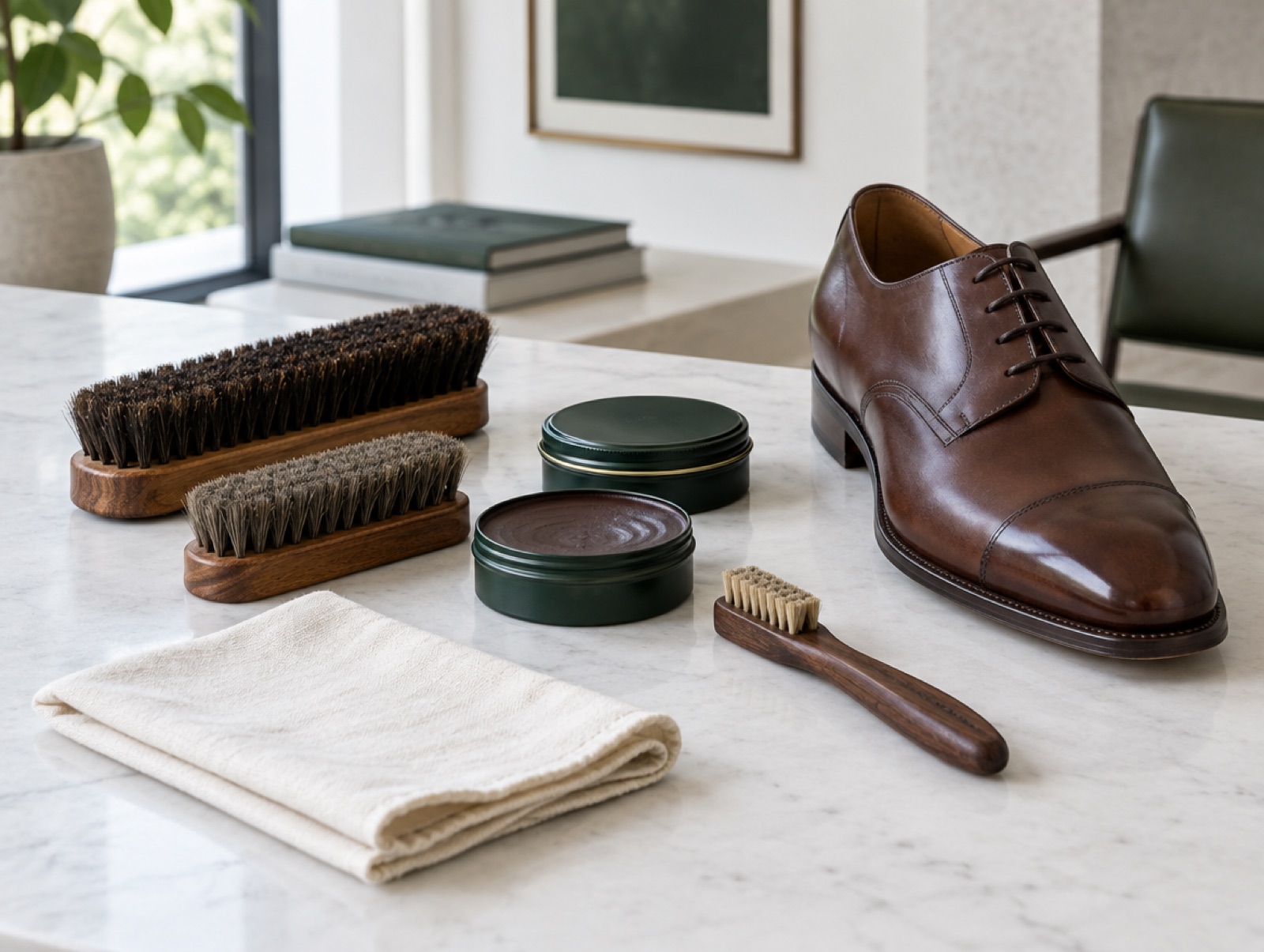
The routine
- Trees, every time. More important than polish.
- Rest. A day between wearings lets the lining dry. Rotating three pairs makes each last more than three times as long.
- Brush after each wearing with a horsehair brush to remove dust, which is abrasive.
- Cream every ten to twenty wearings. Cream contains pigment and moisturisers and feeds the leather; it is what prevents cracking.
- Wax on the toe and heel only, where you want shine and protection. Wax on the flex area cracks.
- Resole when the sole is thin, not when it has holes. A hole lets water into the welt stitching and into the insole, which is a much larger repair.
Water
Wet shoes should be stuffed with newspaper or put on trees and dried slowly, away from any heat source. Heat dries the surface faster than the interior, the fibres shrink unevenly, and the leather cracks. A radiator will do more damage to a shoe in one evening than a year of rain.
Salt stains from winter pavements should be removed promptly with a diluted vinegar solution; salt draws moisture out of leather and leaves it brittle.
Images
Licensing →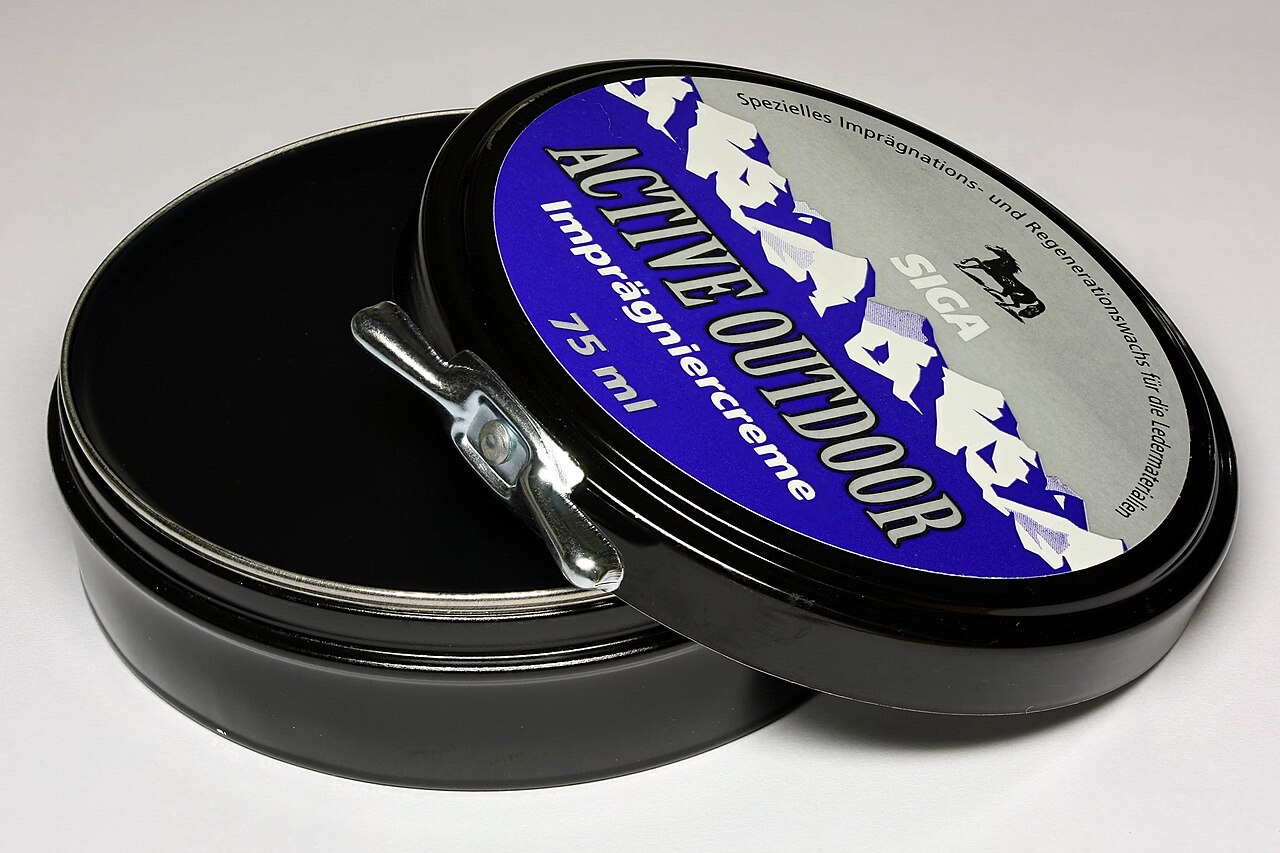
At a glance
How it is made
All techniques →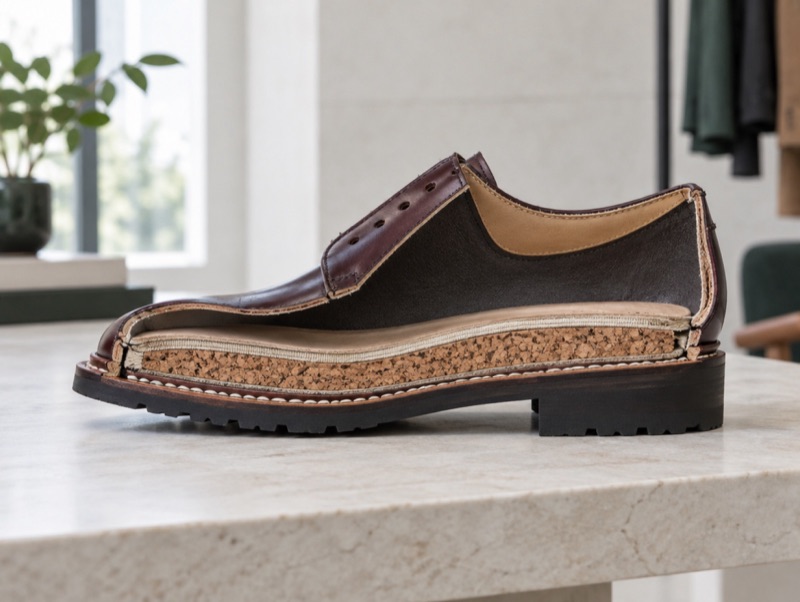
Picture credits 3
- Brushes, polish and cloth beside a shoe: Original art · Il Sartoriale · Il Sartoriale · Il Sartoriale original art
- Can of shoe polish-open - fs PNr°0289: Photograph · D-Kuru · Wikimedia Commons · CC BY-SA 3.0 at
- A welted shoe cut in cross-section: Original art · Il Sartoriale · Il Sartoriale · Il Sartoriale original art