Craftsman · Artisans
Vincenzo Attolini
Vincenzo Attolini was the Naples cutter credited with the soft Neapolitan jacket, made without shoulder padding and with almost no inner stiffening.
Attolini cut at Gennaro Rubinacci's London House and is the figure conventionally credited with creating the modern Neapolitan jacket: chest canvas thinned to almost nothing, shoulder padding removed, lining cut back, and the sleeve set into a high small armhole with the fullness gathered at the head. His son Cesare founded the house that carries the family name.
What he is credited with
Systematically removing the structure from the English coat while keeping its shape, which required shifting the work from the canvas to the cutting and the iron. The result was a jacket that could be worn in Neapolitan heat without looking unmade, and it is the technical basis of an entire tradition.
The visible signatures generally attributed to the same development (the gathered shoulder, the curved breast pocket, the open quarters, the patch pockets) are the consequences of that decision rather than separate inventions.
How firm the attribution is
Reasonably firm and not absolute. The Neapolitan trade was moving towards lighter construction generally, other workshops were experimenting, and the tidy story of one cutter changing everything is the kind of narrative this subject produces easily.
What is documented is that London House is where the change is first clearly recorded and that Attolini was its cutter. This site records that, and records the caveat with it.
The lineage
His son Cesare established the house bearing the family name, now run by Cesare's sons and producing hand-finished Neapolitan tailoring at scale. The Rubinacci house also continues under the founding family.
Two of the most significant businesses in Neapolitan tailoring therefore descend from the same workshop and the same decade, which is unusual even in a trade built on lineage.
What the change required technically
Removing a canvas does not simply lighten a coat; it removes every opportunity to correct. Shape has to come from the cut of the panels and from ironwork: shrinking and stretching the cloth into three dimensions before it is sewn. That is why an unstructured jacket is harder to make than a structured one rather than easier, and why the Neapolitan style is a genuine technical achievement rather than an absence of one.
At a glance
Houses working in this tradition
-
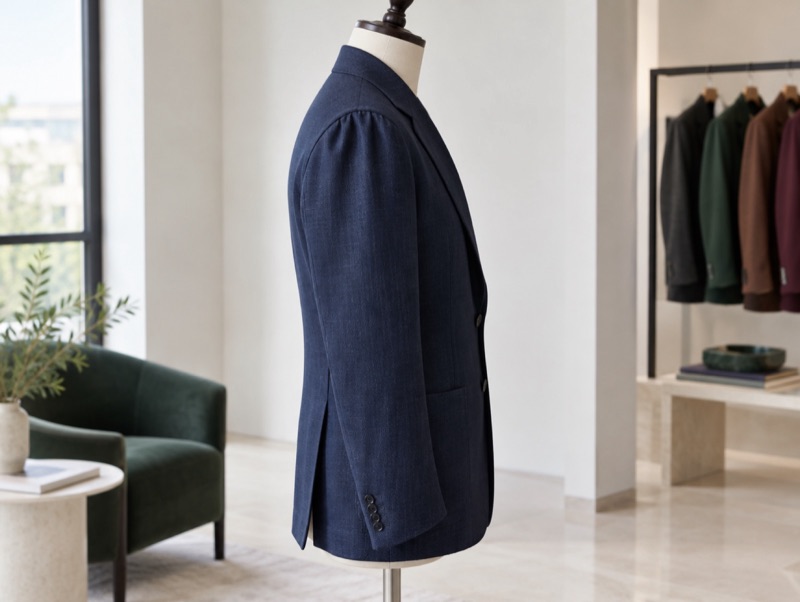 Cesare Attolini
Naples · 1930
Cesare Attolini
Naples · 1930Cesare Attolini is a Neapolitan clothing house run by descendants of the creator of the soft Neapolitan jacket, and it produces in volume while keeping much of the work done by…
-
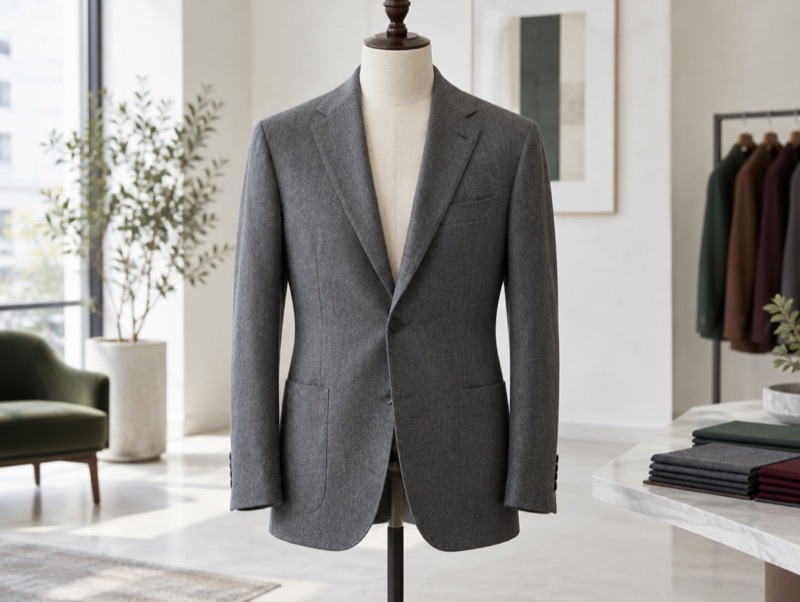 Rubinacci
Naples · 1932
Rubinacci
Naples · 1932Rubinacci is the oldest and best-known tailoring house in Naples, founded in 1932, where the soft Neapolitan jacket without heavy padding was first created.
Picture credits 2
- An illustration of the house's recorded cut: shirt shoulder, light canvas chest, soft neapolitan, high armhole. Not a photograph of the house's own work.: Original art · Il Sartoriale · Il Sartoriale · Il Sartoriale original art
- An illustration of the house's recorded cut: natural shoulder, light canvas chest, soft, short, open quarters. Not a photograph of the house's own work.: Original art · Il Sartoriale · Il Sartoriale · Il Sartoriale original art