ऐतिहासिक व्यक्तित्व · People
Ralph Lauren
Did not design a silhouette; assembled an entire visual language and sold it to the world for fifty years.
Ralph Lauren's contribution to menswear is not technical. He took existing vocabularies (English country dress, Ivy, western, military) and assembled them into a coherent, legible aesthetic that could be sold at every price point. The influence on how men dress internationally is difficult to overstate.
What he actually did
Began with ties in 1967, wide ones, when narrow was standard, and built outward into a full wardrobe and then into a lifestyle proposition. None of the individual garments was new; the assembly was.
The consequential move was to sell an aesthetic rather than products: a coherent world with a consistent visual language, which meant a customer could buy into it at any level and understand what they were buying.
The assessment
Two things are true at once. Purple Label tailoring is genuinely well made, largely in Italy, and stands comparison with Italian houses at similar prices. And a great deal of the group's output is ordinary clothing sold on the strength of the aesthetic rather than the making. Both facts belong on the record. The historical contribution, teaching several generations internationally what classic menswear looks like, is separable from any judgement about a particular garment.
The mechanism
Selling an aesthetic rather than garments has a specific consequence: the customer can enter at any price point and understand what they are buying, and the brand can extend indefinitely without losing coherence.
It also means the aesthetic has to be legible from a photograph, which is why the imagery has always been as carefully constructed as the clothes. Whatever one thinks of the result, it is the most successful piece of sustained aesthetic communication the industry has produced.
एक नज़र में
चित्र श्रेय 1
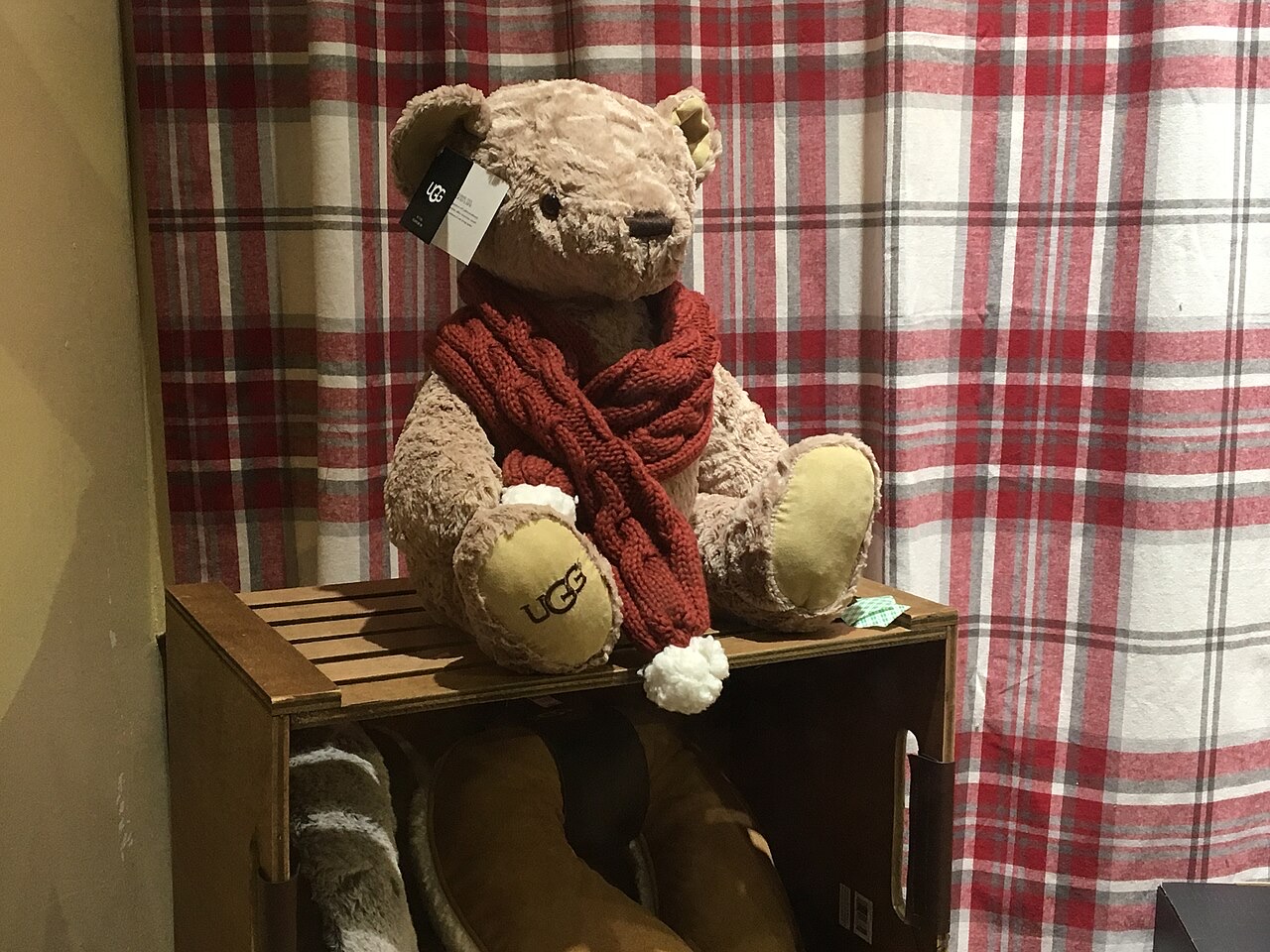
- 20191211 04 Ralph Lauren bear (49778660963): Photograph · David Wilson from Oak Park, Illinois, USA · Wikimedia Commons · CC BY 2.0