Schneiderstil · France
Parisian tailoring
The most sculptural shoulder in tailoring, over the cleanest possible chest.
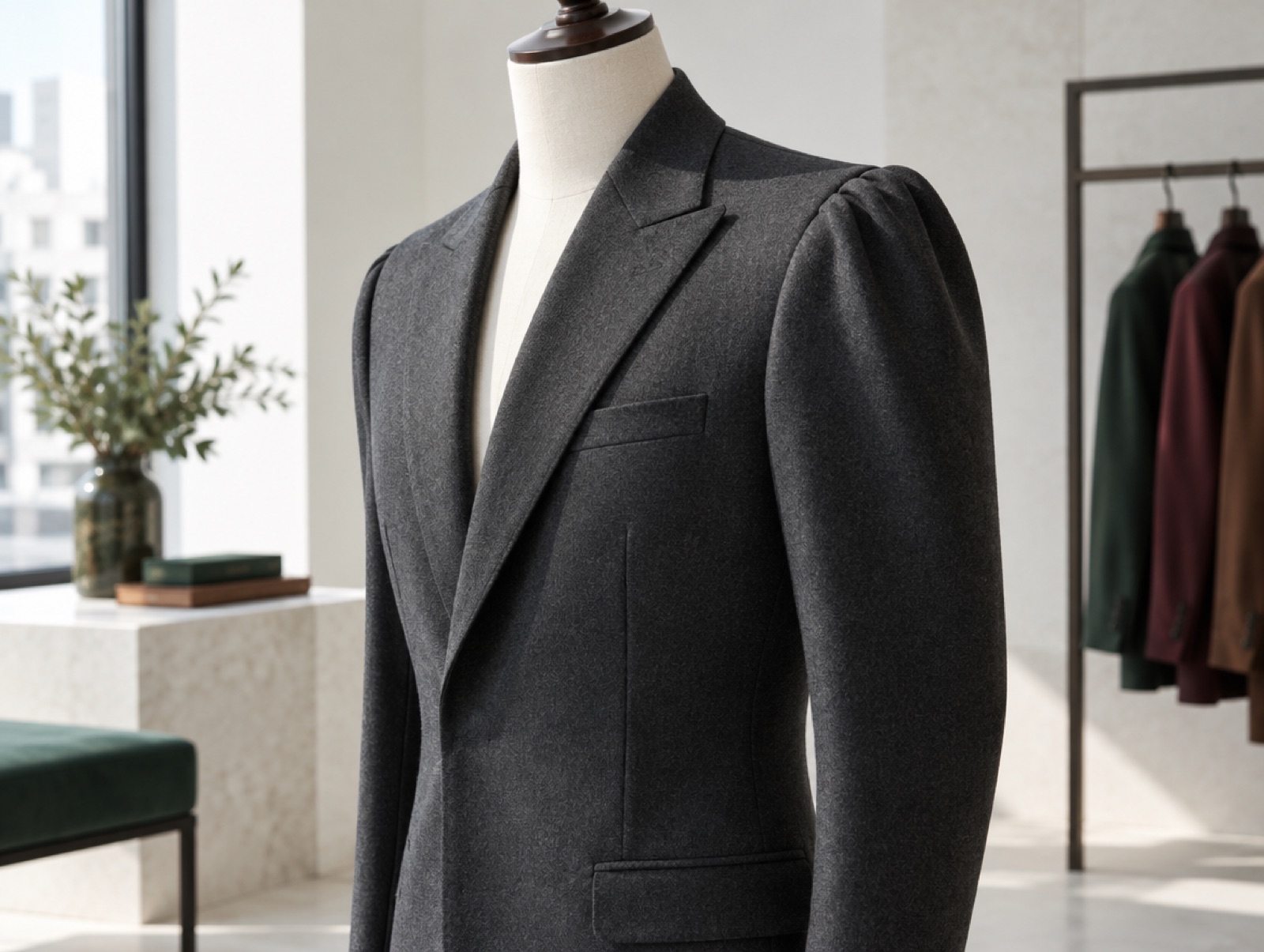
Parisian bespoke builds a rounded, sculpted shoulder with a pronounced roll at the sleeve head, then cuts the chest and waist extremely close and clean beneath it. It is the most visually dramatic of the European traditions and among the most labour-intensive.
Building a shoulder
The Parisian shoulder is constructed rather than padded flat: layers built up and shaped so the line rises slightly and rolls at the sleeve head, with the fullness controlled so it reads as sculpture rather than bulk. Cifonelli is most identified with it.
Underneath, everything is pulled tight. The chest is cut close and pressed clean, the waist is high and narrow, and the skirt is cut to flare very slightly. The proportions are theatrical in a way neither English nor Italian tailoring attempts.
Building a shoulder
Layers of wadding and canvas shaped and sewn so that the shoulder line rises slightly towards its end and then rolls into the sleeve head in a continuous curve. It is neither a flat pad nor an English rope; it is a constructed three-dimensional form.
It takes hours and cannot be approximated. It is also the reason Parisian coats photograph as they do: the shoulder catches light along the roll.
Details that identify a house
- The Cifonelli sleeve head: a rolled, sculpted junction rather than a rope or a flat set.
- The Camps de Luca fishmouth lapel notch, cut so the notch interlocks like a mouth.
- Hand finishing carried to an unusual degree throughout, including on parts nobody sees.
The rest of the coat
Everything below the shoulder is pulled clean: a close chest pressed smooth, a high narrow waist, a skirt cut to flare very slightly over the hip. The lapel is generally cut with a strong peak.
The combination, drama at the shoulder, discipline everywhere else, is what distinguishes the school from the English tradition it otherwise resembles technically.
Bilder
Lizenzierung →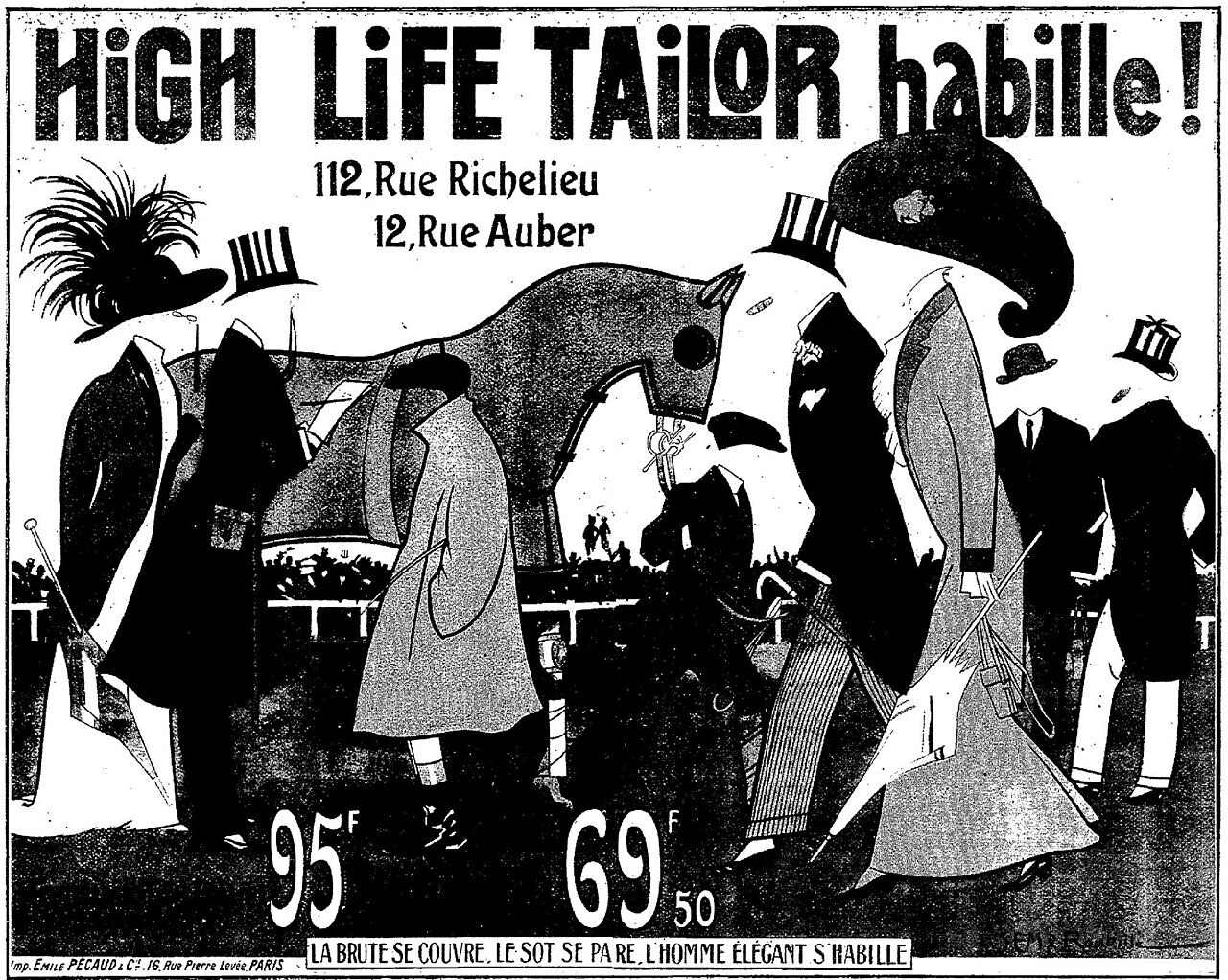
Auf einen Blick
Häuser, die in dieser Tradition arbeiten
-
 Camps de Luca
Paris · 1959
Camps de Luca
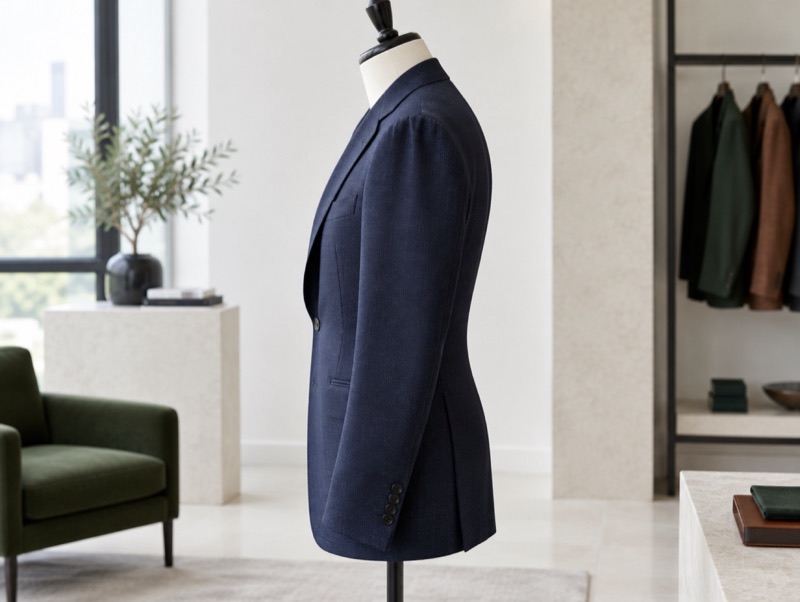
Paris · 1959Camps de Luca is a Paris tailor known for fine hand sewing and a signature lapel where collar and lapel meet in a mouth-like notch.
-
 Cifonelli
Paris · 1880
Cifonelli
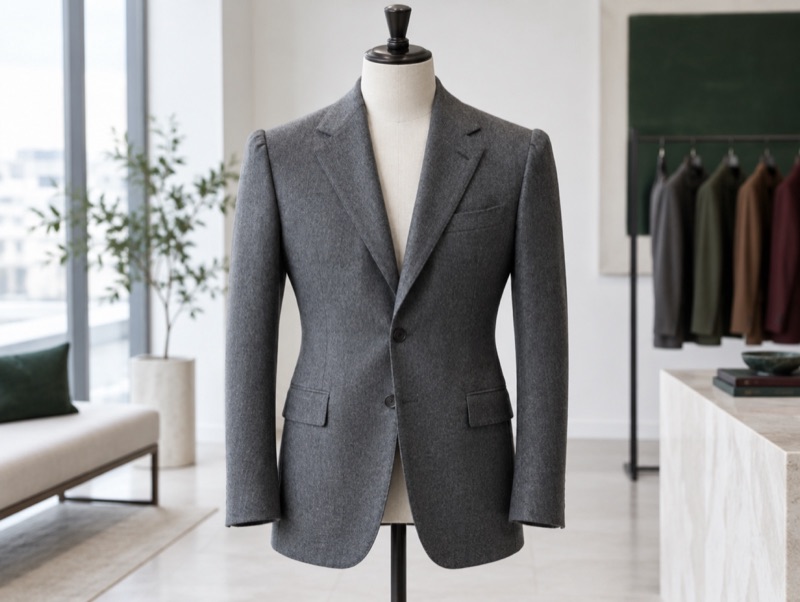
Paris · 1880Cifonelli is a Paris tailoring firm, founded by a Roman family in the 1920s, famous for a padded, rounded shoulder and a very close-fitting chest.
Wie es gemacht wird
Alle Techniken →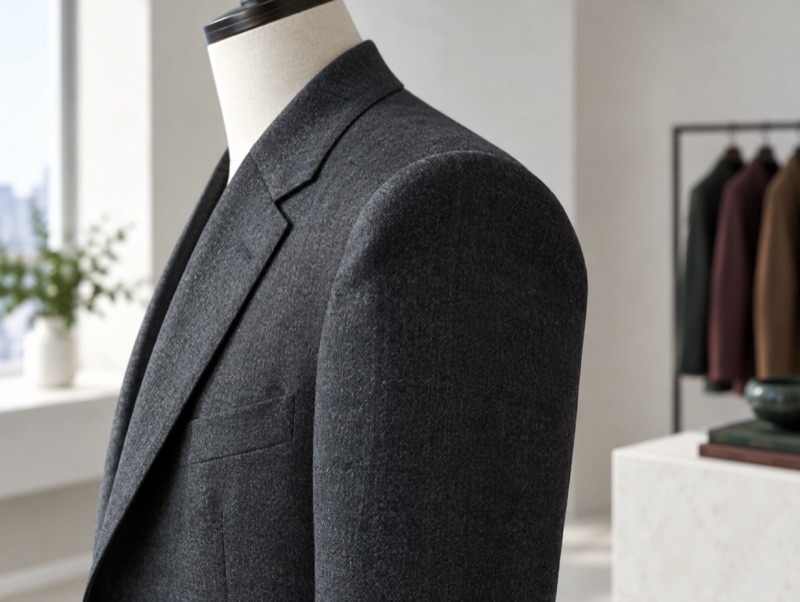
Bildnachweise 5
- A sculpted Parisian roped shoulder: Original art · Il Sartoriale · Il Sartoriale · Il Sartoriale original art
- Sem Roubille High Life Tailor habille: Photograph · Georges Goursat - Roubille · Wikimedia Commons · Public domain
- An illustration of the house's recorded cut: roped shoulder, full canvas chest, sharp, strongly built shoulder, defined waist. Not a photograph of the house's own work.: Original art · Il Sartoriale · Il Sartoriale · Il Sartoriale original art
- An illustration of the house's recorded cut: roped shoulder, full canvas chest, sculpted shoulder, very clean close chest, high waist. Not a photograph of the house's own work.: Original art · Il Sartoriale · Il Sartoriale · Il Sartoriale original art
- A roped shoulder with a raised sleeve head: Original art · Il Sartoriale · Il Sartoriale · Il Sartoriale original art