Kỹ thuật · Construction
The basted fitting
A garment loosely tacked together, tried on, marked in chalk, and then taken apart again.
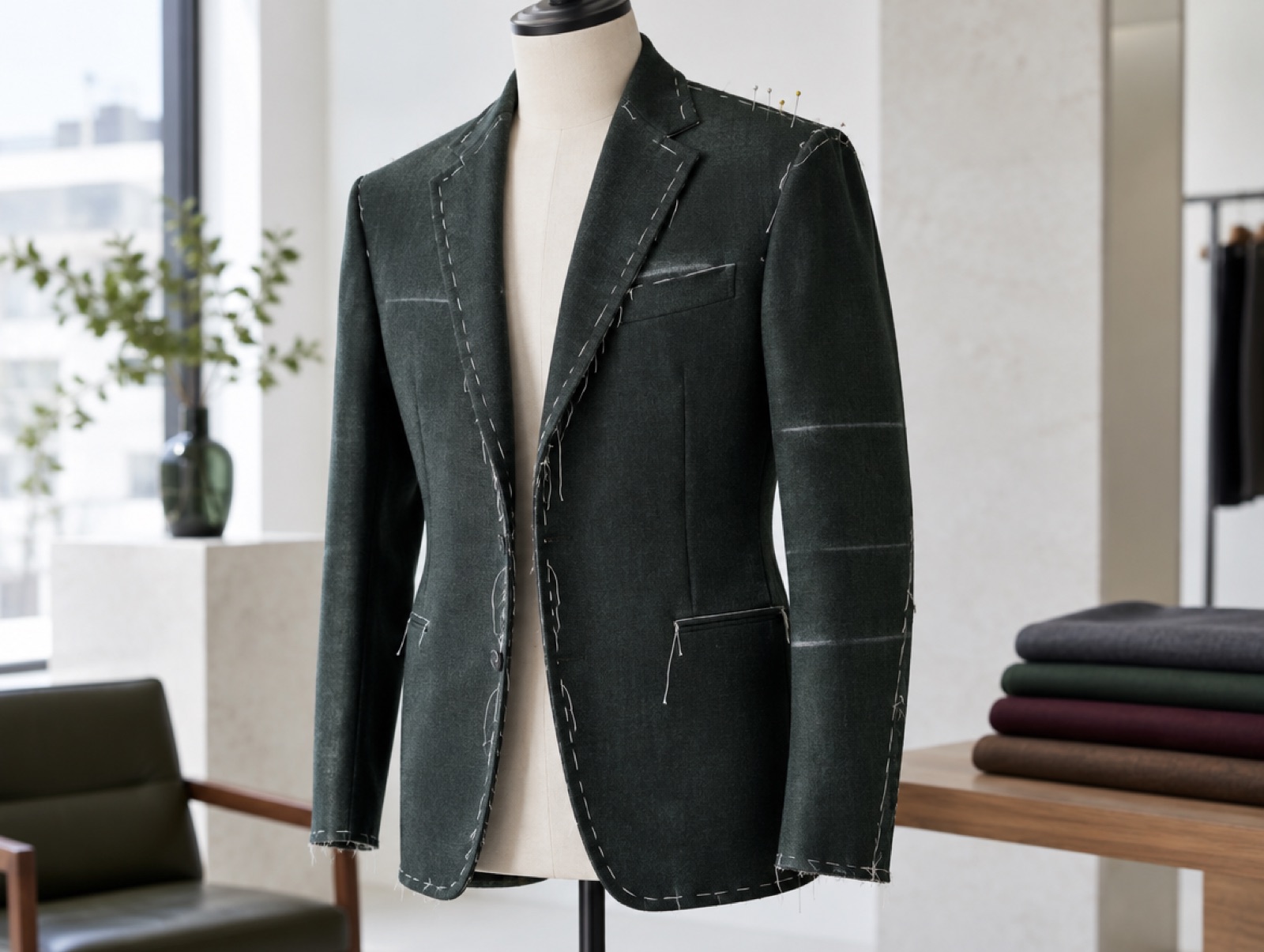
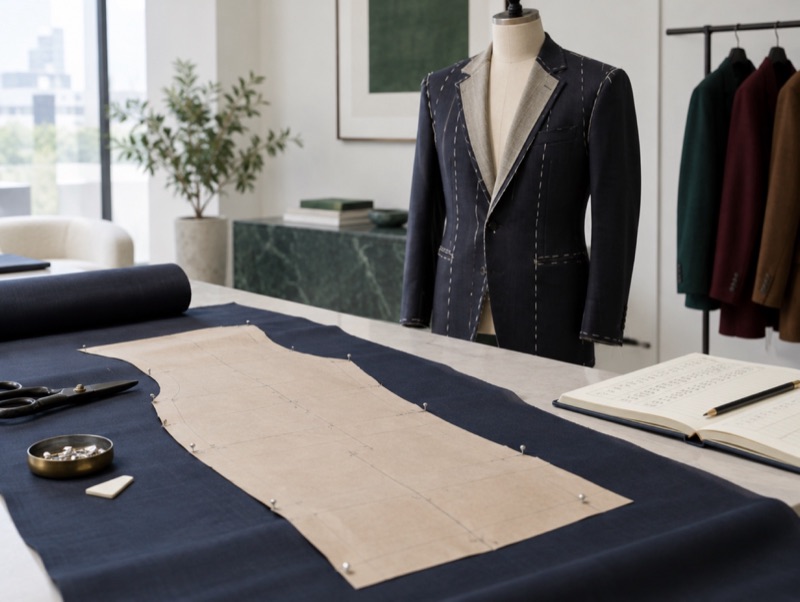
In a basted fitting the coat is assembled with long temporary stitches, without finished edges, often with one sleeve or none. The customer puts it on, the cutter marks the corrections in chalk, and the garment is pulled apart and recut. It is the operation that makes bespoke bespoke.
Why it has to be taken apart
Because cloth on a body behaves differently from cloth on a table. A pattern can be technically correct and still produce a collar that stands away, or a drag line running from the shoulder blade, and the only way to find out is to make the thing and look at it.
The basted stage exists so that the correction can still be made in the cloth rather than in an alteration. Once seams are finished, edges are taped and the canvas is in, changing the balance of a coat is difficult and sometimes impossible.
What happens at the fitting
- The cutter looks at the coat standing still, from the front, side and back, before touching anything.
- Balance is checked first: whether the coat hangs level front to back. Nothing else can be judged until it does.
- Chalk marks record the corrections; pins hold new positions; sometimes a seam is cut open on the spot.
- The customer's job is to stand normally. Standing to attention produces a coat that fits a soldier.
How many
Two to four fittings is the usual range for a first commission, and the number is not a quality measure by itself. A house that knows a customer's pattern well may need one; a difficult figure or a first commission may need four. What matters is whether the house is willing to have another fitting when something is wrong, which is a question worth asking directly.
One fitting, or none, is made-to-measure. That is a legitimate product with a lower price; it is not the same thing.
How to be useful at a fitting
Stand as you actually stand. The commonest way a customer sabotages his own fitting is to draw himself up into a posture he does not hold, which produces a coat that fits a man who does not exist.
Wear the shoes and the shirt you will wear with the garment, empty your pockets, and say what feels wrong even if you cannot name it. A cutter can diagnose 'it pulls when I reach' far better than you can, but only if you mention it.
Tóm lược
Ai sử dụng nó
Các nhà may và xưởng vải trên trang này có liên hệ được ghi nhận với The basted fitting.
 01
Bắt đầu từ đây
01
Bắt đầu từ đây How a great suit is actually made
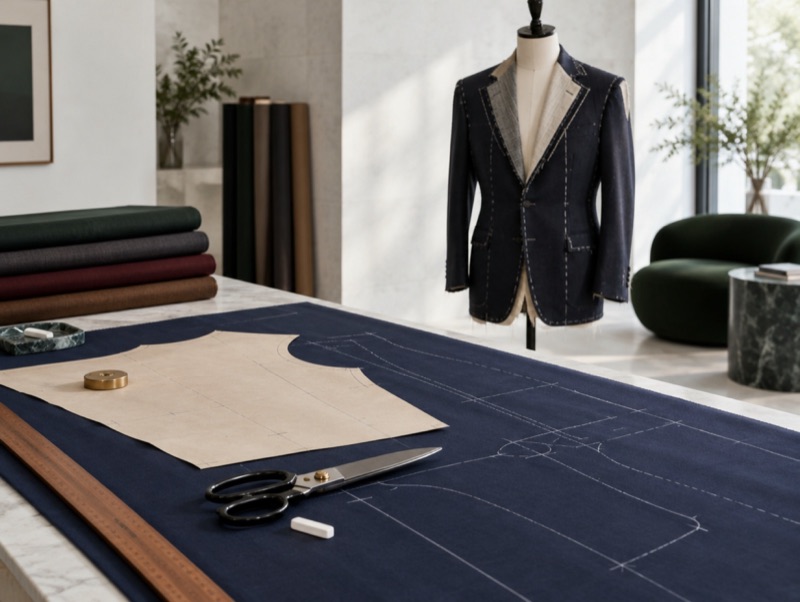
A good tailored jacket has a horsehair and wool inner layer shaped with hand stitching, cloth shaped with an iron, and repeated fittings on the body.
 02
Kỹ thuật
02
Kỹ thuật Pattern drafting
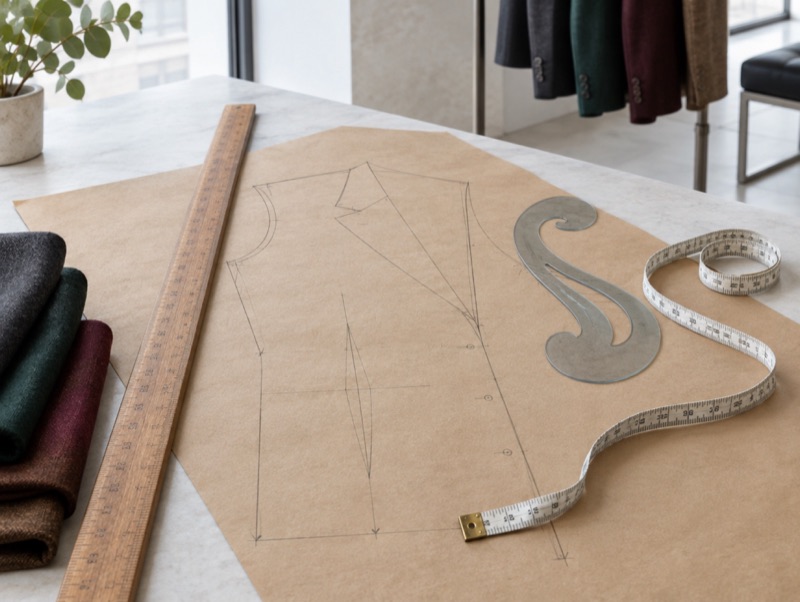
Turning a set of measurements and a look at a body into flat paper shapes. The part that decides everything.
 03
Hướng dẫn
03
Hướng dẫn What to ask a tailor before you commission
Eight questions to ask a tailor before ordering tell you what you are buying, who is making it, and what happens if it goes wrong.
 04
Kỹ thuật
04
Kỹ thuật Hand cutting
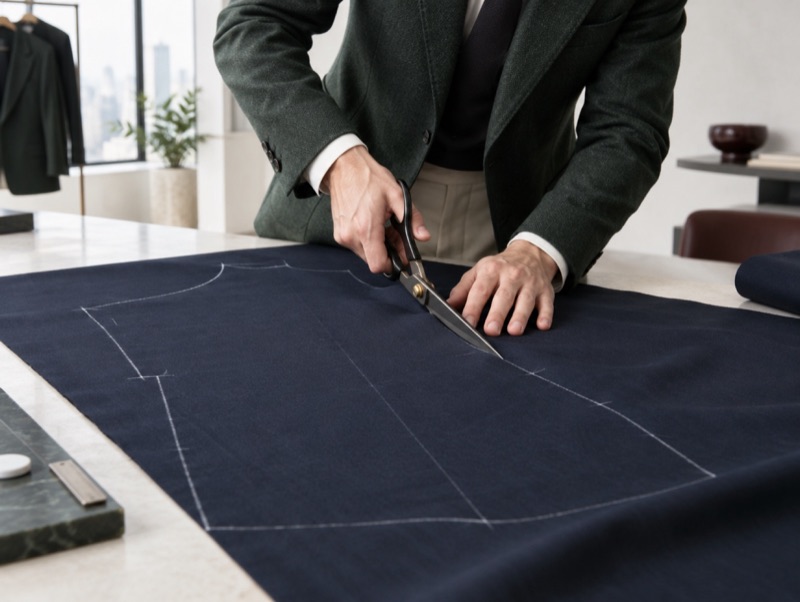
One person, one pair of shears, one layer of cloth at a time.
 05
Kỹ thuật
05
Kỹ thuật How a bespoke commission works
A bespoke commission takes four to six months of measuring, a pattern made just for you, and repeated fittings, which are what you are paying for.
 06
Trang phục
06
Trang phục The suit
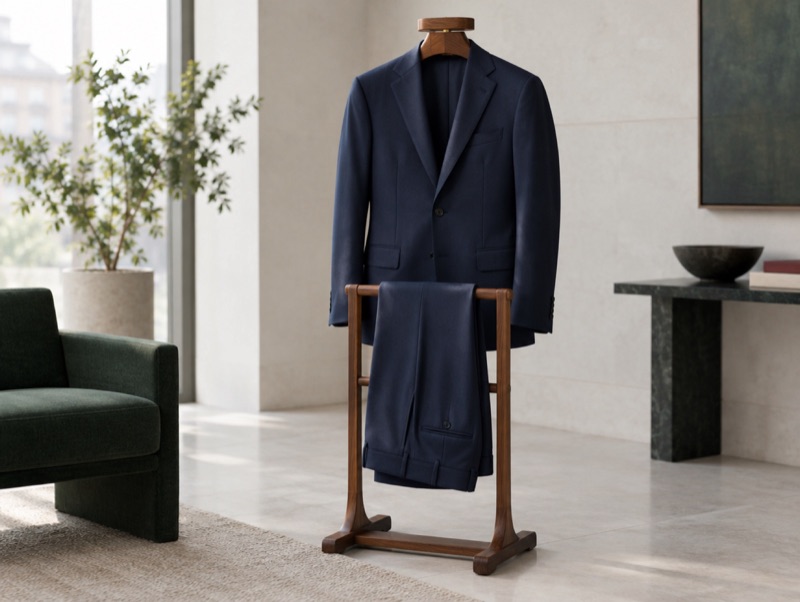
A suit is simply a jacket and trousers, sometimes with a waistcoat, made from the same cloth at once so they match exactly.
-
Basting
Thuật ngữ từ điển
Long temporary stitches holding a garment together for fitting, removed afterwards. A basted garment can be pulled apart and recut, which is the point of the basted fitting.
-
Forward fitting
Thuật ngữ từ điển
A fitting after the basted one, with the garment made up further. How many there are depends on the figure and on how well the house already knows it.
-
Balance
Thuật ngữ từ điển
Whether a coat hangs level front to back. A coat out of balance rides up at the back of the neck or falls away at the front, and nothing else about the fit can be judged until it…
-
Drag lines
Thuật ngữ từ điển
Diagonal creases radiating from a point of strain, showing where a garment is pulling. They point towards the problem: creases from the shoulder blade mean the back is tight; from…
-
Finished fitting
Thuật ngữ từ điển
The last fitting, with the garment essentially complete and only small adjustments possible. If something is structurally wrong at this stage it should have been caught earlier.
-
Try-on
Thuật ngữ từ điển
A trial garment (a shoe, a shirt, sometimes a jacket) made to test the pattern before the real one is cut. Standard in bespoke shoemaking, where it is the only way to correct a…
Ghi công hình ảnh 7
- A basted jacket marked in chalk: Original art · Il Sartoriale · Il Sartoriale · Il Sartoriale original art
- A cutting table with pattern, chalk and shears: Original art · Il Sartoriale · Il Sartoriale · Il Sartoriale original art
- A paper pattern drawn on brown paper: Original art · Il Sartoriale · Il Sartoriale · Il Sartoriale original art
- A fitting room with a basted jacket: Original art · Il Sartoriale · Il Sartoriale · Il Sartoriale original art
- Shears cutting chalk-marked cloth: Original art · Il Sartoriale · Il Sartoriale · Il Sartoriale original art
- A cutting room with pattern, basted jacket and ledger: Original art · Il Sartoriale · Il Sartoriale · Il Sartoriale original art
- A navy suit on a valet stand: Original art · Il Sartoriale · Il Sartoriale · Il Sartoriale original art