Technique · Construction
Pad stitching
Thousands of small diagonal stitches that curl flat cloth into a permanent three-dimensional shape.
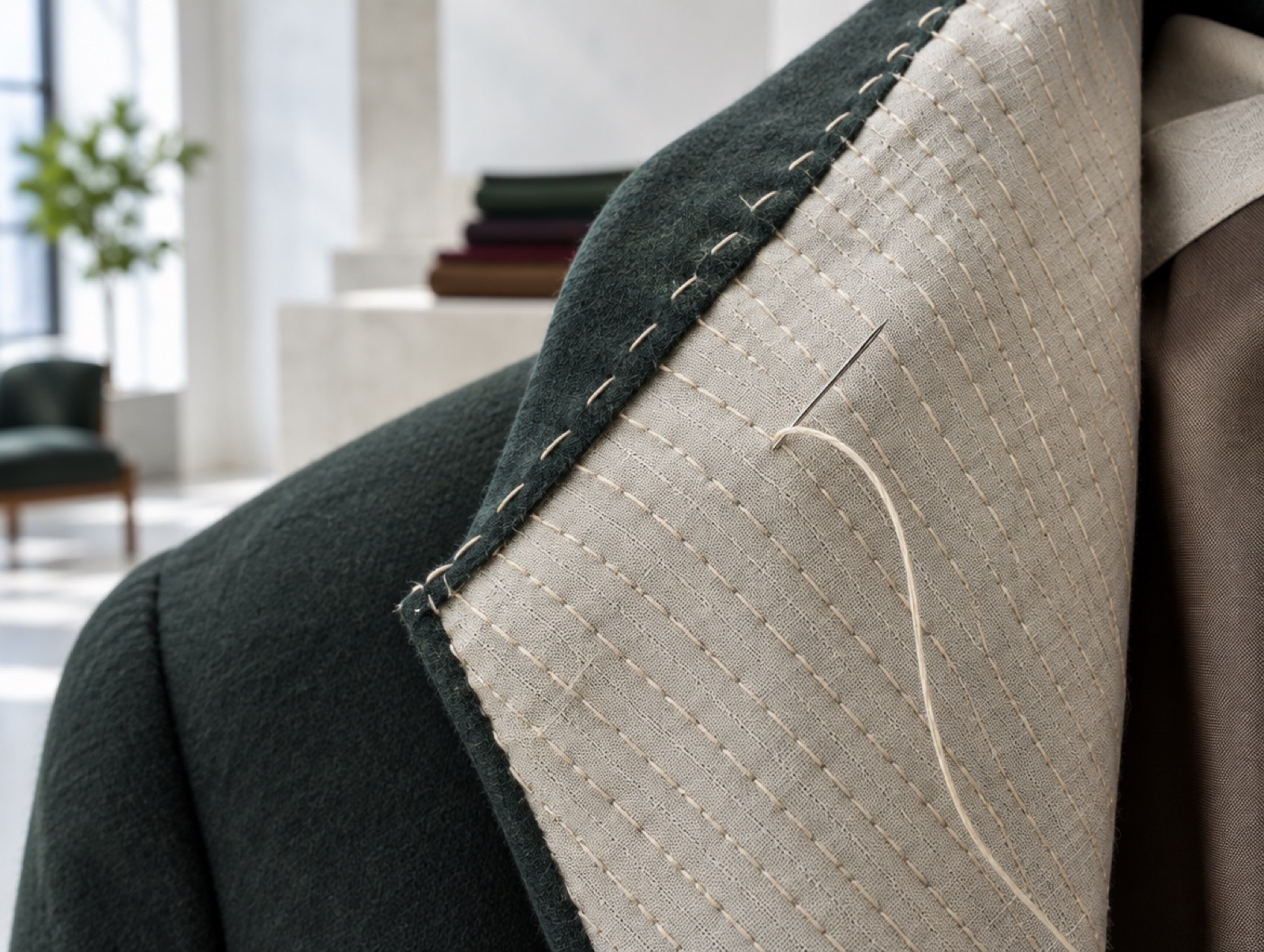
Pad stitching is how a tailor makes flat canvas curve. Working with the canvas held over the hand, the maker takes rows of short diagonal stitches that catch the layers at slightly different tensions; released, the canvas holds the curve. It shapes the chest and rolls the lapel, and it is done by hand in bespoke and by machine in most factory work.
How it works
Two layers, stitched together while one is held curved over the maker's hand and the other is not. Each stitch picks up slightly more of the outer layer than the inner one, so when the work is released the layers cannot lie flat against each other and the whole piece takes a curve. Repeat over several hundred stitches and you have a chest. It is one of the few tailoring operations where the shape is produced by the stitching itself rather than by cutting or pressing, and it is what people are pointing at when they say a coat is built rather than sewn.
Hand and machine
Machine pad stitching exists and is competent. What it cannot do is vary: a machine works at constant tension in straight rows, where a hand can tighten through the chest, ease at the edge, and shape the lapel roll differently at the top than at the bottom. The difference shows most in the lapel. A hand-padded lapel has a soft, three-dimensional roll and a slightly convex belly; a machine-padded one is flatter and more uniform. Once you have seen the two side by side it is difficult to stop noticing.
Where to look for it
Turn back the lapel of a jacket and look at the underside near the buttonhole. On a hand-padded lapel you can often see faint dimpling in rows where the stitches pass through, and the lapel will have a soft three-dimensional curve rather than a pressed fold.
The other tell is behaviour: a hand-padded lapel springs back when pushed flat and returns to its roll. A fused or machine-padded one stays where you put it.
At a glance
Who works with it
Houses and mills on this site with a documented connection to Pad stitching.
 01
Technique
01
Technique Full canvas construction
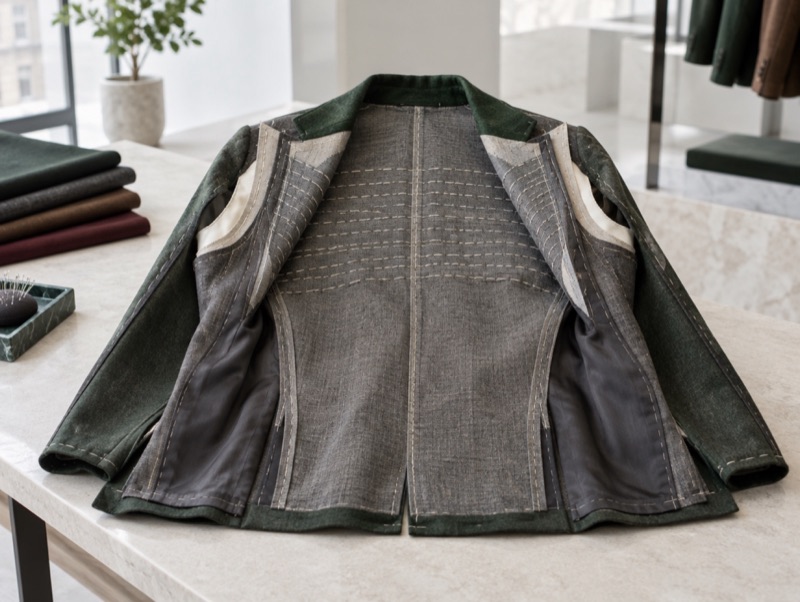
A hand-shaped skeleton of horsehair and wool, sewn (never glued) between cloth and lining.
 02
Start here
02
Start here How a great suit is actually made
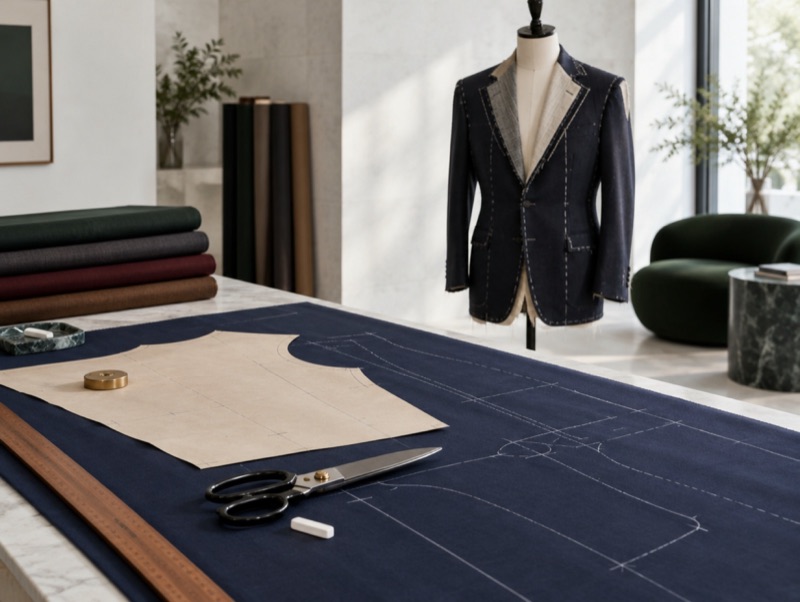
A good tailored jacket has a horsehair and wool inner layer shaped with hand stitching, cloth shaped with an iron, and repeated fittings on the body.
 03
Tailoring style
03
Tailoring style Savile Row
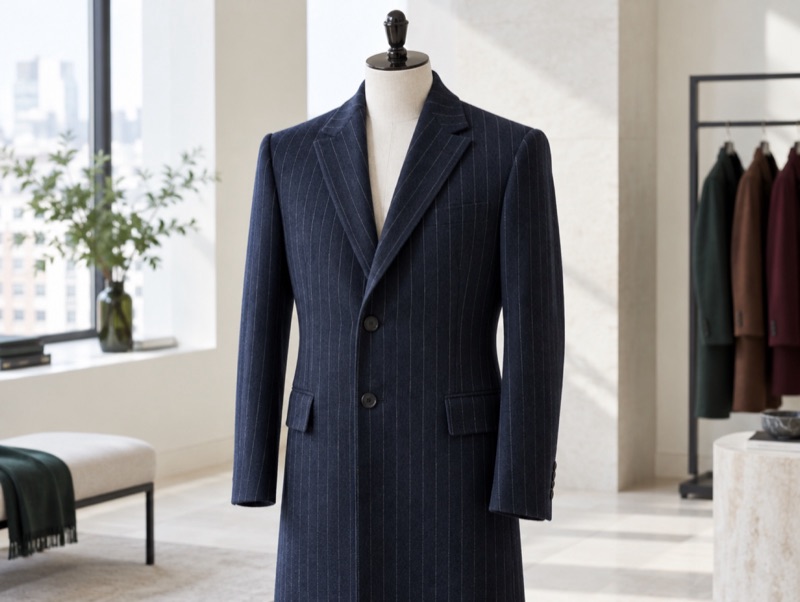
Savile Row jackets are shaped by hand around a horsehair and wool inner layer, giving defined shoulders, a nipped waist and an upright look for decades.
 04
Guide
04
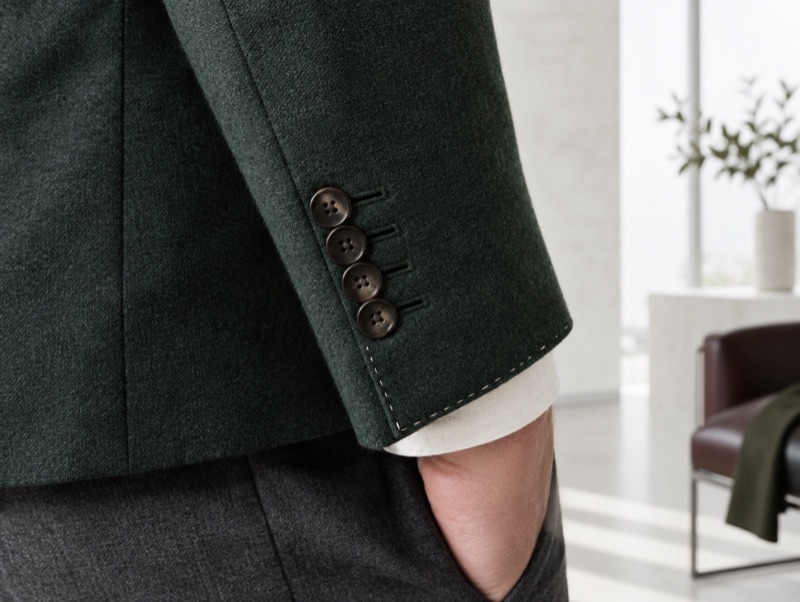
Guide How to tell a well-made jacket in ninety seconds
Six shop checks, such as buttonholes, lining, shoulder and whether patterns line up at seams, reveal how well a jacket was made.
 05
Start here
05
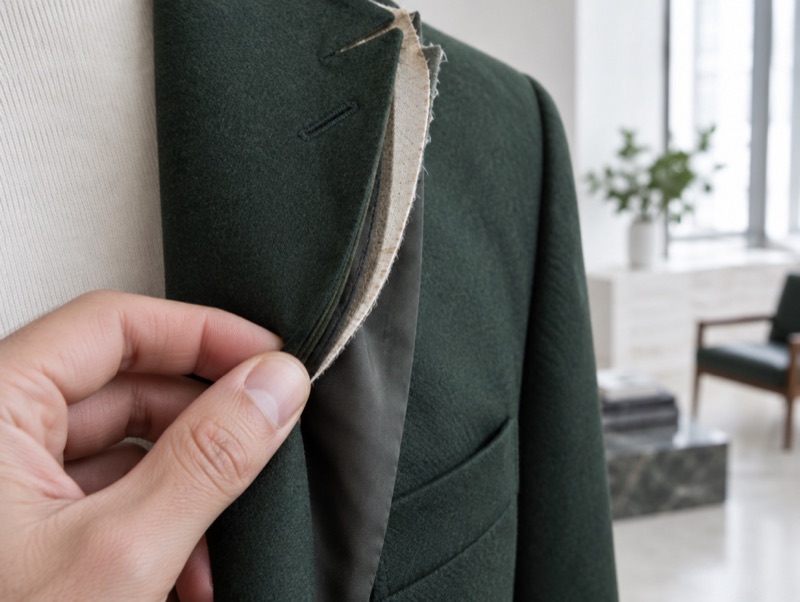
Start here What full canvas means
There is a hand-shaped skeleton inside a good jacket. You can feel it in ten seconds.
 06
Technique
06
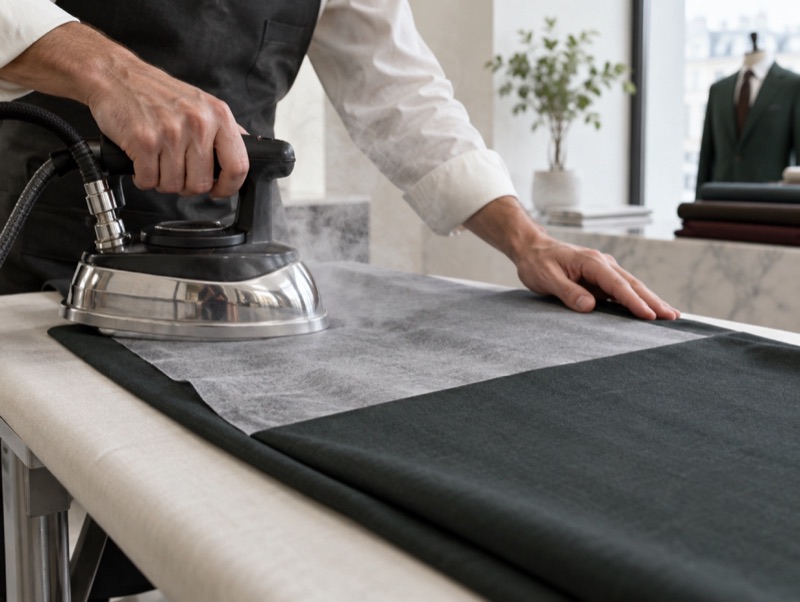
Technique Fused construction
An interlining bonded to the cloth with heat and adhesive. Fast, cheap, and the reason most suits feel like boards.
-
 Half canvas construction
Technique
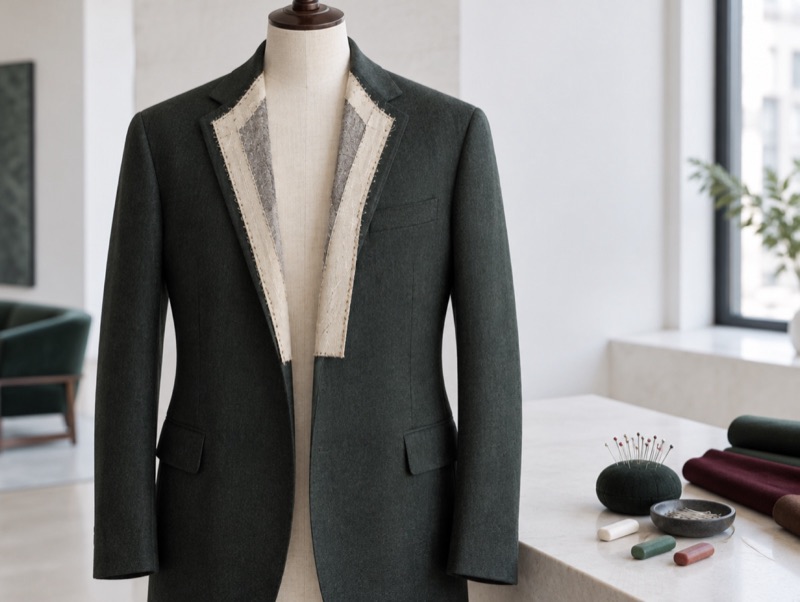
Half canvas construction
TechniqueCanvas through the chest and lapel, fusible below: the compromise most good ready-to-wear makes.
-
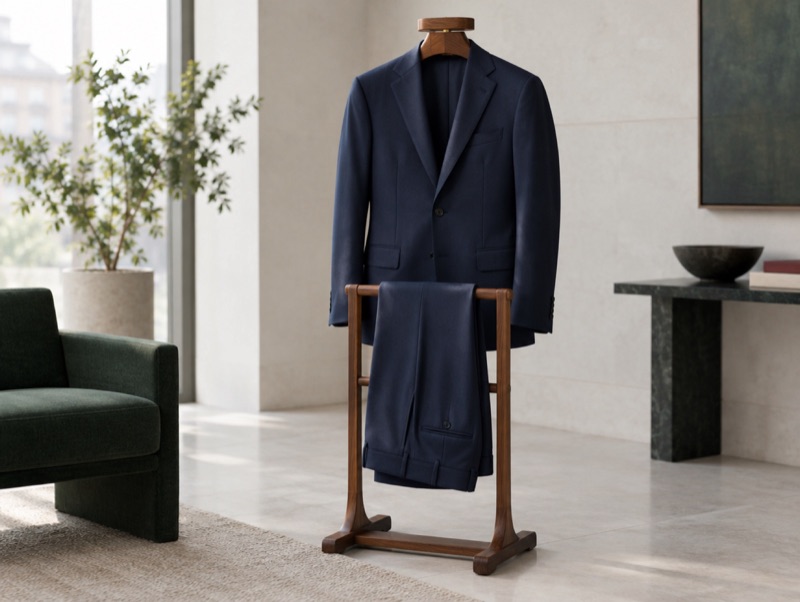 The suit
Garment
The suit
GarmentA suit is simply a jacket and trousers, sometimes with a waistcoat, made from the same cloth at once so they match exactly.
-
Bridle
Glossary term
A narrow tape sewn along the lapel roll line inside a jacket, holding the roll in place and stopping the lapel stretching. Set with slight tension by hand so the lapel curves…
Picture credits 9
- Rows of pad stitches on a lapel canvas: Original art · Il Sartoriale · Il Sartoriale · Il Sartoriale original art
- A jacket front showing its full canvas: Original art · Il Sartoriale · Il Sartoriale · Il Sartoriale original art
- A cutting table with pattern, chalk and shears: Original art · Il Sartoriale · Il Sartoriale · Il Sartoriale original art
- A structured English-cut coat on a dummy: Original art · Il Sartoriale · Il Sartoriale · Il Sartoriale original art
- A cuff with working buttonholes: Original art · Il Sartoriale · Il Sartoriale · Il Sartoriale original art
- A lapel pinched to feel the canvas: Original art · Il Sartoriale · Il Sartoriale · Il Sartoriale original art
- Fusible interlining pressed onto cloth: Original art · Il Sartoriale · Il Sartoriale · Il Sartoriale original art
- A jacket front showing a half canvas: Original art · Il Sartoriale · Il Sartoriale · Il Sartoriale original art
- A navy suit on a valet stand: Original art · Il Sartoriale · Il Sartoriale · Il Sartoriale original art