Pengrajin · Artisans
Antonio Panico
Trained at Rubinacci, and cuts the version of the Neapolitan coat that existed before the world noticed.
Panico learned in the Rubinacci workshop and established his own sartoria in Naples. He is among the tailors most frequently named by other tailors, and his coat is a classical statement of the style: fuller in the chest and longer than the contemporary fashion, with a shoulder that is soft rather than collapsed.
Why the trade rates him
The reasons given by other tailors are consistent: the balance of the coat, the way the collar sits, and a refusal to follow the international market's preference for progressively softer and shorter jackets.
The local trade's estimation and the international market's estimation of a Neapolitan tailor frequently diverge, and Panico is the clearest case of the first being considerably higher than the second.
The generational point
Panico belongs to a generation trained directly in the workshops where the style was formalised, and that generation is small and shrinking. Whether the method transmits depends on apprenticeship rather than on documentation, and there is not much of either.
It is the most important fact about Neapolitan tailoring today and the one least discussed in writing about it.
The coat itself
A soft, unpadded shoulder; a light chest; a high armhole; a lapel with a pronounced belly; open quarters; and proportions that are generous rather than close. It is Neapolitan without any of the amplifications the style acquired after 2010.
Handwork is extensive throughout and the workshop is small, which means waiting and means commissioning in Naples rather than at a trunk show.
The conservative Neapolitan
Panico's work is repeatedly cited by other tailors as the classical reading of the Naples coat, and the distinction from the internet-famous version is worth stating plainly: a soft, narrow-set shoulder rather than an extended one; a gathered sleeve head rather than a decorative ruffle; and proportions from the mid-century rather than from a photograph of a mid-century photograph.
Sekilas pandang
Rumah mode yang bekerja dalam tradisi ini
-
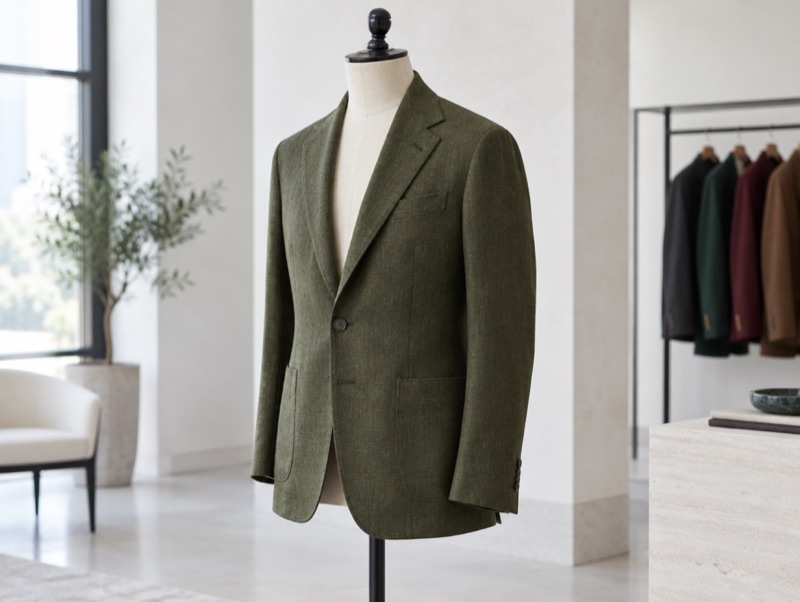 Sartoria Panico
Naples
Sartoria Panico
NaplesSartoria Panico is a small Naples tailoring workshop run by Antonio Panico, who trained at Rubinacci and cuts a classic jacket that many local tailors treat as the benchmark.
-
 Rubinacci
Naples · 1932
Rubinacci
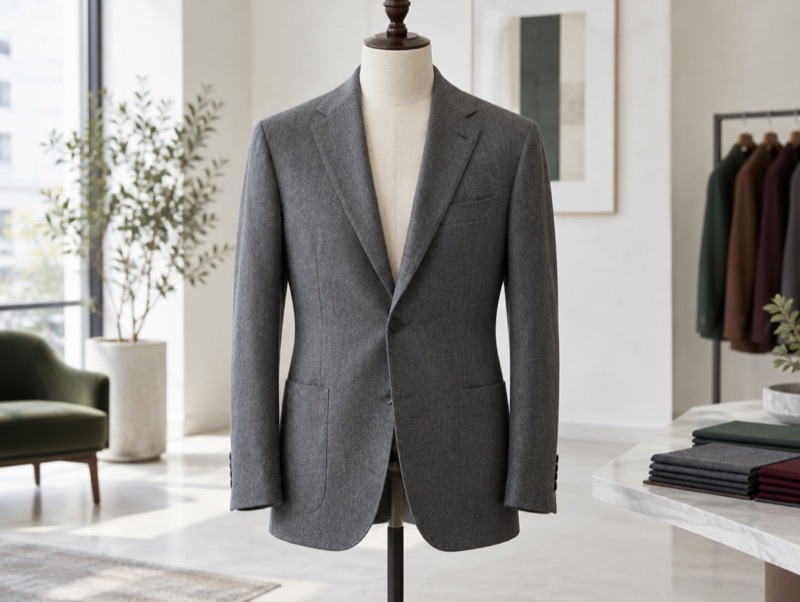
Naples · 1932Rubinacci is the oldest and best-known tailoring house in Naples, founded in 1932, where the soft Neapolitan jacket without heavy padding was first created.
Kredit foto 2
- An illustration of the house's recorded cut: natural shoulder, light canvas chest, classical neapolitan. Not a photograph of the house's own work.: Original art · Il Sartoriale · Il Sartoriale · Il Sartoriale original art
- An illustration of the house's recorded cut: natural shoulder, light canvas chest, soft, short, open quarters. Not a photograph of the house's own work.: Original art · Il Sartoriale · Il Sartoriale · Il Sartoriale original art